
Sticker Price, Invoice Price, and Market Value: What the Numbers Mean
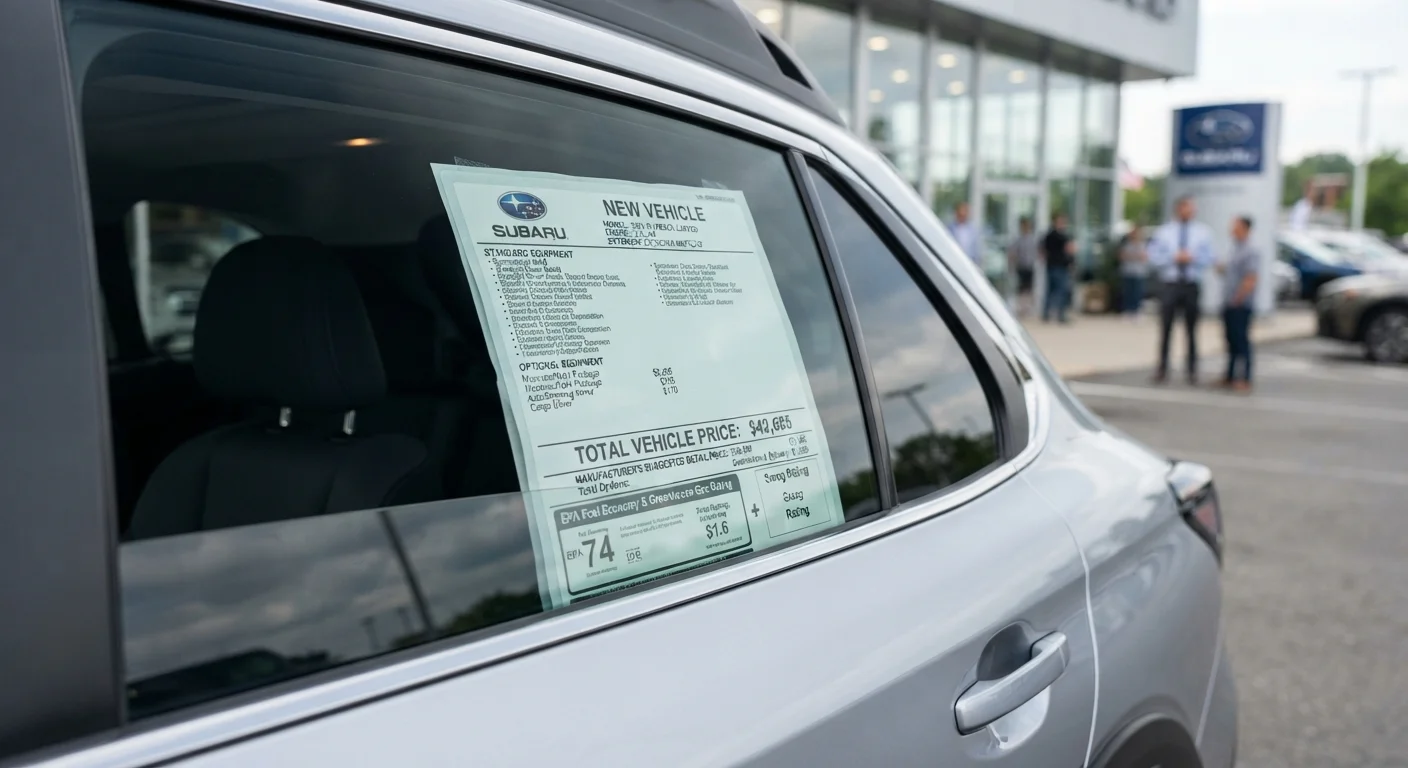
Photo credit: SkripTee.com | Search. Explore. Learn.
In this article
Decode the pricing terminology you'll encounter when buying a car — MSRP, invoice, dealer markup, and fair market value — explained clearly.
The Three Prices on Every Car Deal
Walk onto any dealership lot and you'll encounter a stack of numbers - the window sticker, the invoice, the "market adjustment," and more. Each figure means something different, and confusing them can cost you. This reference breaks down the core pricing terms so you can evaluate any deal with clear eyes.
| MSRP Set By | The vehicle manufacturer |
| Invoice Price Availability | Publicly accessible through major automotive research databases |
| Typical Holdback Range | 1-3% of MSRP (Industry standard; varies by manufacturer) |
| Monroney Sticker Required By | U.S. federal law (Automobile Information Disclosure Act) |
| Market Value Varies By | Region, trim level, and current supply and demand |
| Dealer Markup Disclosure | Must appear on the window sticker |
For a full walkthrough of the purchase process, see The Car-Buying Process, Explained from Lot to Keys.
MSRP, Invoice Price, and Dealer Cost - Defined
MSRP (Manufacturer's Suggested Retail Price) is the price the automaker recommends the vehicle be sold for. It appears on the Monroney sticker - the federally required window label - and includes the base price plus any factory-installed options. "Suggested" is the operative word: dealers are not legally required to sell at MSRP.
Invoice price is what the dealer pays the manufacturer for the vehicle. It is publicly available through several automotive research databases and is often cited as a negotiating baseline. However, invoice does not represent the dealer's true cost. Holdback - a manufacturer rebate typically equal to 1-3% of MSRP paid back to the dealer quarterly - and factory-to-dealer incentives mean the dealer's effective cost is usually lower than the invoice figure.
Dealer cost is the actual net amount the dealer pays after all manufacturer incentives, holdbacks, and rebates are applied. This figure is rarely published and varies by dealer, region, and sales volume.
MSRP
Manufacturer's Suggested Retail Price - the automaker's recommended selling price, displayed on the federally mandated Monroney window sticker. Dealers can sell above or below this figure.
Invoice Price
The amount a dealer pays the manufacturer for a vehicle before any holdbacks or incentives are applied. Often used as a negotiating reference, but it is not the dealer's true net cost.
Holdback
A manufacturer payment returned to the dealer - typically 1-3% of MSRP - after a vehicle is sold. Holdback means a dealer can profit even when selling at or near invoice.
Fair Market Value
The price a willing buyer and willing seller agree on under normal market conditions. For vehicles, this is tracked as the average transaction price in a given region for a specific trim.
Dealer Markup
An amount added above MSRP, often labeled 'market adjustment' on the sticker. Markups are disclosed but may be negotiable depending on inventory levels and demand.
Monroney Sticker
The federally required window label on new vehicles, displaying MSRP, fuel economy ratings, standard equipment, and options pricing. Dealers are required by law to affix it.
Dealer Incentives
Manufacturer-funded discounts or bonuses paid directly to dealers, separate from consumer rebates. These reduce the dealer's effective cost below the invoice price.
Transaction Price
The actual amount a buyer pays for a vehicle after all negotiations, rebates, and incentives are applied. Databases tracking average transaction prices provide realistic market benchmarks.
Knowing these distinctions helps you spot the difference between a real discount and a nominal one. Common myths about car negotiation often center on treating invoice as the dealer's floor - it rarely is.
Market Value, Markups, and What You Should Actually Pay
Fair market value reflects what buyers in your region are actually paying for a given vehicle - not what's on the sticker. When demand exceeds supply, market value rises above MSRP; when inventory is plentiful, vehicles may sell below MSRP. Several independent automotive data providers track average transaction prices by ZIP code and trim level, giving buyers a realistic price anchor.
Dealer markup (sometimes labeled "market adjustment" or "additional dealer markup") is an amount added above MSRP. These markups are legal and disclosed on the sticker, but they are negotiable depending on current market conditions and vehicle availability.
1-3%
Typical dealer holdback as a share of MSRP
Holdback is a manufacturer rebate paid to dealers after a sale, reducing their true cost below the invoice price.
Varies by ZIP
Average transaction price relative to MSRP
Regional supply and demand mean the same vehicle can transact above or below MSRP depending on local market conditions.
What you should pay is ultimately a function of local market conditions, the vehicle's availability, and any manufacturer incentives in play at the time of purchase. Researching average transaction prices for the exact trim you want - not just the base model - gives you the most accurate reference point before entering any negotiation.
Once you've agreed on a purchase price, remember that it's only part of your financial picture. See Total Cost of Vehicle Ownership: Beyond the Purchase Price for a full accounting of ongoing costs.

Author
Autos Editorial Team
Autos Editorial Team is the collective byline for our editorial team and contributor network. Articles published under this byline or an editorial pen name are researched, written, and reviewed according to our editorial standards for clarity, consistency, and independence before publication.
View all articles →