
Dietary Supplements: What They Can and Cannot Do
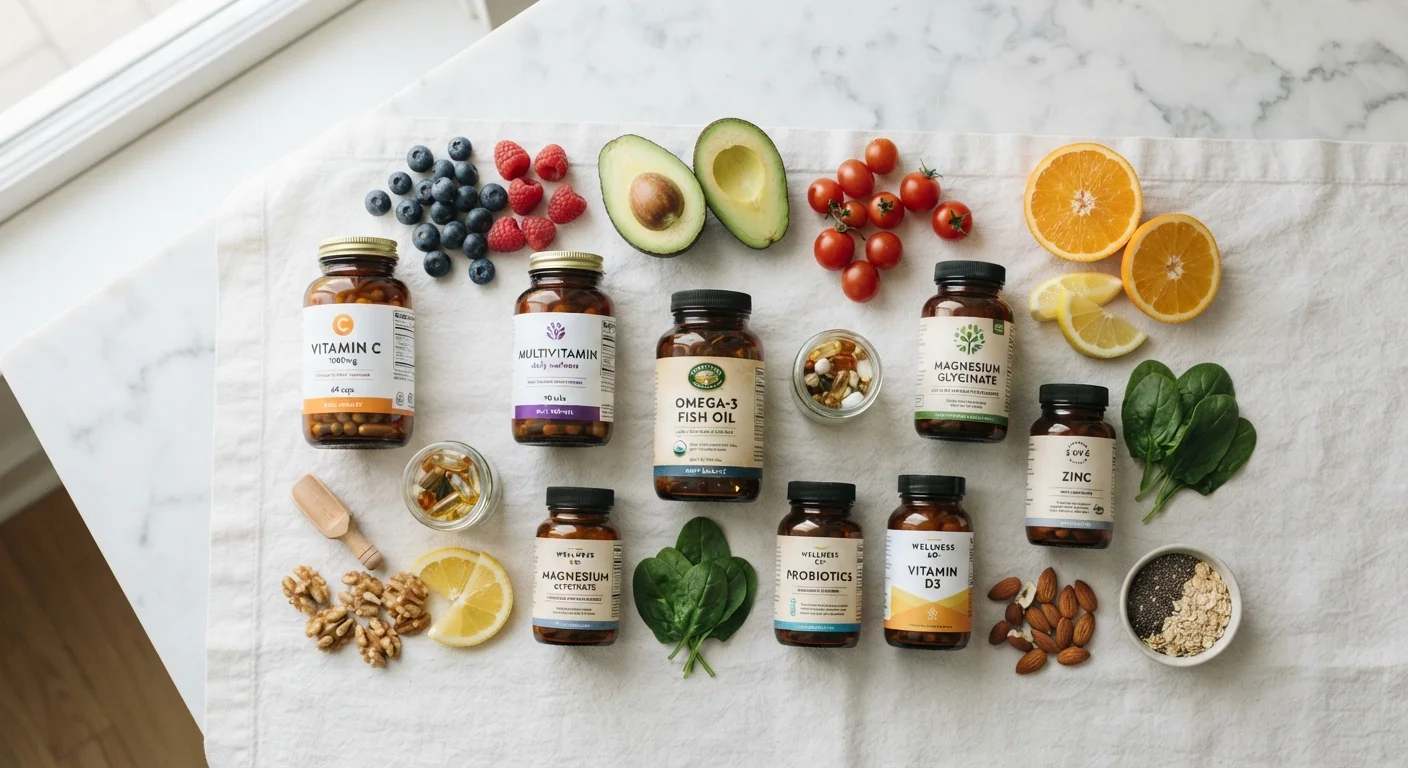
Photo credit: SkripTee.com | Search. Explore. Learn.
In this article
Supplements are widely used, but their role in nutrition is frequently misunderstood. A clear-eyed look at evidence, limitations, and when to consult a professional.
Key Takeaways
- Dietary supplements can fill genuine nutritional gaps but cannot replicate whole foods' full complexity.
- Certain groups - including pregnant individuals, older adults, and those with deficiencies - may have evidence-based reasons to supplement.
- The supplement industry has less regulatory oversight than pharmaceuticals, making label claims less reliable.
- Supplements are not a substitute for a balanced diet and should be used with professional guidance.
Corrects clinically confirmed nutrient deficiencies
When blood tests reveal deficiencies in iron, vitamin D, or B12, targeted supplements can restore adequate levels more reliably than diet alone in the short term.
Supports elevated needs during specific life stages
Pregnancy, breastfeeding, and older adulthood increase demand for certain nutrients; supplementation provides a reliable way to meet those needs when dietary sources fall short.
Fills gaps created by dietary restrictions
People following vegan or other restrictive diets may have limited access to nutrients like B12, iron, or long-chain omega-3s, making supplementation a practical and evidence-supported option.
Convenient and consistent delivery of key nutrients
Supplements provide a standardized, measured dose, which is useful when achieving consistent nutrient intake through food is difficult due to access, preference, or medical conditions.
Cannot replicate the complexity of whole foods
Whole foods contain synergistic compounds - fiber, polyphenols, and co-nutrients - that isolated supplements cannot reproduce, and some benefits attributed to diets rich in these foods have not translated to supplementation trials.
Limited pre-market efficacy testing required by law
Under DSHEA, manufacturers are not required to demonstrate that a supplement works before selling it, making many product claims on shelves less evidence-based than they appear.
Risk of toxicity with fat-soluble vitamins at high doses
Vitamins A, D, E, and K are stored in body fat and can accumulate to harmful levels when taken in excess, a risk that does not apply to the same nutrients consumed through food.
Potential for interactions with medications
Some supplements - including vitamin K, St. John's Wort, and high-dose fish oil - can meaningfully interact with prescription drugs, altering their effectiveness or safety profile.
Quality and label accuracy vary significantly
Independent testing has found supplements that contain different amounts of an ingredient than stated on the label, underscoring why third-party verification is important but not universal.
What Dietary Supplements Actually Are
Dietary supplements are products intended to add nutritional value to the diet. They include vitamins, minerals, amino acids, herbal ingredients, enzymes, and concentrates - sold as capsules, tablets, powders, or liquids. In the United States, the FDA regulates supplements under the Dietary Supplement Health and Education Act (DSHEA), which classifies them separately from drugs. This means manufacturers do not need to prove a supplement is effective before selling it - only that it is not unsafe.
That regulatory distinction matters. Unlike medications, supplements cannot legally claim to treat, cure, or prevent disease. What they can do is support general nutritional adequacy - and for specific populations, that role has real value. Understanding this boundary is the foundation of making informed choices. For a broader look at how nutrition evidence is evaluated, see how nutrition research works.
The Genuine Case for Supplements
For certain groups, supplementation is supported by strong scientific consensus - not marketing. Folic acid during pregnancy reduces neural tube defect risk. Vitamin D and calcium are important when sun exposure is limited and dairy intake is low. Vitamin B12 supplementation is widely recommended for people following plant-based diets, as B12 is found almost exclusively in animal products.
Corrects clinically confirmed nutrient deficiencies
When blood tests reveal deficiencies in iron, vitamin D, or B12, targeted supplements can restore adequate levels more reliably than diet alone in the short term.
Supports elevated needs during specific life stages
Pregnancy, breastfeeding, and older adulthood increase demand for certain nutrients; supplementation provides a reliable way to meet those needs when dietary sources fall short.
Fills gaps created by dietary restrictions
People following vegan or other restrictive diets may have limited access to nutrients like B12, iron, or long-chain omega-3s, making supplementation a practical and evidence-supported option.
Convenient and consistent delivery of key nutrients
Supplements provide a standardized, measured dose, which is useful when achieving consistent nutrient intake through food is difficult due to access, preference, or medical conditions.
Beyond deficiency correction, some research supports specific uses: iron supplementation in confirmed iron-deficiency anemia, iodine in populations where soil depletion limits dietary iodine, and omega-3 fatty acids for those who rarely consume fatty fish. These are targeted applications based on identified need - not universal prescriptions.
57%
US adults who use dietary supplements
According to the National Institutes of Health Office of Dietary Supplements, more than half of American adults report taking at least one dietary supplement.
~$50B
Annual US supplement market size
The US supplement industry generates roughly $50 billion in annual sales, reflecting widespread consumer interest that outpaces the available clinical evidence for many products.
The Limitations Supplements Cannot Overcome
Whole foods contain thousands of bioactive compounds - fiber, phytonutrients, antioxidants - that interact in ways science has not fully mapped. Supplements isolate individual nutrients but cannot replicate that complexity. Several large clinical trials, including studies on beta-carotene and vitamin E, found that isolated high-dose supplements did not confer the same protective effects observed in people who consumed nutrient-rich diets.
Cannot replicate the complexity of whole foods
Whole foods contain synergistic compounds - fiber, polyphenols, and co-nutrients - that isolated supplements cannot reproduce, and some benefits attributed to diets rich in these foods have not translated to supplementation trials.
Limited pre-market efficacy testing required by law
Under DSHEA, manufacturers are not required to demonstrate that a supplement works before selling it, making many product claims on shelves less evidence-based than they appear.
Risk of toxicity with fat-soluble vitamins at high doses
Vitamins A, D, E, and K are stored in body fat and can accumulate to harmful levels when taken in excess, a risk that does not apply to the same nutrients consumed through food.
Potential for interactions with medications
Some supplements - including vitamin K, St. John's Wort, and high-dose fish oil - can meaningfully interact with prescription drugs, altering their effectiveness or safety profile.
Quality and label accuracy vary significantly
Independent testing has found supplements that contain different amounts of an ingredient than stated on the label, underscoring why third-party verification is important but not universal.
There is also the matter of quality variability. Because pre-market efficacy testing is not required, independent lab analyses have found that some supplements contain less of an ingredient than labeled, or include unlisted substances. Third-party certification programs (such as USP or NSF International verification) offer some assurance, but consumers must actively look for them. For a look at how supplement claims compare to fortified foods, see when fortified foods and supplements help.
Third-Party Certification: What to Look For
Because FDA oversight of supplements is limited compared to pharmaceuticals, independent verification programs help consumers identify products that have been tested for purity, potency, and label accuracy. Look for seals from organizations such as USP (United States Pharmacopeia), NSF International, or ConsumerLab. Certification does not mean a product is effective, but it does indicate it has been independently tested to contain what it claims. Always discuss supplement choices with a healthcare provider regardless of certification status.
Navigating Supplements Thoughtfully
Before adding any supplement, the most useful first step is identifying whether a deficiency or elevated need actually exists - ideally through a blood test or assessment by a registered dietitian or physician. Self-diagnosing based on fatigue, hair loss, or other common symptoms and then self-prescribing supplements is rarely precise and occasionally counterproductive: fat-soluble vitamins (A, D, E, K) can accumulate to harmful levels at high doses.
Supplements can also interact with prescription medications - vitamin K with blood thinners, for example, or St. John's Wort with antidepressants. Disclosing all supplements to a healthcare provider is an important safety practice, not an optional one. For a grounded look at common nutrition misconceptions, including some that drive unnecessary supplementation, visit our guide on nutrition myths that refuse to die.
This article is for general informational purposes only and does not constitute medical or nutritional advice. Always consult a qualified healthcare professional before starting, stopping, or changing any supplement routine.

Author
Health Editorial Team
Health Editorial Team is the collective byline for our editorial team and contributor network. Articles published under this byline or an editorial pen name are researched, written, and reviewed according to our editorial standards for clarity, consistency, and independence before publication.
View all articles →