
Building a Pet First Aid Kit - and Knowing When It's Not Enough
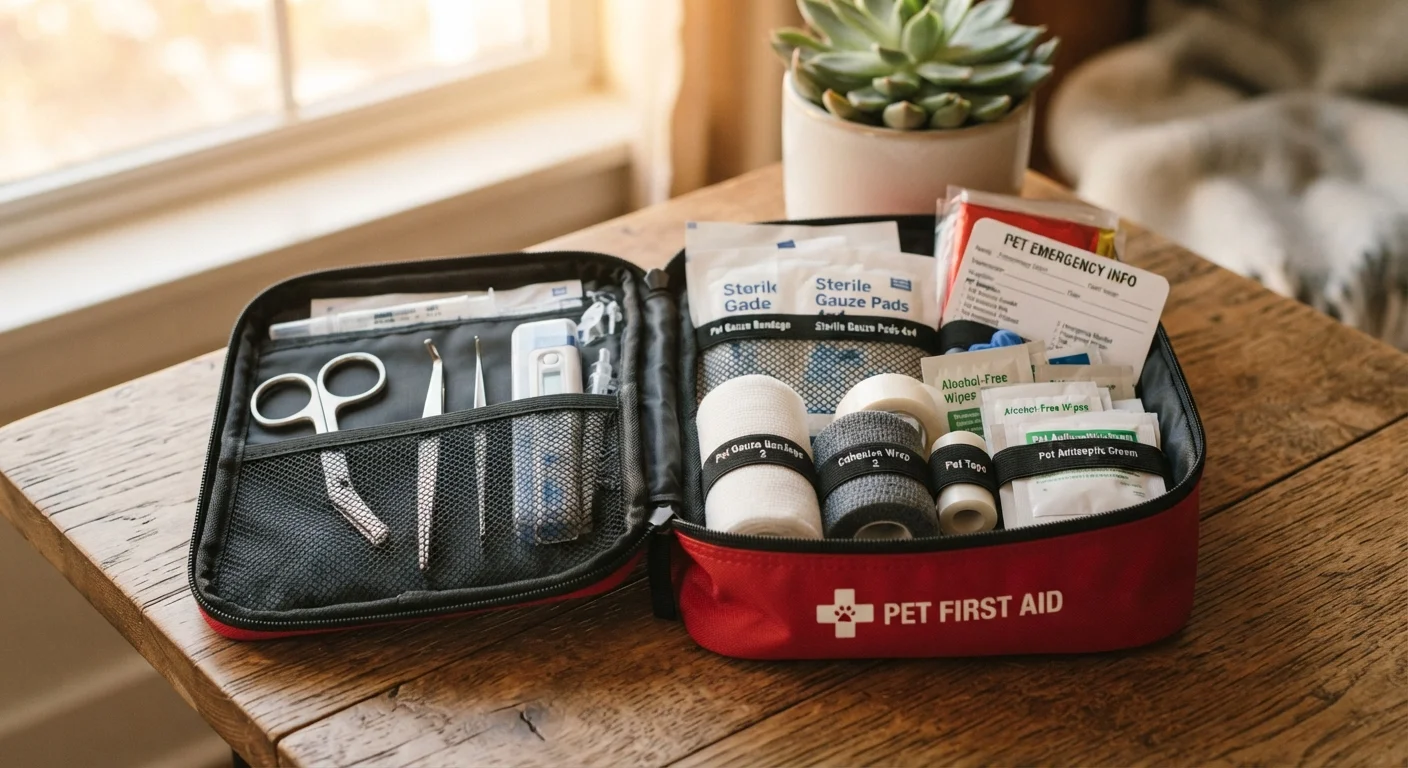
Photo credit: SkripTee.com | Search. Explore. Learn.
In this article
A well-stocked first aid kit can help in minor emergencies, but knowing its limits is equally important. Here's what to include and what requires a vet.
Key Takeaways
- A pet first aid kit helps manage minor injuries but is never a substitute for veterinary care.
- Your kit should be tailored to your pet's species, size, and any known health conditions.
- Knowing the limits of home care is just as important as knowing what supplies to keep on hand.
- Store emergency vet contacts and your pet's medical records inside the kit itself.
- Inspect and restock your kit every six months to keep supplies current and unexpired.
Why Every Pet Owner Needs a First Aid Kit
Accidents don't wait for a convenient moment. A scratched paw on a weekend hike, a bee sting in the backyard, or a minor cut from rough play - these situations arise without warning, and having the right supplies on hand lets you respond calmly and effectively. That said, a pet first aid kit is a bridge, not a destination. It buys you time and limits discomfort while you arrange professional care.
If you're in the process of setting up your home for a new animal, this checklist pairs well with our full pre-arrival supply checklist, which covers the broader essentials before day one. And once you're settled in, understanding what normal and abnormal look like for your pet will sharpen your judgment about when the kit is enough - and when it isn't.
First Aid Does Not Replace Veterinary Care
Even when a situation appears minor, a veterinarian's evaluation is often warranted - infections, internal injuries, and toxic exposures can appear subtle at first. Use your kit to stabilize and comfort your pet, then contact your vet or an emergency clinic. When in doubt, always call a professional rather than waiting to see if things improve.
What to Pack: The Complete Checklist
Use the checklist below to build or audit your kit. Items are grouped by function so you can work through them systematically. Adapt as needed for your pet's species - some items, such as muzzle size or saline volume, will differ between a large dog and a small rabbit.
Contact Information & Records
Wound Care Supplies
Examination & Monitoring Tools
Restraint & Comfort Items
Kit Maintenance
A note on medications: never include human over-the-counter drugs unless your veterinarian has explicitly approved them for your specific pet. Many common pain relievers and antihistamines that are safe for people are toxic to dogs and cats.
Human Medications Can Be Toxic to Pets
Common household drugs - including ibuprofen, acetaminophen, and certain antihistamines - can cause serious or fatal harm to dogs, cats, and other pets, even in small doses. Never administer any human medication to your pet without explicit guidance from your veterinarian. If you suspect your pet has ingested any medication, contact a vet or poison control immediately.
Tools That Make the Kit Work
Supplies are only as useful as your ability to use them confidently. Consider keeping these resources alongside your physical kit.
Pet first aid reference guide or manual
Provides step-by-step instructions for common scenarios like wound care, choking, and heatstroke so you aren't relying on memory under stress.
Pet first aid app (veterinarian-reviewed)
Offers illustrated emergency guidance on your phone when a printed guide isn't within reach.
Pet first aid and CPR course
Hands-on training from a certified instructor significantly improves your ability to respond effectively in a real emergency.
Waterproof container or hard-shell case
Keeps all supplies organized, dry, and easy to grab during a stressful moment - especially important for outdoor or travel use.
Recognizing When Home Care Isn't Enough
One of the most valuable skills a pet owner can develop is knowing when to stop and call a vet. First aid is appropriate for superficial wounds, minor swelling, or a splinter - not for anything involving the chest, abdomen, eyes, or neurological signs. If your pet is struggling to breathe, has lost consciousness, is seizing, is bleeding heavily, or has ingested a potential toxin, go directly to an emergency veterinary clinic. Do not attempt to manage these situations at home.
Unexpected vet visits can come with significant costs. If you haven't already thought through your financial safety net, comparing pet insurance with a dedicated savings fund is a worthwhile exercise - ideally before an emergency arises, not during one.
For households with children and pets sharing the same space, also review safe interaction guidelines for pets and young children, since children are statistically more likely to be involved in accidental pet-related incidents.
This article provides general educational information about pet first aid preparation and is not a substitute for professional veterinary advice. Always consult a licensed veterinarian for guidance specific to your pet's health needs.

Author
Pets Editorial Team
Pets Editorial Team is the collective byline for our editorial team and contributor network. Articles published under this byline or an editorial pen name are researched, written, and reviewed according to our editorial standards for clarity, consistency, and independence before publication.
View all articles →