
Before You Book: What to Look for in a Veterinary Practice
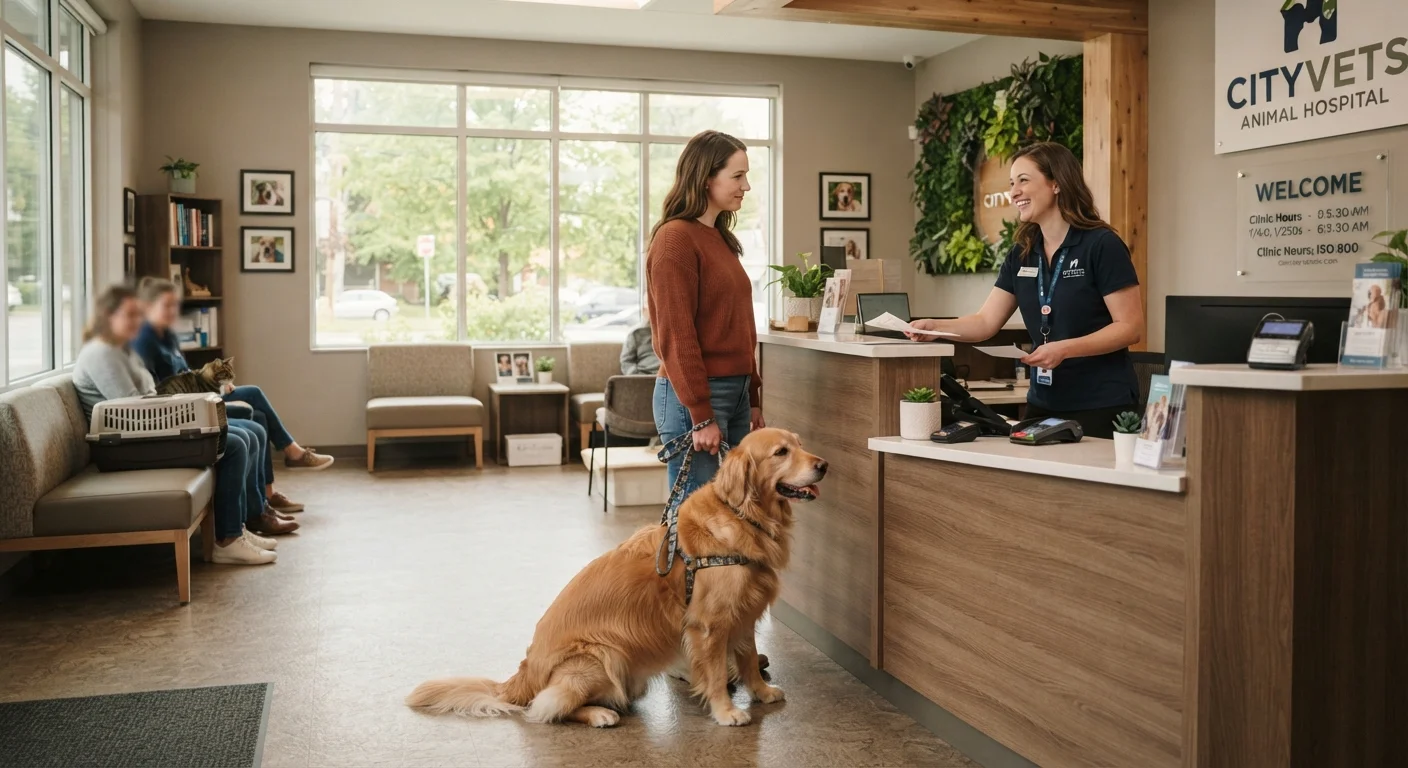
Photo credit: SkripTee.com | Search. Explore. Learn.
In this article
Choosing where your pet receives care is a significant decision. These are the factors worth examining — from accreditation to communication style — before committing.
Key Takeaways
- Accreditation from recognized veterinary bodies signals a practice meets established standards of care.
- Communication style matters as much as clinical expertise - your vet should explain things clearly.
- Visiting before your pet's first appointment helps you evaluate the environment firsthand.
- Emergency protocols and after-hours coverage are critical details to confirm upfront.
- Transparent fee structures and written estimates help you plan for your pet's care.
Why the practice matters as much as the practitioner
Finding veterinary care you trust is one of the most consequential decisions you'll make as a pet owner - and it's rarely a one-time choice. The practice you select becomes a long-term partner in your animal's health across wellness exams, vaccinations, dental care, and those unexpected moments that require urgent attention. Yet many owners choose a clinic based solely on proximity or a quick web search, without examining the details that actually shape the quality of that care.
Whether you're a first-time owner - in which case our pre-arrival checklist can help you prepare - or switching from a provider you've outgrown, these are the factors worth examining before you book. Finding a veterinarian you can trust is a process, not a single click.
Check for accreditation and professional affiliations
Voluntary accreditation - such as that offered by the American Animal Hospital Association (AAHA) - means a practice has been evaluated against published standards covering equipment, staff training, medical protocols, and facility cleanliness. Not every reputable clinic pursues accreditation, but its presence is a reliable indicator of commitment to quality. Look also for vets who hold membership in professional bodies such as the American Veterinary Medical Association (AVMA) or relevant specialty colleges, which signals ongoing engagement with the profession.
Accreditation signals a practice has been independently evaluated against published care standards.
Evaluate how the staff communicate with you
A technically skilled vet who struggles to explain a diagnosis clearly can leave you more anxious than informed. During an initial call or visit, notice whether staff answer questions patiently, use plain language rather than unexplained jargon, and seem genuinely willing to engage with your concerns. A practice that welcomes questions and takes time to explain recommendations - including the reasoning behind them - will make the entire care relationship more productive over your pet's lifetime.
A vet who communicates clearly turns a confusing diagnosis into an informed, confident decision.
Ask about emergency and after-hours coverage
Pets don't keep business hours, and urgent situations can arise at any time. Before registering, ask directly: does the practice offer after-hours emergency support, or do they refer to a specific emergency clinic? If they refer out, get the name and address of that facility so you're not searching during a crisis. Some practices also offer nurse triage lines outside regular hours - a valuable resource when you're unsure whether a symptom warrants an immediate visit.
Know exactly where to go after hours before you ever need to go there in an emergency.
Tour the facility - even briefly
A short visit before booking your first appointment can reveal a great deal. Observe how animals in the waiting area are managed, whether the space feels clean and organized, and how staff interact with patients. Many practices now use separate waiting areas or entry times for dogs and cats to reduce stress - a detail that reflects awareness of animal behavior and welfare. A well-run facility usually looks and feels it, even on a brief walk-through.
A five-minute walk-through tells you more about a practice than any online review can.
Understand the fee structure before you commit
Veterinary costs vary considerably across practices and regions. Ask upfront whether the clinic provides written estimates before procedures, and how they handle payment - including whether they work with veterinary payment plans or accept pet insurance. Knowing this in advance prevents surprises and lets you consider your financial planning. For a broader look at covering unexpected costs, explore the trade-offs between pet insurance and a dedicated savings fund.
Transparent fee communication upfront prevents financial stress when your pet needs care most.
Confirm the range of services offered
Not every practice offers the same scope of care. Some focus primarily on wellness and general medicine; others offer in-house diagnostics, dentistry, surgery, or rehabilitation. Understanding what a clinic can handle internally - and when they refer to specialists - helps you set realistic expectations and avoid having to search for a second provider mid-treatment. Ask whether the practice has digital X-ray, ultrasound, or in-house laboratory testing, as these capabilities often speed up diagnosis significantly.
In-house diagnostics can shorten the time between concern and diagnosis for your pet.
Look for consistency in the care team
Seeing the same vet - or at least a small, familiar team - at each visit supports continuity of care. Your pet's provider builds context over time: baseline weight, temperament, previous reactions to treatments, and any conditions being monitored. Ask how the practice handles scheduling and whether you can generally request a specific vet. High staff turnover or a very large rotating roster may make building that ongoing relationship more difficult.
Continuity in your care team means your pet's history doesn't need to be re-explained every visit.
Bring Your Questions to the First Call
You don't need to wait for an appointment to learn about a practice. A brief phone call asking about services, fees, and emergency protocols is entirely appropriate - and how staff respond to that call tells you something meaningful about how they treat clients.
Making a confident, informed choice
No single clinic will check every box perfectly, and geographic access is a real constraint for many pet owners. The goal isn't to find a flawless practice - it's to go in with clear criteria so you can make a genuinely informed decision rather than one made under pressure.
Once you've selected a practice, take time to understand what a routine visit actually involves. Our guide to what your pet's annual wellness exam covers explains each component of a standard checkup and why it matters. And if you're thinking ahead to your pet's immunization schedule, understanding core vs. non-core vaccines will help you have a more informed conversation with your vet from the start.
This Article Is General Information
The guidance here is intended to help pet owners evaluate veterinary practices as an informed consumer decision - it is not a substitute for professional veterinary advice. Every pet's health situation is unique. For any specific health concerns about your animal, consult a licensed veterinarian directly.

Author
Pets Editorial Team
Pets Editorial Team is the collective byline for our editorial team and contributor network. Articles published under this byline or an editorial pen name are researched, written, and reviewed according to our editorial standards for clarity, consistency, and independence before publication.
View all articles →