
Budgeting Methods Explained: Envelope, Percentage, and Pay-Yourself-First
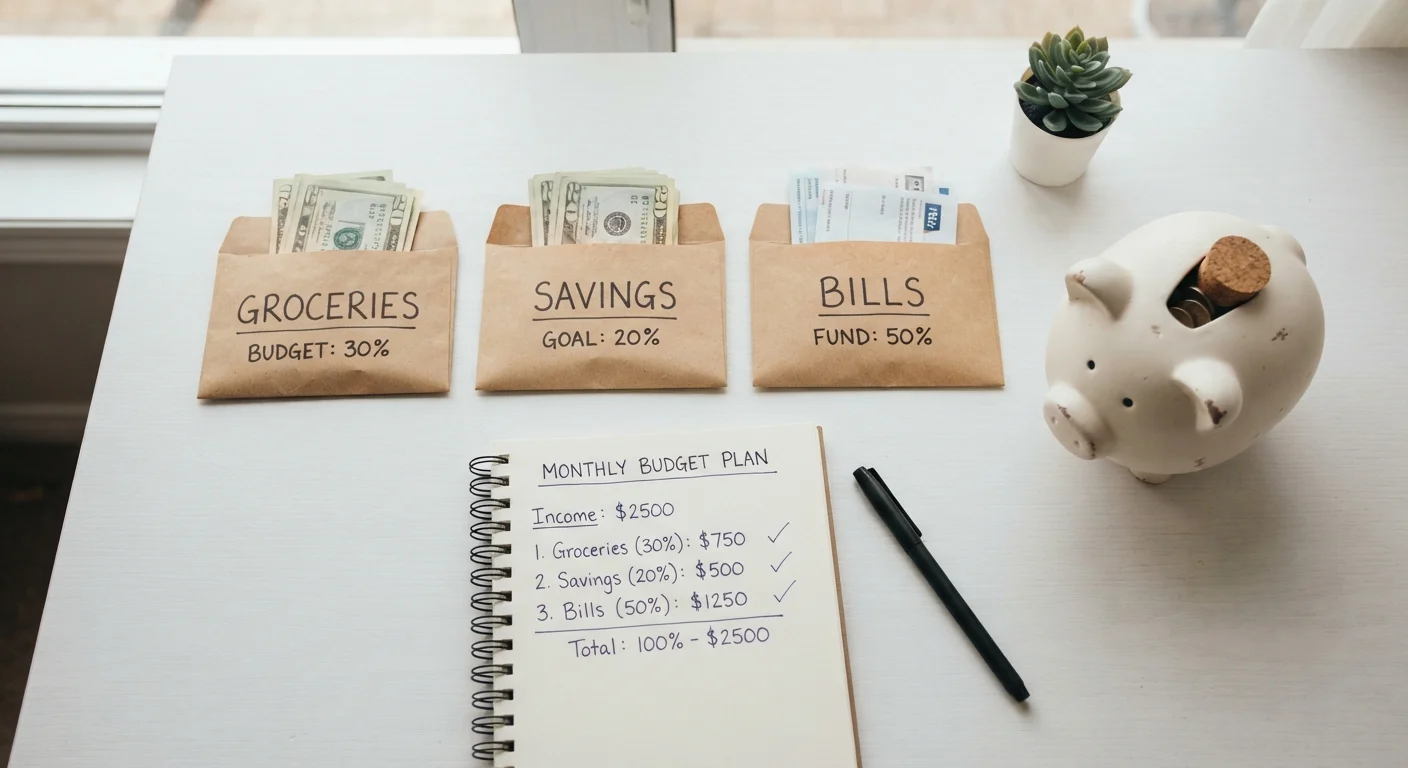
Photo credit: SkripTee.com | Search. Explore. Learn.
In this article
A clear breakdown of three common budgeting approaches — what they involve, how they work, and who each one tends to suit.
Key Takeaways
- The envelope method uses physical or digital cash limits per spending category to prevent overspending.
- Percentage-based budgeting allocates fixed portions of income to broad spending buckets like needs, wants, and savings.
- Pay-yourself-first prioritizes saving by automating transfers before discretionary spending begins.
- No single method works for everyone - the best budget is one you can consistently follow.
- Combining elements of multiple methods is a legitimate and often effective strategy.
Why the Method You Choose Matters
A budget is only useful if you stick to it, and sticking to it depends largely on whether the structure fits how you actually think about money. Three methods - envelope budgeting, percentage-based budgeting, and pay-yourself-first - each take a fundamentally different approach to the same goal: making sure your spending aligns with your priorities.
If you're new to budgeting entirely, the foundational concepts behind personal budgeting are worth reviewing before diving into any specific method. For everyone else, here's a plain-language breakdown of how each approach works and who it tends to serve well.
The Envelope Method: Spend Until the Cash Runs Out
Originally a cash-based system, the envelope method involves dividing your monthly spending money into labeled categories - groceries, dining, gas, entertainment - and funding each with a set amount. Once a category's envelope is empty, spending in that area stops until the next budget period.
The constraint is the point. Because the money is physically (or digitally) separate, it's harder to rationalize overspending in one area by mentally borrowing from another. This method builds awareness of category-level habits quickly.
Digital envelopes replicate this logic without cash, using budgeting apps or separate sub-accounts to create virtual spending pools. For a closer look at how cash-based budgeting holds up in a world of card payments and subscriptions, see cash budgeting in a card-first world.
Works well for: People who frequently overspend in specific categories and want a clear, visible stop point. It requires more setup and ongoing maintenance than other methods.
Making Envelopes Work Digitally
If carrying cash feels impractical, many budgeting apps replicate envelope logic using virtual categories or sub-accounts. The key is treating each digital envelope as a genuine hard limit - not a soft guideline. Checking balances before spending, not after, preserves the method's core benefit.
Percentage-Based Budgeting: Allocate by Proportion
Percentage-based budgeting assigns fixed slices of take-home income to broad categories. The most widely cited version is the 50/30/20 framework: roughly 50% toward needs (housing, utilities, groceries), 30% toward wants (dining, entertainment, hobbies), and 20% toward savings and debt repayment. The specific percentages can be adjusted to fit your situation.
The appeal is simplicity. You don't track every purchase - you monitor whether you're staying within each bucket at the end of the month. This lower administrative burden makes it accessible for people who find granular tracking discouraging.
The tradeoff is precision. If your fixed expenses are high relative to your income, a 50% needs ceiling may be unrealistic. The percentages are a starting framework, not a universal prescription. For a side-by-side look at how this approach compares to another structured method, see the 50/30/20 rule vs. zero-based budgeting.
Works well for: Those who want a structured framework without detailed tracking, and whose income and expenses are relatively predictable.
| Envelope Method | Percentage-Based | Pay-Yourself-First | |
|---|---|---|---|
| Core mechanism | Hard spending limits per category | Fixed income proportions per bucket | Savings transferred before spending |
| Tracking effort | High - category-level monitoring | Medium - bucket-level monitoring | Low - automate and spend remainder |
| Best addresses | Category overspending | Lack of overall structure | Failure to save consistently |
| Flexibility | Low - hard limits by design | Moderate - percentages adjustable | High - no spending restrictions |
| Works with variable income | Yes, but resets each period | Partially - ratios stay constant | Yes - save a percentage, not a fixed sum |
| Typical starting complexity | Higher - requires category setup | Lower - three broad buckets | Lowest - one automatic transfer |
Pay-Yourself-First: Save Before You Spend
Pay-yourself-first flips the conventional budgeting sequence. Instead of saving whatever remains after expenses, you transfer a set amount to savings or investments immediately when income arrives - then live on the rest. The logic is behavioral: money that's already moved is psychologically easier to leave alone.
This method pairs naturally with automation. Setting up an automatic transfer to a savings account on payday removes the decision entirely. The relationship between emergency funds and your budget illustrates how this kind of automatic saving builds a financial safety net over time.
Pay-yourself-first doesn't provide detailed spending guidance - it simply ensures savings happen consistently. For people who struggle to save but manage day-to-day expenses without major category overruns, this is often enough. If you're also building toward specific predictable costs, sinking funds can work alongside this method.
Works well for: Those whose primary goal is growing savings and who struggle to save under a spend-first approach. Works less well if day-to-day spending still needs structural guidance.
Putting It Into Practice
Choosing a method is step one; implementing it effectively is step two. A few practical notes apply to all three approaches:
- Start with accurate numbers. Any method requires knowing your actual take-home income and your real average monthly expenses. Estimates tend to understate discretionary spending.
- Hybrid approaches are valid. Many people combine pay-yourself-first with either envelope or percentage-based structures for day-to-day spending. There's no rule requiring you to use only one framework.
- Track your progress. Whether you use a spreadsheet or an app matters less than consistency. See spending tracker vs. budget spreadsheet for guidance on picking the right tool.
- Adjust as life changes. Income shifts, new expenses, and changing goals all warrant a budget review. A static budget stops being useful quickly.
For a step-by-step walkthrough of building out whichever method you choose, setting up your first monthly budget provides a practical starting framework.
This article is for general informational and educational purposes only and does not constitute personalized financial advice. Consult a qualified financial professional for guidance tailored to your individual circumstances.

Author
Finance Editorial Team
Finance Editorial Team is the collective byline for our editorial team and contributor network. Articles published under this byline or an editorial pen name are researched, written, and reviewed according to our editorial standards for clarity, consistency, and independence before publication.
View all articles →