
Spending Tracker vs. Budget Spreadsheet: Which Approach Suits You?
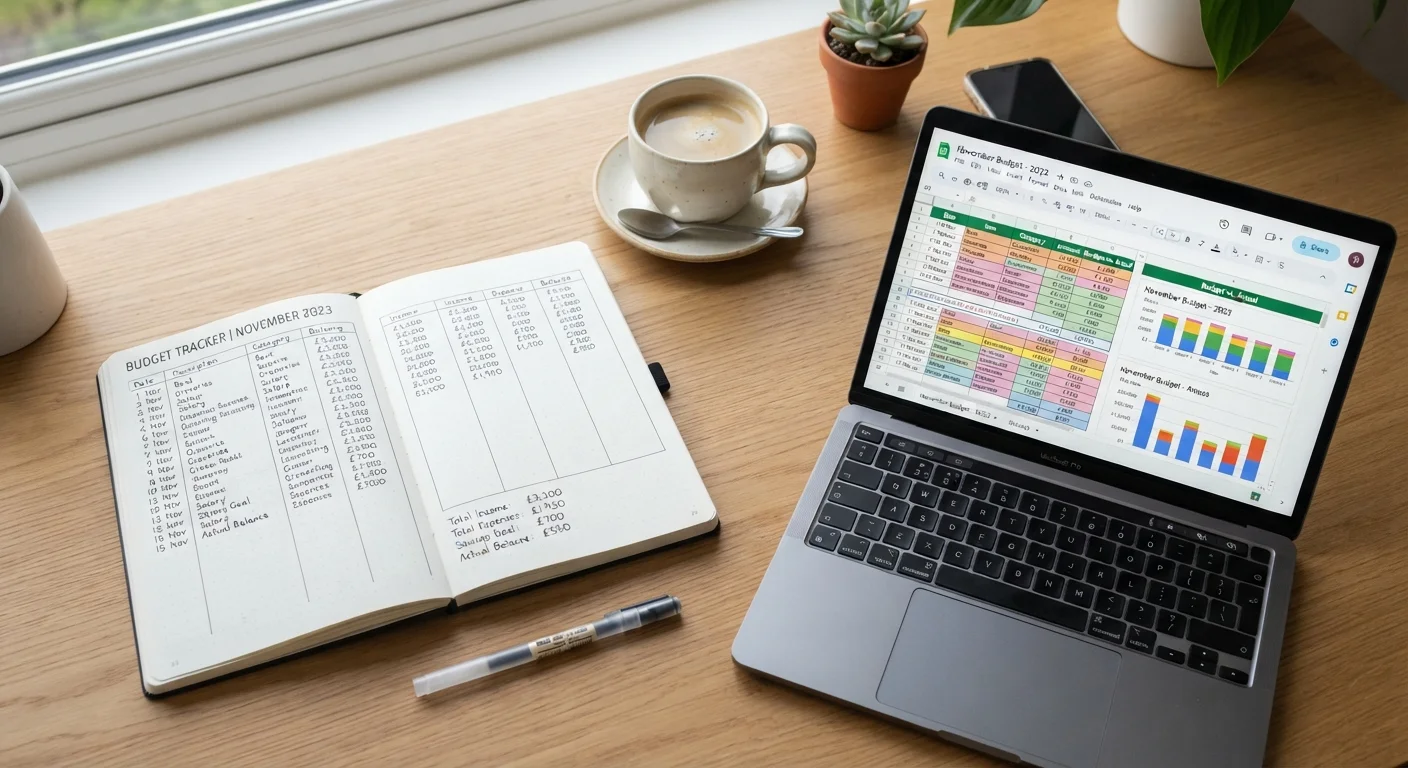
Photo credit: SkripTee.com | Search. Explore. Learn.
In this article
Logging spending after the fact and planning it in advance serve different purposes. Here's how to decide which method — or combination — fits your habits.
Key Takeaways
- A spending tracker records transactions after they happen; a budget spreadsheet plans allocations before spending occurs.
- Trackers reveal patterns in existing habits; spreadsheets impose structure and spending limits going forward.
- Neither tool guarantees financial results - consistency in using whichever method you choose matters most.
- Many people benefit from using both together: tracking to gather data, then budgeting to act on it.
- Your choice should reflect your personality, income predictability, and how much financial detail you can realistically manage.
What Each Approach Actually Does
A spending tracker is a log - digital or paper - that records every transaction after it occurs. You note what you spent, where, and in what category. Over time, this produces a factual picture of your habits. It answers the question: where did my money go?
A budget spreadsheet works in the opposite direction. You start at the beginning of the month, list expected income, and allocate amounts to categories - rent, groceries, transportation, savings - before any money moves. It answers the question: where should my money go?
Understanding this distinction matters because the two tools solve different problems. If you don't know your spending patterns yet, a tracker gives you the data you need. If you already know your patterns and want to change them, a spreadsheet gives you the structure. See how to map your monthly spending categories for a practical starting point if you're in the discovery phase.
| Criterion | Spending Tracker | Budget Spreadsheet |
|---|---|---|
| Primary function | Records past spending | Plans future spending |
| Best starting point | No prior data needed | Requires baseline spending data |
| Behavioral impact | Builds awareness | Enforces spending limits |
| Setup effort | Low - log as you go | Moderate - categories and formulas |
| Suits irregular income | Yes - flexible by nature | Harder - plan changes monthly |
| Goal tracking | Indirect - via spending patterns | Direct - dedicated goal rows |
| Risk of failure | Tracking fatigue over time | Unrealistic categories from the start |
The Case for a Spending Tracker
Spending trackers shine in two situations: when you're starting out and when your income is unpredictable. Because you're recording reality rather than projecting it, the data is inherently accurate. Over two or three months, patterns emerge - subscriptions you forgot about, dining costs higher than you assumed, utility bills that spike seasonally.
That pattern recognition is genuinely valuable. The Consumer Financial Protection Bureau (CFPB) notes that awareness of spending habits is a foundational step in improving financial health. You can't realistically plan without accurate baseline numbers.
The limitation is that tracking alone doesn't change behavior. Recording a $200 overspend on takeout doesn't prevent next month's repeat. A tracker is a mirror, not a guardrail.
33%
Americans with a written household budget
According to Gallup polling, roughly one in three U.S. adults reports maintaining a detailed household budget - highlighting how many people manage money without a formal plan.
60-90 days
Recommended tracking period before budgeting
Personal finance educators commonly suggest tracking spending for two to three months before setting budget categories, to ensure allocations reflect real behavior rather than estimates.
If your income varies - freelance work, hourly wages, commission-based pay - a flexible tracker is often more sustainable than a rigid monthly budget that becomes obsolete the moment your paycheck changes. For more context on managing variable costs within any system, see fixed vs. variable expenses.
The Case for a Budget Spreadsheet
A budget spreadsheet is proactive by design. Before the month begins, you decide how much goes to each category. This pre-commitment is psychologically powerful: research in behavioral economics suggests that planning spending in advance reduces impulsive decisions because you've already given yourself a defined limit.
Spreadsheets also make goal-tracking concrete. If you're building an emergency fund or paying down debt, you can create a dedicated row, assign a monthly contribution, and watch the number move. That visibility tends to sustain motivation in a way that after-the-fact tracking often doesn't.
The tradeoff is setup time and maintenance. A well-structured spreadsheet takes initial effort to build - you need accurate income figures and realistic category estimates. If those inputs are based on guesswork, your budget will produce a tidy plan that doesn't reflect real life. That's why many financial educators recommend tracking your spending for at least 60 days before building a formal spreadsheet budget. For a structured walkthrough, setting up your first monthly budget covers the full process step by step.
Spreadsheet budgets also pair well with established frameworks. If you're drawn to percentage-based rules, see how they map to the 50/30/20 rule and zero-based budgeting - two of the most widely used structures you can build directly into a spreadsheet.
Spreadsheets Don't Have to Be Complex
A functional budget spreadsheet can be as simple as three columns: category, planned amount, and actual amount. You don't need advanced formulas or financial software to start. Many people begin with a basic table in any free word-processing or spreadsheet application. Complexity should grow only as your needs do - not as a prerequisite for getting started.
Using Both Together
The most effective approach for many people is sequential: track first, then budget. Spend 60-90 days logging every transaction without judgment. Then use those averages to populate realistic spreadsheet categories. Your grocery budget is no longer a guess - it's based on what you actually spent across three months.
Once your spreadsheet is running, continue light tracking to compare actual versus planned spending. A simple monthly check-in - did I stay within each category? - takes 15-20 minutes and catches overruns before they compound. The monthly budget review checklist offers a structured format for exactly this kind of end-of-month assessment.
If you're exploring other budgeting methods beyond spreadsheets, envelope, percentage, and pay-yourself-first methods each have different strengths depending on how you relate to money and spending limits.
This article is for general informational and educational purposes only and does not constitute personalized financial advice. Consider consulting a qualified financial professional for guidance tailored to your specific situation.

Author
Finance Editorial Team
Finance Editorial Team is the collective byline for our editorial team and contributor network. Articles published under this byline or an editorial pen name are researched, written, and reviewed according to our editorial standards for clarity, consistency, and independence before publication.
View all articles →