
Where Does Your Money Actually Go Each Month?
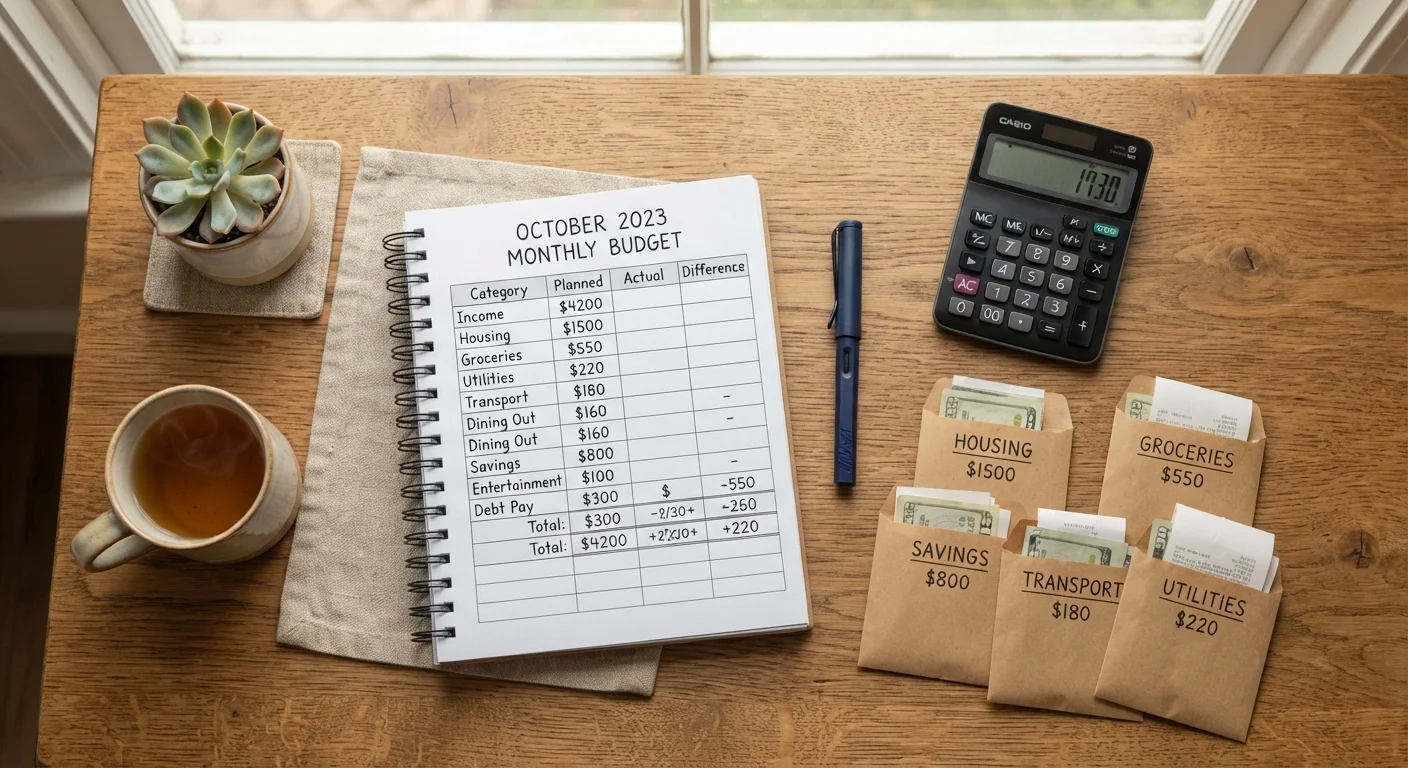
Photo credit: SkripTee.com | Search. Explore. Learn.
In this article
Learn how to map your monthly spending categories clearly, so nothing slips through the cracks in your household budget.
Key Takeaways
- Most household budgets fall into four broad areas: fixed needs, variable needs, discretionary wants, and savings.
- Irregular and annual expenses are among the most commonly missed categories in personal budgets.
- Tracking actual spending for 30 days before building a budget gives you more accurate category amounts.
- The goal of categorizing spending is awareness, not perfection - small adjustments compound over time.
- A monthly review catches category drift before it becomes a financial problem.
The Four Buckets Most Budgets Use
Before you can answer where your money goes, you need a framework for organizing it. Most personal finance approaches organize household spending into four broad buckets:
- Fixed needs: Expenses that stay the same amount each month - rent or mortgage, car payment, insurance premiums, loan minimums.
- Variable needs: Necessary but fluctuating costs - groceries, gas, utilities, out-of-pocket medical bills.
- Discretionary wants: Spending you choose - dining out, streaming services, hobbies, travel.
- Savings and debt repayment: Money directed toward future goals or paying down balances faster than required.
These buckets aren't rigid rules - they're a starting map. The 50/30/20 guideline popularized by personal finance educators loosely mirrors this structure, suggesting roughly half your take-home pay covers needs, 30% goes to wants, and 20% funds savings and debt payoff. Think of it as a benchmark, not a prescription, since housing costs alone vary enormously across U.S. cities.
If you're just starting to organize your finances, our step-by-step guide to setting up your first monthly budget walks through how to translate these buckets into actual numbers.
33%
Average share of income spent on housing
According to the U.S. Bureau of Labor Statistics Consumer Expenditure Survey, housing consistently represents the largest single spending category for American households.
$227/mo
Average U.S. household food spending at home
The BLS Consumer Expenditure Survey tracks grocery spending separately from food away from home, which averaged an additional $166 per month per household.
~$300
Estimated average monthly subscription spending
Consumer research has found that people tend to significantly underestimate their total subscription costs when asked to recall them from memory.
The Spending Categories That Slip Through the Cracks
The most common budget failure isn't overspending on obvious things - it's forgetting the irregular ones. These fall into a few predictable patterns:
Annual and Semi-Annual Bills
Car registration, homeowner's or renter's insurance, professional memberships, and software renewals all hit infrequently but can cost hundreds of dollars. The fix is straightforward: add up what you pay annually, divide by 12, and include that figure as a monthly category called something like "irregular expenses" or "sinking fund."
Lifestyle Creep in Subscription Categories
Streaming services, gym memberships, cloud storage plans, and meal-kit subscriptions each seem minor, but collectively they can quietly consume $100 to $200 or more per month. A line item labeled "subscriptions" makes the total visible and keeps it from hiding inside broader categories.
Personal and Social Spending
Gifts, birthday dinners, and contributions to group activities often go untracked because each individual instance feels small. Grouping them together under a "personal/social" category for a month or two usually surprises people.
For a deeper look at which costs tend to catch households off guard, see our article on hidden costs that quietly derail household budgets.
Build a Sinking Fund for Irregular Costs
Total up every irregular expense you anticipate for the year - annual subscriptions, registration fees, holiday gifts, seasonal costs. Divide the total by 12 and move that amount to a dedicated savings bucket each month. When the expense arrives, the money is already there and your monthly budget stays intact.
How to Map Your Actual Spending in 30 Days
Estimates are less reliable than evidence. The most accurate way to build your spending categories is to track real transactions for one full month before deciding on any amounts. Here's a practical approach:
- Gather statements: Download or print 30 days of bank and credit card transactions. Include any cash spending you can recall.
- Label every line: Assign each transaction to a category. Don't overthink the labels - consistency matters more than perfection.
- Total each category: Add up what you actually spent. The totals often differ significantly from what people estimate.
- Identify surprises: One or two categories almost always contain more than expected. Those are your starting points for adjustment.
Many banking apps now auto-categorize transactions, which speeds this step up. Just verify the labels - apps frequently miscategorize online purchases or restaurants as general retail.
Once you have your real numbers, you can make an informed decision about which tools will help you maintain the habit. Our comparison of spending tracker vs. budget spreadsheet approaches can help you decide what fits your style.
“A budget is telling your money where to go instead of wondering where it went.”
— Dave Ramsey, Personal finance author and radio host
This article is for general informational purposes only and does not constitute personalized financial advice. Consider consulting a qualified financial professional for guidance tailored to your specific situation.
Frequently Asked Questions

Author
Finance Editorial Team
Finance Editorial Team is the collective byline for our editorial team and contributor network. Articles published under this byline or an editorial pen name are researched, written, and reviewed according to our editorial standards for clarity, consistency, and independence before publication.
View all articles →