
Air Filters, Spark Plugs, and Belts: The Overlooked Items on Service Schedules
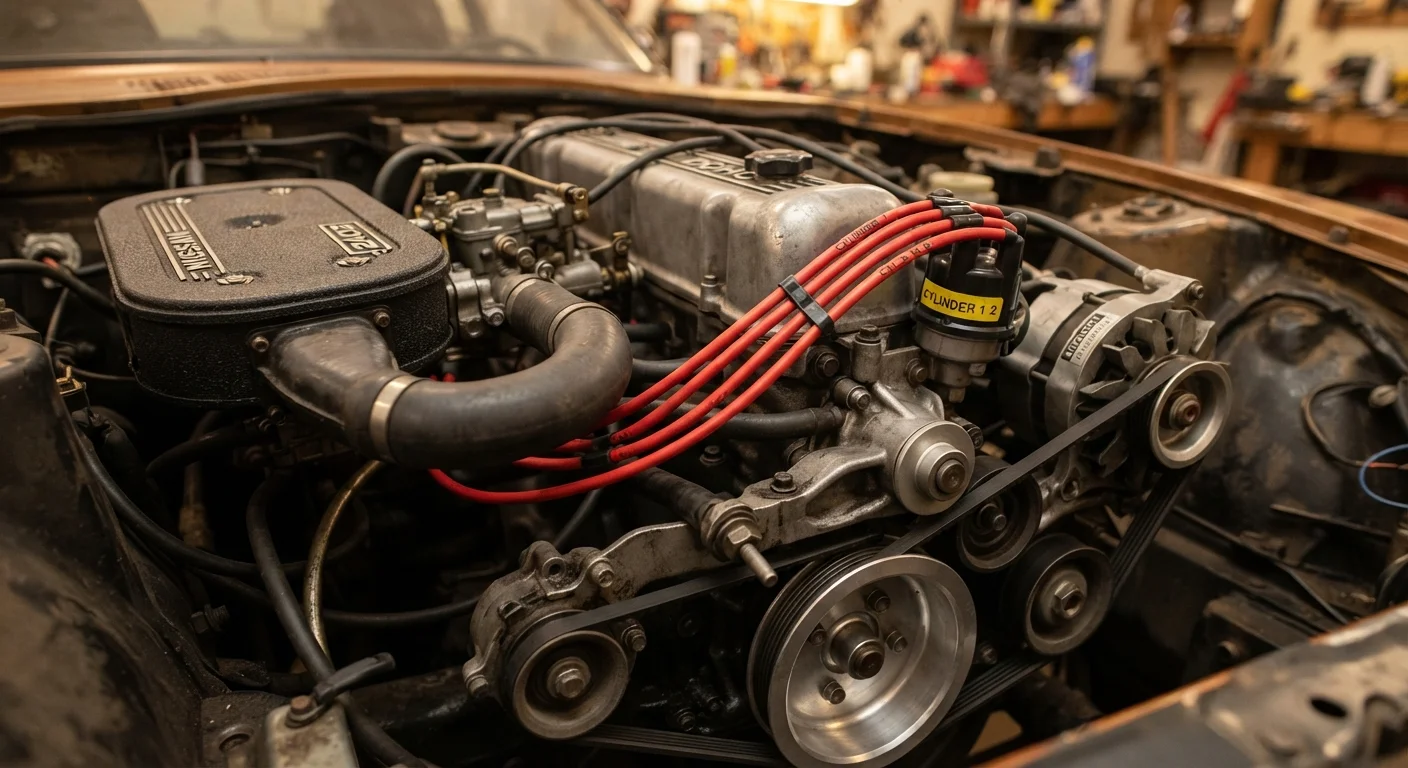
Photo credit: SkripTee.com | Search. Explore. Learn.
In this article
These components rarely make headlines until they fail. Here's what each one does, how to spot wear, and why they appear on manufacturer service intervals.
Key Takeaways
- Air filters, spark plugs, and belts each have manufacturer-specified replacement intervals that vary by vehicle and driving conditions.
- Neglecting these parts rarely triggers a warning light, making them easy to overlook until a failure occurs.
- Catching wear early on these components can prevent significantly more expensive downstream repairs.
- Your owner's manual remains the most reliable source for your vehicle's specific service intervals and specifications.
The Parts That Fail Quietly
Oil changes and tire rotations dominate most conversations about routine maintenance - and for good reason. But manufacturer service schedules include a longer list of components that wear gradually and fail without dramatic warning. Air filters, spark plugs, and drive belts sit in that category: critical to how the engine breathes, fires, and powers its accessories, yet easy to defer because they rarely announce their decline with a dashboard light or obvious symptom.
Preventive maintenance works precisely because it targets components before failure, not after. Each item below has a specific role in engine operation and a manufacturer-defined service window. Understanding what each one does - and what wear looks like - helps you have a more informed conversation at your next service appointment.
Intervals Vary by Vehicle and Conditions
The mileage figures referenced throughout this article are general ranges drawn from common manufacturer guidance - not universal rules. Your specific vehicle may have shorter or longer intervals depending on its engine design, the climate you drive in, and whether your use qualifies as 'severe duty' (frequent short trips, towing, stop-and-go traffic, or dusty environments). Always consult your owner's manual for the authoritative schedule. See how to read your owner's manual for help interpreting those specifications.
Six Components Worth Knowing
Engine Air Filter
The engine air filter is a pleated paper or synthetic element that sits between the outside air and your engine's intake. Its job is straightforward: trap dirt, dust, pollen, and debris before they can enter the combustion chamber and wear cylinder walls or foul sensors.
A clogged filter restricts airflow, which forces the engine to work harder to draw in the air it needs. This can reduce fuel economy, dull throttle response, and in severe cases cause the engine to run rich - meaning it burns more fuel than necessary relative to the air available.
Most manufacturers suggest inspecting the air filter every 15,000-30,000 miles and replacing it somewhere in that range, though driving in dusty or unpaved conditions can cut that interval considerably. The filter itself is usually visible once you open the air box under the hood. If it looks noticeably gray or packed with debris rather than the light tan or white of a new filter, it's time to swap it.
A clogged air filter forces the engine to work harder and can quietly erode fuel economy.
Cabin Air Filter
Often confused with the engine air filter, the cabin air filter serves an entirely different purpose: it cleans the air flowing through the heating, ventilation, and air-conditioning (HVAC) system into the passenger compartment. It captures dust, pollen, exhaust particulates, and other airborne contaminants.
A restricted cabin filter reduces airflow from your vents, which makes the HVAC system less effective and can strain the blower motor over time. Drivers with allergies may notice more symptoms when the cabin filter is overdue. Replacement intervals typically fall between 15,000 and 25,000 miles, though this varies.
Cabin filters are often located behind the glove box or under the dashboard and are generally straightforward to access. Because this service is sometimes omitted from basic oil change packages, it's worth confirming it's included - or asking a mechanic to check it - at each visit.
A neglected cabin filter strains your HVAC system and delivers noticeably weaker airflow to the passenger cabin.
Spark Plugs
Spark plugs ignite the air-fuel mixture inside each cylinder. A small electrical arc jumps the gap at the plug's tip with precise timing, and that controlled explosion drives the pistons. When plugs wear, the gap widens, the arc becomes inconsistent, and combustion falters.
Worn spark plugs commonly cause misfires (a brief hesitation or stumble, sometimes accompanied by a flashing check-engine light), rough idling, sluggish acceleration, and reduced fuel efficiency. Electrode wear happens gradually, so the decline in performance is often subtle until the plugs are significantly degraded.
Conventional copper plugs may need replacement every 30,000 miles, while extended-life iridium or platinum plugs can last 60,000-100,000 miles or more depending on the manufacturer's specification. Always cross-reference the correct heat range and gap specification in your owner's manual or a verified parts reference - installing plugs with the wrong specification can cause more harm than the worn originals.
Worn spark plugs cause misfires and poor fuel economy long before most drivers notice anything is wrong.
Serpentine Belt
The serpentine belt (also called the drive belt) is a single continuous loop of reinforced rubber that winds around pulleys to drive several engine accessories simultaneously - typically the alternator, power steering pump, air conditioning compressor, and water pump. Because it handles so many systems at once, a failure can leave you without charging power, steering assistance, or cooling in an instant.
Over time, the belt's rubber compound dries, hardens, and develops small cracks. You may hear a squealing or chirping noise from the engine bay, particularly on cold starts or when accessories are under load. Replacement intervals typically range from 60,000 to 100,000 miles, though the belt should be inspected visually at regular services for cracking, fraying, or glazing.
When a serpentine belt is replaced, mechanics will commonly also inspect the tensioner and idler pulleys that keep the belt at correct tension. If those components show wear, replacing them at the same service visit avoids a return trip shortly after.
When a serpentine belt breaks, it takes multiple engine systems down with it - often without any prior warning.
Timing Belt (Where Applicable)
The timing belt is one of the most consequential maintenance items on vehicles equipped with one. Unlike the serpentine belt, the timing belt synchronizes the rotation of the crankshaft and camshaft, ensuring valves open and close in precise coordination with the pistons. If it fails while the engine is running, the result in many engines is catastrophic internal damage - bent valves, damaged pistons, or a destroyed cylinder head.
Not all vehicles use a timing belt. Many modern engines use a timing chain instead, which is lubricated by engine oil and generally does not have a scheduled replacement interval under normal conditions. Your owner's manual will clarify which your vehicle has.
For vehicles with a timing belt, replacement intervals are typically between 60,000 and 105,000 miles. Because the water pump is often driven by the timing belt, many mechanics recommend replacing the water pump at the same time - saving significant labor cost if the pump were to fail independently later.
A timing belt failure in an interference engine can cause immediate and severe internal engine damage.
PCV Valve
The positive crankcase ventilation (PCV) valve is a small, inexpensive component that vents gases from inside the engine's crankcase back into the intake manifold to be burned rather than released into the atmosphere. It also helps maintain proper crankcase pressure.
A stuck-open PCV valve can cause rough idling and increased oil consumption. A stuck-closed valve can allow pressure to build in the crankcase, potentially forcing oil past seals and gaskets. Either failure mode is disproportionate to the size and cost of the part itself.
Many manufacturers don't assign a hard mileage interval to the PCV valve - instead recommending periodic inspection. In practice, it's often checked or replaced during major tune-ups. The valve typically rattles when shaken if it's functioning correctly; a valve that doesn't rattle or shows heavy sludge buildup should be replaced.
A failing PCV valve can force oil past engine seals - a small part with outsized consequences.
Bundle Services to Save on Labor
Several of these components - particularly the timing belt, water pump, and tensioner - share significant labor overlap. If your vehicle is due for a timing belt replacement, ask your mechanic which adjacent components are accessible at the same time. Addressing them together often costs meaningfully less in total labor than returning for separate visits.
Making These Services Work for You
None of these components are exotic or unusually expensive on their own. What makes them costly is deferring them until a failure cascades into a larger repair - a worn timing belt that destroys an engine, or a degraded serpentine belt that strands you mid-commute. The pattern described in habits that quietly shorten a car's lifespan applies here too: neglect compounds.
Tracking when each of these services was last performed is straightforward if you keep consistent records. A complete service history helps you and any mechanic quickly identify what's due - and provides documentation of care that matters if you ever sell the vehicle. If you're newer to vehicle ownership, building these habits early makes all of this significantly easier to manage over time.

Author
Autos Editorial Team
Autos Editorial Team is the collective byline for our editorial team and contributor network. Articles published under this byline or an editorial pen name are researched, written, and reviewed according to our editorial standards for clarity, consistency, and independence before publication.
View all articles →