
Added Sugar vs. Natural Sugar: Why the Source Changes the Conversation
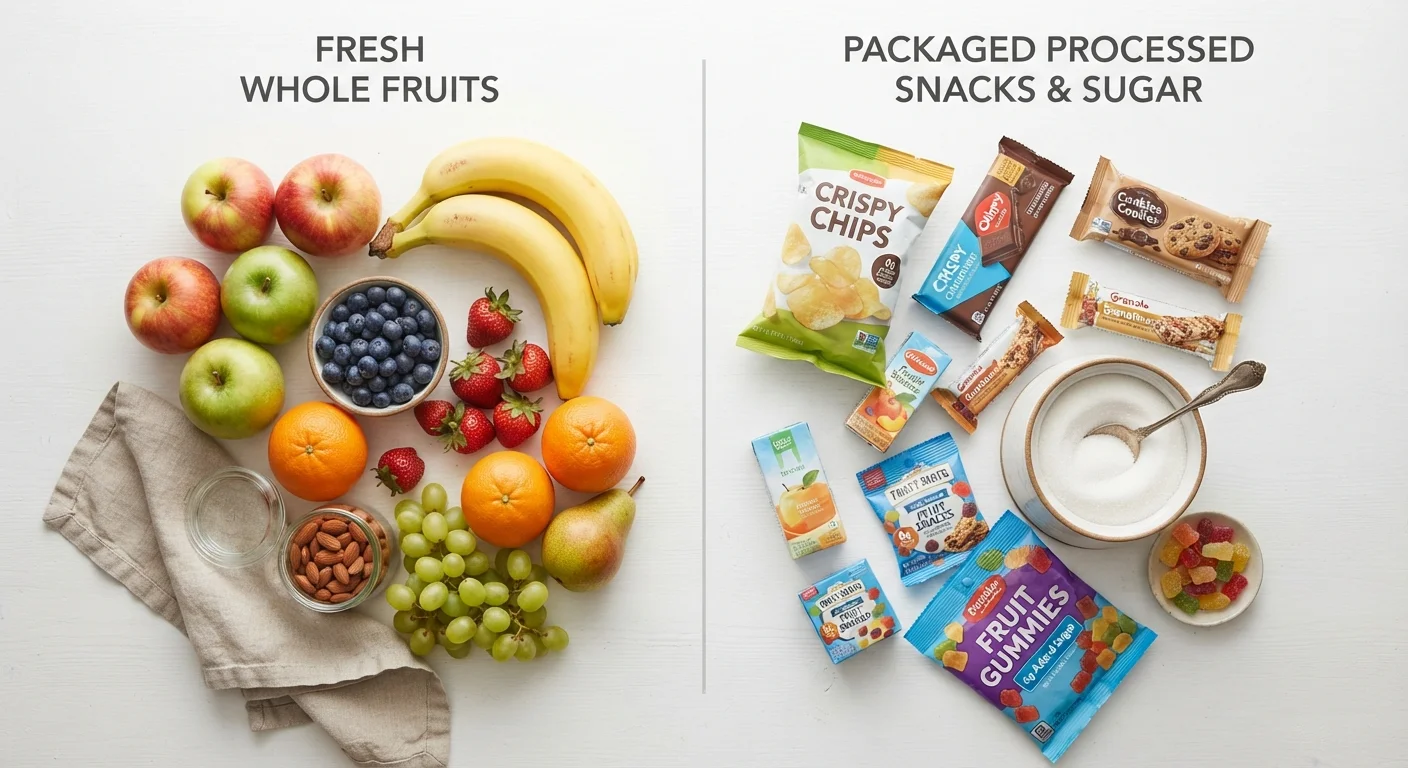
Photo credit: SkripTee.com | Search. Explore. Learn.
In this article
Clarify the nutritional and metabolic distinctions between sugars naturally present in food and those added during processing.
Key Takeaways
- Natural sugars occur within whole foods alongside fiber, vitamins, and minerals that affect how the body processes them.
- Added sugars are incorporated during processing or cooking, providing calories without accompanying nutritional benefits.
- The 2020-2025 Dietary Guidelines for Americans recommend limiting added sugars to less than 10% of daily calories.
- Food labels in the U.S. are now required to list added sugars separately, making it easier to monitor intake.
- Fiber in whole foods slows sugar absorption, moderating blood glucose response in a way isolated added sugars cannot.
The Core Distinction: Context Is Everything
Sugar is sugar at the molecular level - a teaspoon of sucrose from a mango and a teaspoon from a candy bar deliver the same chemical compound. But nutrition science tells us that framing is deeply incomplete. What surrounds that sugar when you eat it shapes how your body responds to it entirely.
Natural sugars exist within the cellular structure of whole foods. Fructose in an apple, lactose in milk, and glucose in a sweet potato all arrive accompanied by fiber, protein, water, vitamins, and minerals. These co-passengers aren't incidental - they directly influence digestion rate, satiety signals, and nutrient absorption. The fiber matrix in whole fruit, for instance, slows the rate at which sugar enters the bloodstream, producing a more gradual glucose response. See our glycaemic index explainer for a deeper look at how that dynamic works.
Added sugars, by contrast, are sugars and syrups incorporated into foods during processing, preparation, or manufacturing. They include sucrose, high-fructose corn syrup, honey, agave nectar, fruit juice concentrates, and dozens of other caloric sweeteners. When added to food, these sugars typically arrive stripped of the fiber and micronutrient context that moderates absorption in whole foods.
| Criterion | Natural Sugar | Added Sugar |
|---|---|---|
| Origin | Inherent to whole food | Added during processing or prep |
| Common sources | Fruit, dairy, vegetables | Soft drinks, baked goods, condiments |
| Nutrient co-passengers | Fiber, vitamins, minerals, water | Few to none |
| Effect on blood glucose | Moderated by fiber matrix | More rapid absorption typical |
| Covered by dietary guidelines cap | No | Yes (< 10% daily calories) |
| Listed separately on U.S. labels | No | Yes (Added Sugars line) |
| Associated health concern | Low when from whole foods | Higher at elevated intake levels |
What the Research and Guidelines Actually Say
Public health guidance has become precise about which type of sugar warrants concern. The 2020-2025 Dietary Guidelines for Americans specifically target added sugars - not total sugars - recommending that they account for less than 10% of total daily caloric intake. This distinction is deliberate: the evidence linking high added sugar consumption to weight gain, cardiovascular risk factors, and metabolic disruption is substantially stronger than evidence implicating naturally occurring sugars in whole foods.
< 10%
Recommended daily calorie cap for added sugars
Per the 2020-2025 Dietary Guidelines for Americans, issued by the U.S. Departments of Agriculture and Health and Human Services.
17 tsp
Average daily added sugar intake in the U.S.
Federal dietary survey data suggests many American adults consume well above the recommended maximum of about 12 teaspoons per day on a 2,000-calorie diet.
60+
Names for added sugar on ingredient lists
The Sugar Science project at the University of California San Francisco has identified over 60 names manufacturers use for added sugars on food labels.
The U.S. Food and Drug Administration's updated Nutrition Facts label, which most manufacturers now use, lists both Total Sugars and Added Sugars separately. This reflects a regulatory acknowledgment that the two categories carry different nutritional implications. For guidance on decoding the full label, our nutrition terms glossary covers key definitions in plain language.
It's worth noting that not all natural sugar sources are nutritionally equivalent, either. Whole fruit and low-fat dairy offer genuine nutritional density. Fruit juice - even 100% juice - removes much of the fiber found in whole fruit, blunting some of those metabolic advantages while concentrating the sugar. Understanding these gradations matters for building a well-rounded picture. For a useful parallel, consider how grain processing changes nutritional value - the same principle of nutrient stripping applies.
A Note on 'Natural' Sweeteners
Honey, maple syrup, and agave nectar are often marketed as healthier alternatives to refined sugar, but from a regulatory and nutritional standpoint they are classified as added sugars when incorporated into foods. Their micronutrient content is minimal at typical serving sizes. The 'natural' label on a sweetener does not exempt it from the added sugar category on a nutrition label or in dietary guidance.
Practical Implications for Everyday Eating
Understanding the distinction empowers smarter food choices without requiring elimination of entire food groups. A few grounded principles help.
- Whole fruit is not the enemy. Concerns about sugar intake from public health bodies are directed at added sugars, not the naturally occurring sugars in intact fruit. Nutrition science consistently supports fruit consumption as part of a healthy dietary pattern.
- Ingredient lists reveal hidden added sugars. Manufacturers use more than 60 different names for added sugar on ingredient lists - including evaporated cane juice, malt syrup, dextrose, and maltose. The Nutrition Facts panel's dedicated Added Sugars line offers a clearer shortcut.
- Sweetened beverages are a primary source. Soft drinks, sweetened coffees, energy drinks, and flavored waters collectively represent one of the largest contributors to added sugar intake in the U.S. diet, according to federal dietary survey data.
- Processing degree matters. The more processed a food is, the more likely it contains added sugars, often alongside refined grains and sodium. This is consistent with the broader picture explored in our guide to separating nutrition evidence from trends.
This article provides general nutritional information for educational purposes and is not a substitute for personalized dietary advice from a registered dietitian or qualified healthcare professional.

Author
Food Editorial Team
Food Editorial Team is the collective byline for our editorial team and contributor network. Articles published under this byline or an editorial pen name are researched, written, and reviewed according to our editorial standards for clarity, consistency, and independence before publication.
View all articles →