
Cash Budgeting in a Card-First World
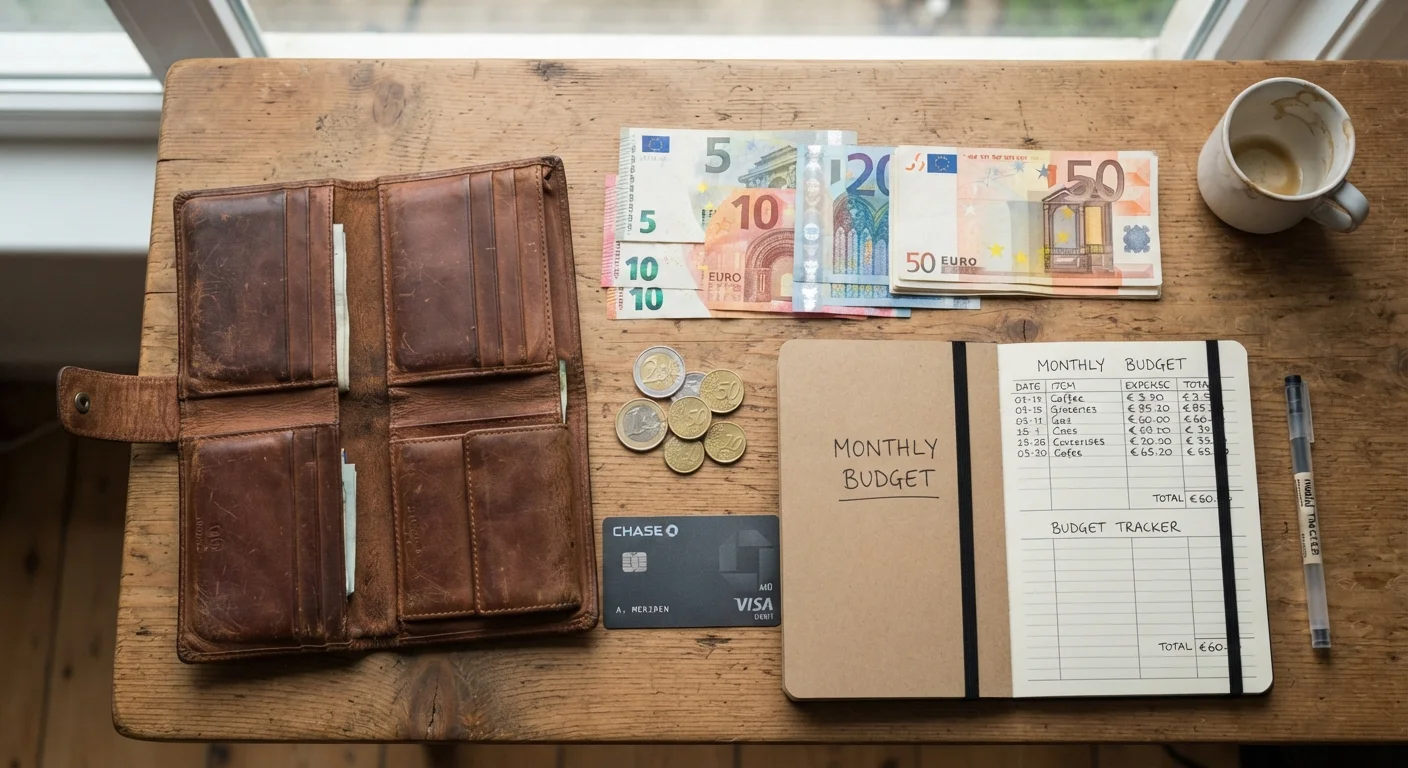
Photo credit: SkripTee.com | Search. Explore. Learn.
In this article
Physical cash budgeting has real advantages — and real drawbacks — in an era of tap-to-pay and automatic billing. A balanced look at both sides.
Key Takeaways
- Using physical cash makes spending feel more tangible, which can help reduce impulse purchases.
- Cash budgeting is incompatible with automatic billing, subscriptions, and online transactions.
- The envelope method is the most common cash-based budgeting system for discretionary spending.
- Lost or stolen cash has no fraud protection, unlike most debit and credit cards.
- A hybrid approach - cash for variable categories, cards for fixed bills - works for many households.
Spending feels more real, curbing impulse purchases
Research in consumer behavior - including studies published in the Journal of Consumer Research - suggests that paying with physical cash produces a measurable 'pain of paying' that card transactions do not, making people more deliberate about each purchase.
Hard spending limits enforced automatically
An empty envelope creates a firm, self-imposed cutoff with no override option. This removes the in-the-moment decision about whether to exceed a budget, which is where digital payment methods make it easiest to slip.
No debt accumulation on variable spending
Because you can only spend money you already have in hand, cash envelopes make it structurally impossible to go into credit card debt on the categories they cover.
No transaction fees or interest on purchases
Cash carries no swipe fees, interest charges, or deferred billing - you pay the face price and nothing more, which is particularly relevant for high-frequency small purchases.
Simple to understand and explain to others
Envelope-based cash budgeting requires no app, account setup, or financial literacy beyond basic arithmetic - making it accessible and easy to align on within a household.
Incompatible with online and contactless payments
A growing share of everyday transactions - online shopping, subscription services, mobile-order apps, and tap-to-pay terminals - cannot accept physical cash, making a cash-only approach increasingly difficult to maintain in practice.
No fraud protection if cash is lost or stolen
Unlike federally regulated debit and credit cards, which offer liability limits and dispute resolution under the Electronic Fund Transfer Act and the Fair Credit Billing Act respectively, lost or stolen cash is almost never recoverable.
Inconvenient to carry and manage physically
Maintaining multiple labeled envelopes, making regular ATM withdrawals, and tracking remaining balances by hand adds logistical effort that many people find unsustainable over time.
Misses rewards and purchase protections on cards
Many credit and debit cards offer cash-back rewards, extended warranties, or purchase protection on eligible transactions - benefits that are simply unavailable when paying with cash.
Difficult to budget for irregular or large expenses
Sinking funds (set aside for predictable but infrequent costs like car repairs or annual insurance premiums) are awkward to manage in physical envelopes and are generally better handled in a dedicated savings account.
Leaves no automatic spending record
Card and digital payments generate an automatic transaction history that simplifies tracking and tax preparation; with cash, the record-keeping responsibility falls entirely on the individual, and gaps are common.
What Cash Budgeting Actually Means
Cash budgeting means deliberately using physical currency - bills and coins - to fund specific spending categories rather than relying on cards or digital payments for every transaction. The most widely recognized framework is the envelope method: you divide your budgeted cash into labeled envelopes (groceries, dining, entertainment, personal care), spend only what is in each envelope, and stop when the envelope is empty.
This is not the same as avoiding bank accounts or refusing to pay bills electronically. Most people who use a cash budget still pay rent, utilities, and loan payments digitally. The cash component is typically reserved for variable, discretionary spending - the categories where habits are hardest to control. For a fuller picture of how this fits into broader budgeting approaches, see budgeting methods explained.
If you are new to budgeting altogether, personal budgeting from the ground up provides a solid foundation before layering in any specific payment method.
The Real Advantages of Spending in Cash
Cash has a set of genuine, research-supported benefits that digital payments do not fully replicate. Understanding these helps you decide where cash earns its place in your system.
Spending feels more real, curbing impulse purchases
Research in consumer behavior - including studies published in the Journal of Consumer Research - suggests that paying with physical cash produces a measurable 'pain of paying' that card transactions do not, making people more deliberate about each purchase.
Hard spending limits enforced automatically
An empty envelope creates a firm, self-imposed cutoff with no override option. This removes the in-the-moment decision about whether to exceed a budget, which is where digital payment methods make it easiest to slip.
No debt accumulation on variable spending
Because you can only spend money you already have in hand, cash envelopes make it structurally impossible to go into credit card debt on the categories they cover.
No transaction fees or interest on purchases
Cash carries no swipe fees, interest charges, or deferred billing - you pay the face price and nothing more, which is particularly relevant for high-frequency small purchases.
Simple to understand and explain to others
Envelope-based cash budgeting requires no app, account setup, or financial literacy beyond basic arithmetic - making it accessible and easy to align on within a household.
~20%
Share of U.S. in-person transactions made in cash
According to the Federal Reserve's 2023 Diary of Consumer Payment Choice, cash accounted for roughly 20% of all U.S. in-person transactions by number, down from about 31% in 2016.
Higher
Willingness to spend when paying by card vs. cash
Multiple studies in behavioral economics find that consumers consistently spend more - and feel less discomfort doing so - when using cards rather than physical currency for the same purchase.
Beyond the psychological edge, cash also enforces hard limits automatically. There is no overdraft on an envelope - when the money is gone, it is gone. That binary constraint removes the need for willpower in the moment, which is when most discretionary budgets fail.
The Drawbacks You Cannot Ignore
Cash budgeting has meaningful limitations that make it impractical - or even risky - as a standalone system. Weighing these honestly is essential before committing to a cash-heavy approach.
Incompatible with online and contactless payments
A growing share of everyday transactions - online shopping, subscription services, mobile-order apps, and tap-to-pay terminals - cannot accept physical cash, making a cash-only approach increasingly difficult to maintain in practice.
No fraud protection if cash is lost or stolen
Unlike federally regulated debit and credit cards, which offer liability limits and dispute resolution under the Electronic Fund Transfer Act and the Fair Credit Billing Act respectively, lost or stolen cash is almost never recoverable.
Inconvenient to carry and manage physically
Maintaining multiple labeled envelopes, making regular ATM withdrawals, and tracking remaining balances by hand adds logistical effort that many people find unsustainable over time.
Misses rewards and purchase protections on cards
Many credit and debit cards offer cash-back rewards, extended warranties, or purchase protection on eligible transactions - benefits that are simply unavailable when paying with cash.
Difficult to budget for irregular or large expenses
Sinking funds (set aside for predictable but infrequent costs like car repairs or annual insurance premiums) are awkward to manage in physical envelopes and are generally better handled in a dedicated savings account.
Leaves no automatic spending record
Card and digital payments generate an automatic transaction history that simplifies tracking and tax preparation; with cash, the record-keeping responsibility falls entirely on the individual, and gaps are common.
Unfamiliar With Budgeting Terms?
If terms like 'discretionary spending,' 'sinking fund,' or 'fixed expenses' are new to you, it helps to get definitions straight before choosing a payment method. Our key budgeting terms reference explains the most common concepts in plain language. Understanding these distinctions will make it much easier to decide which spending categories belong in a cash envelope and which are better left on autopay.
For households managing a mix of fixed and variable expenses, a spending tracker or budget spreadsheet can complement whichever payment method you use. See spending tracker vs. budget spreadsheet for a side-by-side comparison of those tools.
Building a Practical Hybrid Strategy
Few financial educators today recommend abandoning cards entirely. A more workable approach is to apply cash strategically - to two or three categories where your spending most often goes off-track - while handling fixed and recurring costs digitally.
- Identify your problem categories. Review one to three months of bank or card statements and note where discretionary spending exceeds your intentions most consistently.
- Set a cash envelope for those categories only. Withdraw the allocated amount at the start of each pay period and use that envelope exclusively for those purchases.
- Leave fixed expenses on autopay. Rent, insurance premiums, loan payments, and subscription services are better handled digitally, where records are automatic and payments are never late.
- Track both sides. Use a simple notebook, spreadsheet, or budgeting app to record envelope spending alongside digital transactions. Setting up your first monthly budget walks through how to organize these categories from scratch.
This hybrid model captures the behavioral benefits of cash without the logistical friction of using it for every payment. It also keeps you protected by card fraud safeguards on the larger, less-flexible portions of your budget.
This article is for general informational and educational purposes only and does not constitute personalized financial advice. Consider consulting a qualified financial professional for guidance tailored to your individual circumstances.

Author
Finance Editorial Team
Finance Editorial Team is the collective byline for our editorial team and contributor network. Articles published under this byline or an editorial pen name are researched, written, and reviewed according to our editorial standards for clarity, consistency, and independence before publication.
View all articles →