
Driving With Passengers: How Occupant Dynamics Affect Driver Behaviour
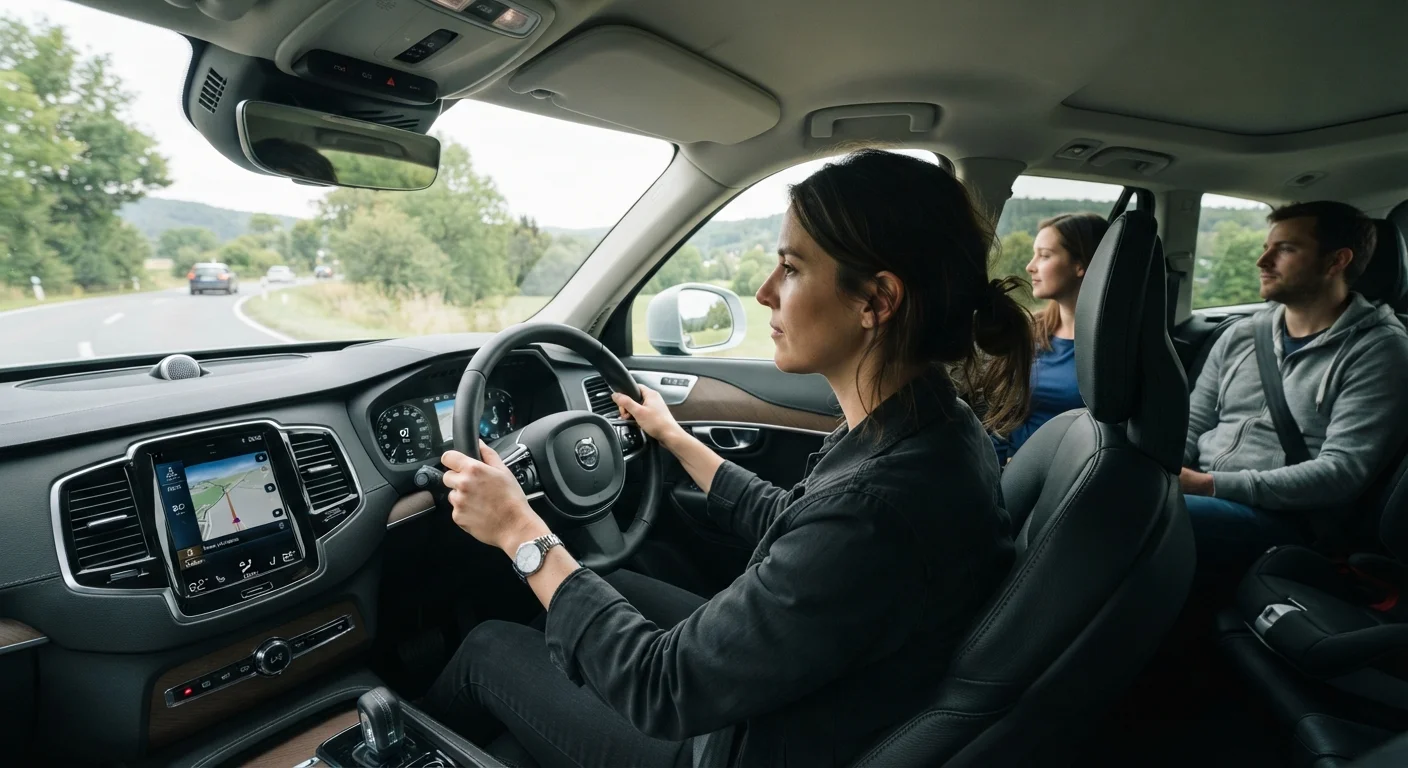
Photo credit: SkripTee.com | Search. Explore. Learn.
In this article
Research shows passengers — especially peers — can meaningfully influence driver decisions. Understand the social factors that shape behaviour behind the wheel.
Key Takeaways
- Passengers - especially peers of similar age - can increase the likelihood of risky driving decisions.
- Young drivers are disproportionately affected by peer passenger influence.
- Not all passenger effects are negative; calm, experienced adults can act as stabilising co-pilots.
- Conversation with passengers is a cognitive distraction, even when the road appears clear.
- Awareness of social pressure is a practical first step toward managing it.
The Social Psychology of the Car Interior
A car is not just a mechanical system - it's a social environment. The moment another person enters the vehicle, the driver is no longer operating in isolation. Social cues, unspoken expectations, and conversational demands all become part of the driving context.
Traffic researchers have documented this effect for decades. The presence of passengers activates a driver's awareness of being observed, which can alter decision-making in ways the driver may not consciously notice. This is sometimes described as an audience effect - behaving differently because someone is watching.
For most experienced adult drivers, this influence is minimal. But for newer drivers, younger drivers, or those in high-pressure social situations, the effect can be substantial. Understanding it is a foundational part of broader safe driving awareness - the kind covered in depth in the complete guide to safe driving in all conditions.
Graduated Licensing and Passenger Restrictions
Many US states address the risk of peer passengers through graduated driver licensing (GDL) laws, which restrict the number of passengers a newly licensed driver may carry during their provisional period. These restrictions are grounded in crash data and are designed to allow new drivers to build skill before managing the added complexity of social dynamics. Check your state's DMV for the specific rules that apply in your jurisdiction.
Peer Passengers and Risk-Taking
The clearest evidence of passenger influence involves young drivers and peer passengers. Multiple large-scale studies - including research drawn from crash data in the United States - have found that teen drivers carrying peer-aged passengers face significantly elevated crash risk compared to when driving alone.
The mechanisms behind this are well understood. Peer passengers may explicitly encourage faster driving or risk-taking. More commonly, though, the effect is implicit: a driver perceives that their peers expect confident, bold behaviour, and adjusts accordingly - speeding slightly, following more closely, or accepting gaps in traffic they would otherwise decline.
2-3×
Crash risk increase for teen drivers with peer passengers
Research from the AAA Foundation for Traffic Safety and similar bodies consistently shows elevated crash rates for young drivers carrying same-age peers.
3+
Passengers linked to highest crash risk increase
Studies indicate crash risk for young drivers rises incrementally with each additional passenger, with three or more peers representing the highest-risk configuration.
This isn't limited to teenagers. Any driver who is socially invested in the impressions of their passengers can experience similar pressure, though the effect diminishes with experience and maturity.
How Passengers Divide Attention
Even without social pressure, passengers introduce cognitive load. Conversation - whether casual or emotionally charged - draws mental resources away from the task of driving. This is one category within the broader landscape of in-car distractions that divide driver attention.
Unlike phone conversations, in-person passenger interactions have a partial self-regulating quality: a present passenger can see traffic conditions and may intuitively pause or stop talking during a complex manoeuvre. Nevertheless, demanding conversations - especially arguments, emotionally intense exchanges, or interactions requiring the driver to turn their head - carry real distraction risk.
Drivers managing fatigue or navigating challenging conditions like night driving may find that even routine passenger conversation tips the balance of their attention in a meaningful way.
Set the Cabin Environment Before You Drive
Before pulling out of a driveway or parking lot, take a moment to manage your environment: reduce audio volume, ask passengers to hold involved conversations until you're parked, and clarify that you may ask for quiet during demanding road sections. Framing this as a normal part of responsible driving - rather than a social imposition - makes it easier for everyone to accept.
When Passengers Help
Not every passenger dynamic is a liability. Experienced adult co-riders - particularly calm, observant ones - can function as a genuine safety asset. They may notice hazards the driver hasn't spotted, help navigate, or provide a measured social environment that reduces rather than increases driver stress.
Parents riding with newly licensed teenagers, for example, often serve a stabilising function - their presence tends to reduce risk-taking behaviour, not amplify it. Driving instructors and supervised learner environments work on exactly this principle.
The key differentiator is whether the passenger enables or undermines the driver's focus. Drivers who set the tone clearly - reducing music volume in traffic, asking for quiet during demanding sections of a route - are exercising an appropriate and effective form of cabin management.
Frequently Asked Questions

Author
Autos Editorial Team
Autos Editorial Team is the collective byline for our editorial team and contributor network. Articles published under this byline or an editorial pen name are researched, written, and reviewed according to our editorial standards for clarity, consistency, and independence before publication.
View all articles →