
Debt Repayment Strategies: Avalanche, Snowball, and Everything In Between
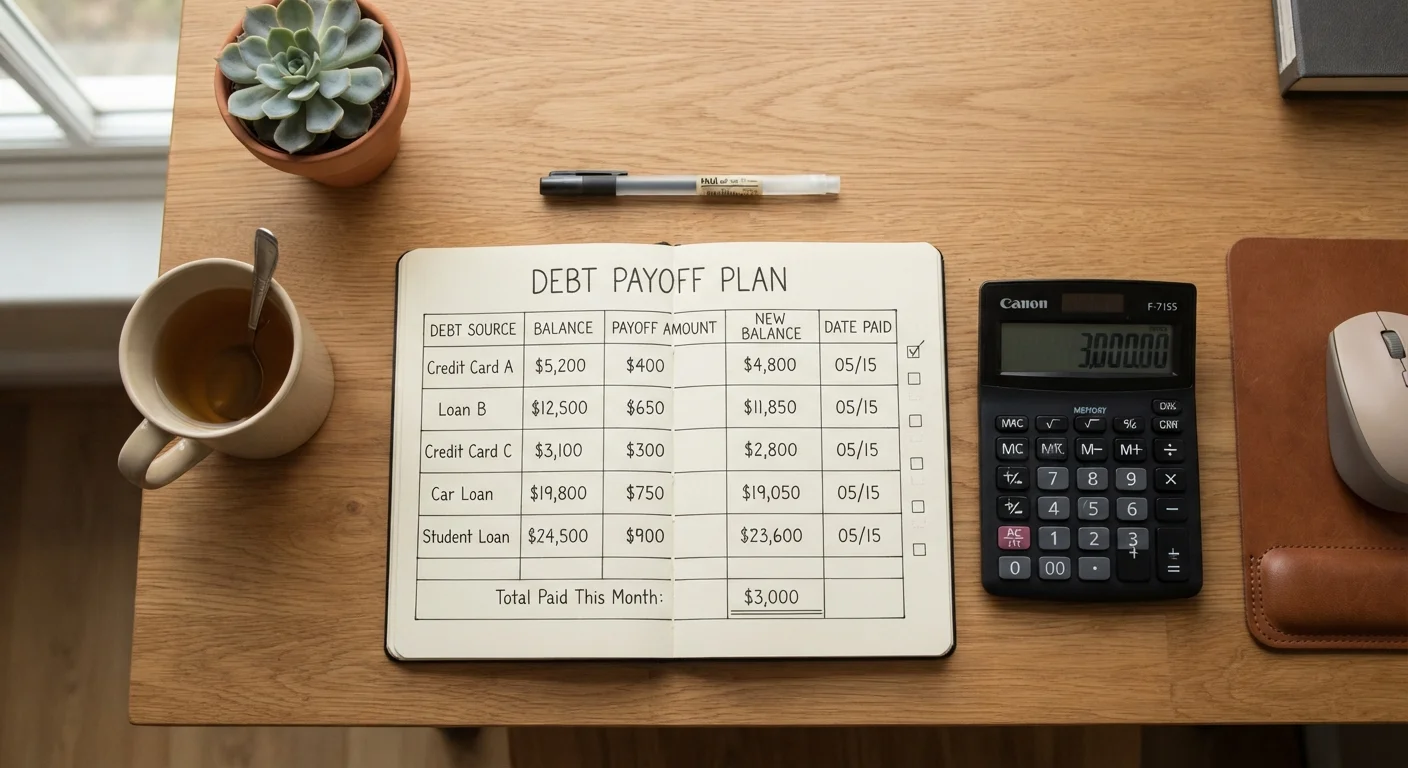
Photo credit: SkripTee.com | Search. Explore. Learn.
In this article
A clear comparison of the most widely used debt repayment methods, including how each works, its trade-offs, and who it tends to suit.
Key Takeaways
- The avalanche method minimizes total interest paid by targeting the highest-rate debt first.
- The snowball method builds momentum by eliminating the smallest balances first, regardless of interest rate.
- Hybrid approaches let you balance math and motivation based on your specific situation.
- No single strategy works for everyone - your income stability, debt mix, and psychology all matter.
- Consulting a nonprofit credit counselor can help you choose and stick to a plan.
Why Your Repayment Strategy Matters
Having debt across multiple accounts - credit cards, personal loans, student loans - is common for American households. What's less common is a deliberate plan for paying it down. Without one, many people pay minimums across all accounts indefinitely, extending repayment timelines and paying far more in interest than necessary.
A repayment strategy gives you a clear priority order: which account gets your extra dollars first, and why. The two most widely discussed frameworks are the debt avalanche and the debt snowball. Each has a distinct logic, and neither is universally superior. Understanding their trade-offs helps you choose the one most likely to work for your situation.
Before comparing strategies, it helps to understand the types of debt you're working with. Different debt categories - revolving credit, installment loans, lines of credit - carry different terms and interest structures that affect which method fits best.
Debt Avalanche: The Interest-First Approach
The avalanche method directs any extra payment toward the account with the highest annual percentage rate (APR) first, regardless of balance size. Once that debt is paid off, you redirect those payments to the next-highest-rate account, and so on.
How it works in practice: Continue making minimum payments on all accounts. Any funds above minimums go entirely to the highest-APR debt. When it's eliminated, roll its payment amount into the next account on the list.
The case for it: By attacking expensive debt first, you reduce the total interest that accrues across all accounts. Over a multi-year repayment timeline, this can translate to meaningful savings - sometimes hundreds or thousands of dollars, depending on balances and rates.
The trade-off: If your highest-rate debt also carries a large balance, it may take a long time before you fully eliminate any single account. That delay can feel discouraging, especially early in the process. Borrowers who need visible progress to stay on track sometimes abandon the avalanche before seeing results.
List Your Debts Before Choosing a Method
Before committing to any strategy, write out every account with its current balance, minimum payment, and APR. This single step makes both the avalanche and snowball sequences concrete and actionable. It also reveals whether the difference in total interest cost between methods is large enough to override your psychological preferences - for some debt profiles, the gap is small.
Debt Snowball: The Balance-First Approach
The snowball method, popularized in personal finance literature, targets the smallest balance first, regardless of interest rate. Extra payments go to the lowest-balance account; once it's cleared, you roll that payment into the next-smallest balance.
How it works in practice: Same minimum-payment rule applies across all accounts. Extra funds concentrate on the smallest balance until it's gone, then cascade to the next.
The case for it: Research in behavioral economics suggests that visible progress - actually eliminating accounts - reinforces motivation and follow-through. Clearing a small balance quickly creates a psychological win that can make a long repayment journey feel more manageable.
The trade-off: By ignoring interest rates, you may allow high-APR balances to compound while you clear lower-rate ones. Over time, this generally costs more in total interest. For borrowers with large gaps between their highest-rate and lowest-balance accounts, the cost difference can be significant.
Understanding terms like APR and minimum payment is essential before building any strategy. A plain-language glossary of credit and debt terms can clarify the vocabulary you'll encounter.
| Debt Avalanche | Debt Snowball | Hybrid Approach | |
|---|---|---|---|
| Priority order | Highest APR first | Smallest balance first | Mix of both criteria |
| Total interest paid | Lowest overall | Potentially higher | Varies by execution |
| Speed of early wins | Slower if high-rate debt is large | Fast - small balances clear quickly | Moderate |
| Psychological motivation | Lower early on | Higher - frequent milestones | Balanced |
| Best suited for | Disciplined, math-focused borrowers | Those needing visible momentum | Borrowers with mixed needs |
| Complexity | Low - rank by APR | Low - rank by balance | Moderate - requires judgment |
Hybrid and Alternative Approaches
Most real-world repayment plans don't fit neatly into either category. A hybrid approach blends elements of both: for example, starting with one or two small balances to build momentum, then switching to the avalanche sequence once those are cleared.
Other approaches worth knowing:
- Highest-minimum-payment-first: Frees up monthly cash flow quickly by eliminating accounts with large required minimums.
- Consolidation: Combines multiple balances into a single loan or balance-transfer product, potentially at a lower rate. This doesn't reduce what you owe, but it can simplify repayment. Debt consolidation has real advantages and real limitations - worth evaluating carefully.
- Income-driven or hardship plans: For federal student loans or accounts in delinquency, structured repayment programs may be available through servicers or nonprofit credit counseling agencies.
It's also worth considering how debt repayment fits alongside savings goals. Deciding whether to pay down debt or build savings in parallel involves both financial and psychological factors. Note too that the type of debt - secured versus unsecured - affects your risk exposure and priority order. Understanding secured and unsecured debt is important context for any repayment plan.
Don't Skip Minimum Payments on Other Accounts
Whichever method you choose, you must continue making at least the minimum payment on every account every month. Directing all extra funds to one account while missing minimums elsewhere triggers late fees, penalty APRs, and credit score damage - costs that can easily exceed any interest savings your strategy was meant to produce.
This article provides general financial education and is not personalized financial advice. For guidance tailored to your circumstances, consider speaking with a licensed financial advisor or a nonprofit credit counselor.

Author
Finance Editorial Team
Finance Editorial Team is the collective byline for our editorial team and contributor network. Articles published under this byline or an editorial pen name are researched, written, and reviewed according to our editorial standards for clarity, consistency, and independence before publication.
View all articles →