
Good Debt, Bad Debt - and Why the Labels Aren't Always Straightforward
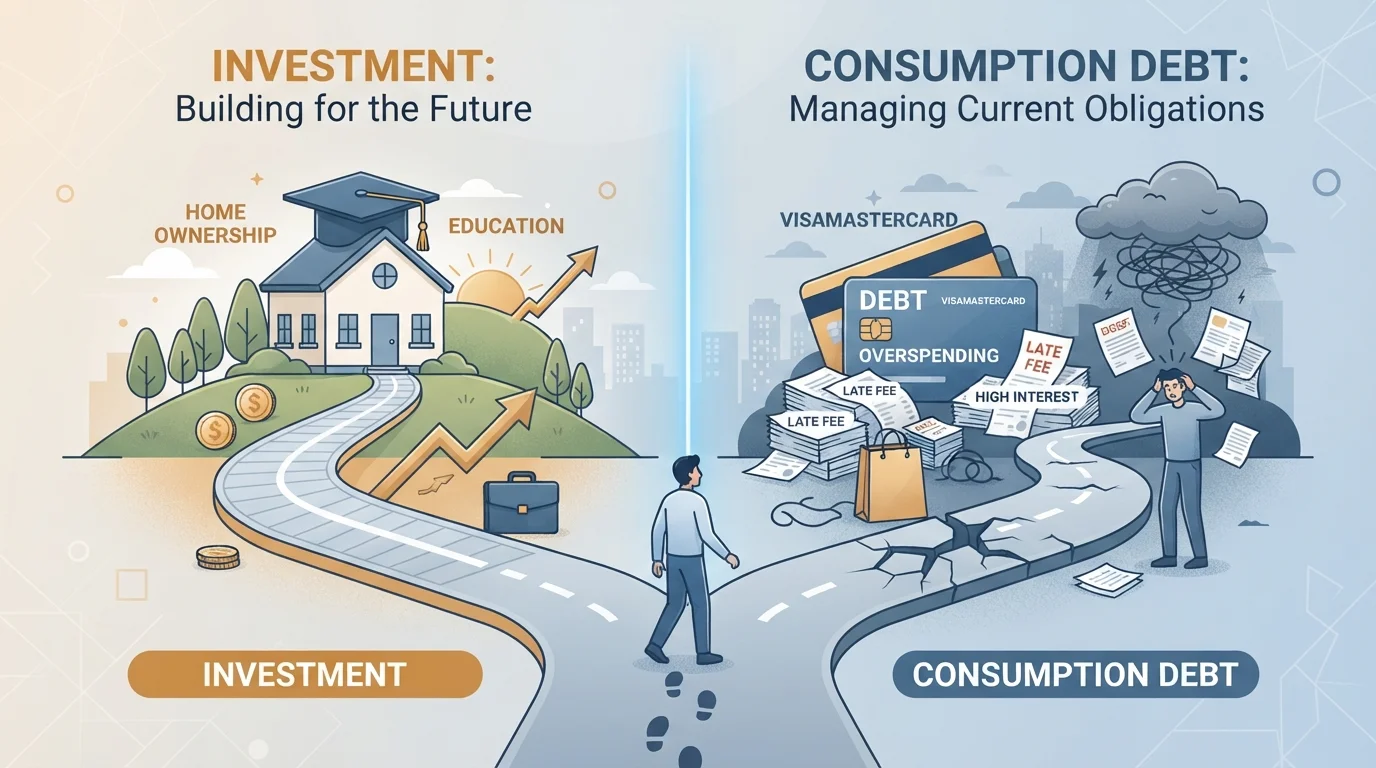
Photo credit: SkripTee.com | Search. Explore. Learn.
In this article
The idea that some debt is 'good' and some is 'bad' is common financial shorthand — but the reality depends on far more than the loan type.
Key Takeaways
- The good/bad debt distinction is a rule of thumb, not a financial law.
- Interest rate and repayment terms often matter more than the loan category.
- Even traditionally 'good' debt can become harmful if the terms or timing are wrong.
- Debt that funds an asset or increases earning potential is generally more favorable.
- Always consider whether you can comfortably service the debt before borrowing.
Where the Labels Come From
The idea that debt falls neatly into good and bad categories became common financial shorthand partly because it is useful shorthand: it gives consumers a quick filter for evaluating borrowing decisions. The underlying logic is straightforward - if borrowing money helps you build wealth or earning capacity, it tends to be framed as good; if it funds consumption with no lasting return, it tends to be framed as bad.
Mortgages and student loans land in the "good" column in this framework. Credit card balances and high-interest personal loans land in the "bad" column. Auto loans typically sit somewhere in between, since a vehicle depreciates but may be essential for employment.
Understanding the full range of borrowing options helps give this framework context. See the many forms debt takes for a breakdown of how different loan structures actually function.
Labels Reflect Averages, Not Your Situation
The good/bad debt framework emerged as a shortcut for general financial education, not as a precise analytical tool. Two people can take out the identical loan and have completely different outcomes based on income, job stability, local market conditions, and their overall financial picture. Use the labels as a starting point, not a conclusion.
Why the Categories Break Down in Practice
The good/bad framework runs into trouble quickly when you examine real-world conditions. Consider two borrowers who each take out a student loan. One graduates into a field with strong demand and pays off the balance within a decade. The other accumulates six figures of debt for a credential that does not materially raise their income. Same loan category - very different outcomes.
Interest rate is often the more decisive variable. A low-rate personal loan used to cover a medical emergency may be far less damaging than a high-rate home equity line of credit used impulsively. The asset backing the loan and the purpose of the funds both shape the actual cost and benefit.
~$1.77T
Total U.S. student loan debt outstanding
According to the Federal Reserve, student loan balances represent one of the largest categories of consumer debt in the United States, underscoring how consequential the good/bad label question is for this debt type.
20%+
Average credit card APR in recent years
The Consumer Financial Protection Bureau has reported average credit card interest rates exceeding 20%, making revolving balances one of the costliest common forms of consumer debt.
43%
DTI threshold commonly used in mortgage underwriting
Many lenders use a debt-to-income ratio of 43% as a general upper limit for mortgage qualification, reflecting how even good debt can create risk when it accumulates beyond a manageable share of income.
Repayment terms add another layer. A long mortgage term keeps monthly payments manageable but increases total interest paid substantially. Shorter terms cost less overall but require higher monthly cash flow. Neither is universally right.
For a clear view of how secured versus unsecured structures affect your exposure, secured and unsecured debt explained walks through what each arrangement means if repayment becomes difficult.
A More Useful Way to Evaluate Any Debt
Rather than reaching for a label, a more practical approach is to evaluate debt on four dimensions before committing:
- Cost: What is the annual percentage rate (APR), and what will you pay in total interest over the life of the loan? A lower APR generally means a less expensive debt, all else equal.
- Purpose: Does this debt fund something that retains or increases in value - a home, an education, a business investment - or does it fund consumption that provides no financial return?
- Affordability: Can you meet the monthly payment without straining your essential expenses or depleting your emergency savings? Debt that is otherwise reasonable can become harmful if it disrupts cash flow.
- Necessity: Is there a realistic alternative - saving up, delaying the purchase, or using existing assets - that avoids the debt entirely or reduces the amount needed?
If you are working through this evaluation before a specific borrowing decision, the practical self-assessment before taking on debt provides a structured set of questions designed for exactly that purpose.
Focus on Rate and Purpose, Not Just the Label
Before accepting any loan, compare the APR to what you expect the borrowed money to do for you financially. If the cost of the debt clearly exceeds any likely return or benefit, the category label matters less than the math. A few minutes with a loan amortization calculator can reveal the true total cost of borrowing before you sign.
When Good Debt Goes Wrong - and Bad Debt Becomes Manageable
A mortgage taken out at the peak of a market, with a payment that stretches the household budget thin, can cause financial stress that a smaller consumer debt never would. A student loan for a high-demand field at a modest total amount may be entirely manageable. Context flips the conventional labels regularly.
On the other side, carrying a small balance on a zero-interest promotional credit card while investing available cash at a higher return is a deliberate financial strategy some households use. The "bad debt" category is not uniformly bad if the cost is low and the trade-off is calculated.
When multiple debts compound the problem - regardless of type - consolidation is one option worth understanding. debt consolidation explained covers how combining balances into a single obligation can simplify repayment, along with its genuine limitations.
Familiarity with credit and debt terminology - APR, debt-to-income ratio, charge-off - helps you read any loan offer accurately rather than relying on category labels that may not reflect the actual terms in front of you.
This article is for general informational purposes only and does not constitute personalized financial or legal advice. Consult a qualified financial professional for guidance specific to your situation.
Frequently Asked Questions

Author
Finance Editorial Team
Finance Editorial Team is the collective byline for our editorial team and contributor network. Articles published under this byline or an editorial pen name are researched, written, and reviewed according to our editorial standards for clarity, consistency, and independence before publication.
View all articles →