
Micronutrients: The Vitamins and Minerals Your Body Can't Make Itself
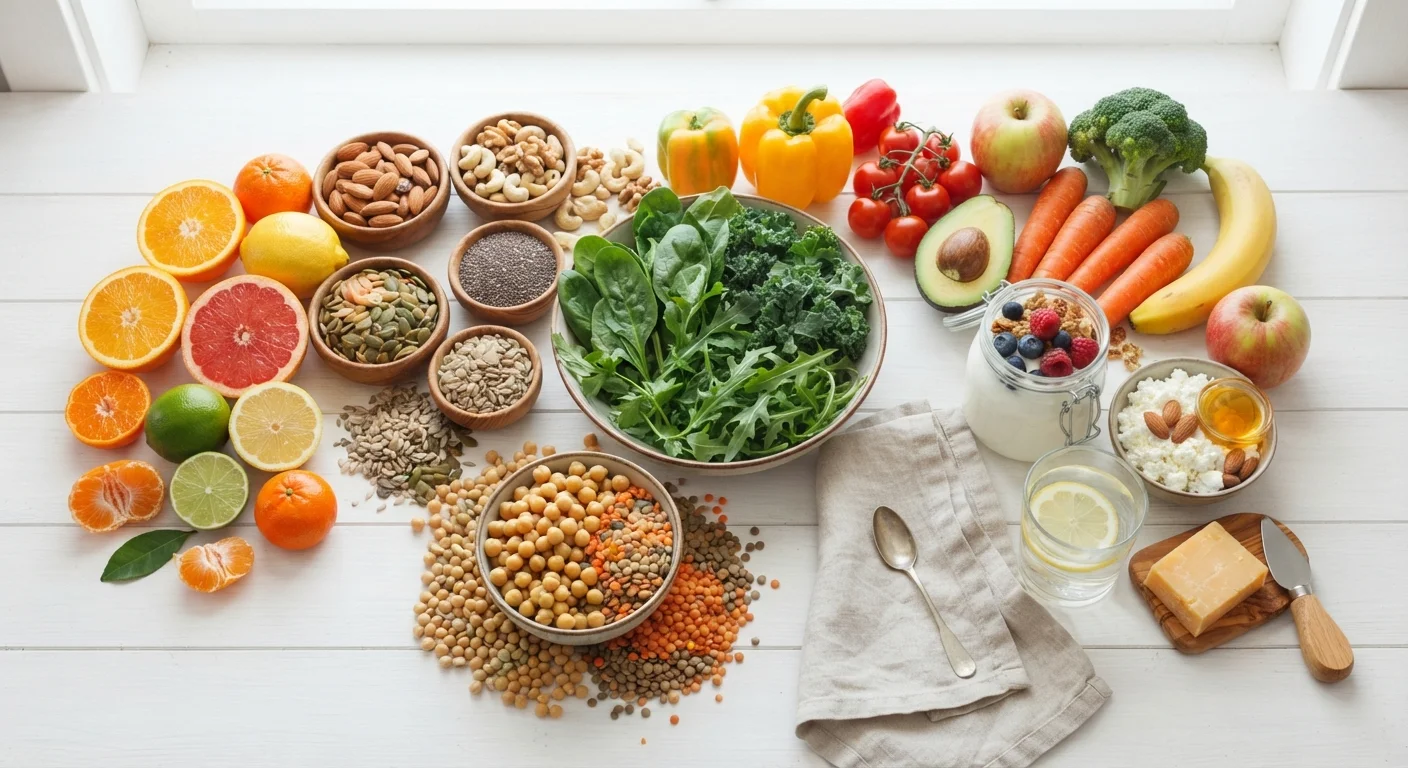
Photo credit: SkripTee.com | Search. Explore. Learn.
In this article
A clear reference to essential vitamins and minerals, what they do in the body, and which foods commonly supply them.
What Are Micronutrients?
Micronutrients are vitamins and minerals that the body requires in relatively small amounts but cannot synthesize in sufficient quantities on its own. Unlike macronutrients such as carbs, proteins, and fats, micronutrients don't supply calories. Instead, they serve as co-factors and structural components for nearly every physiological process - from energy metabolism and immune defense to bone formation and DNA repair.
The term essential in nutrition means the body cannot make enough of a nutrient on its own, so it must come from food. All vitamins are essential. Most minerals are as well, though the body can recycle some (like iron) more efficiently than others.
| Total essential vitamins | 13 (Established by nutritional science consensus) |
| Fat-soluble vitamins | A, D, E, K |
| Water-soluble vitamins | C plus 8 B vitamins |
| Vitamin most often obtained from sunlight | Vitamin D (UVB exposure triggers synthesis in skin) |
| Mineral most commonly deficient globally | Iron (World Health Organization estimates) |
| Vitamin critical during pregnancy | Folate (B9) (Supports neural tube development; widely recommended as supplement) |
Vitamins: Fat-Soluble vs. Water-Soluble
Vitamins divide into two categories based on how the body absorbs and stores them:
Fat-Soluble Vitamins (A, D, E, K)
These dissolve in dietary fat and are stored in fatty tissue and the liver. Because the body can accumulate reserves, deficiency develops slowly - but excessive intake from supplements can reach toxic levels over time.
- Vitamin A: Supports vision (especially in low light), immune function, and cell differentiation. Found in liver, dairy, eggs, and as provitamin A carotenoids in orange and dark-green produce.
- Vitamin D: Regulates calcium absorption and plays a role in immune signaling. Synthesized in skin exposed to UVB sunlight; dietary sources include fatty fish, egg yolks, and fortified foods.
- Vitamin E: Acts as a fat-soluble antioxidant protecting cell membranes. Concentrated in nuts, seeds, and vegetable oils.
- Vitamin K: Essential for blood clotting and bone metabolism. K1 comes primarily from leafy greens; K2 is found in fermented foods and some animal products.
Water-Soluble Vitamins (C and the B Vitamins)
These don't accumulate significantly in the body, so regular dietary intake matters more. Excesses are generally excreted in urine, though very high supplement doses of certain B vitamins can still cause harm.
- Vitamin C: Antioxidant, collagen synthesizer, and immune supporter. Citrus, bell peppers, kiwi, and broccoli are reliable sources.
- B vitamins (B1, B2, B3, B5, B6, B7, B9, B12): This group fuels energy metabolism, supports red blood cell production, and maintains nervous system function. B12 is found almost exclusively in animal products, making it a key consideration for people following plant-based diets. Folate (B9) is critical before and during pregnancy. See our nutrition glossary for plain-language definitions of related terms.
Essential nutrient
A nutrient the body cannot synthesize in adequate amounts on its own, making dietary intake necessary. All vitamins and most minerals fall into this category.
Fat-soluble vitamin
A vitamin (A, D, E, or K) that dissolves in fat and is stored in body tissue. Unlike water-soluble vitamins, these can accumulate to potentially harmful levels if over-supplemented.
Water-soluble vitamin
A vitamin (C or any of the B vitamins) that dissolves in water and is not stored significantly by the body. Regular dietary intake is important because excesses are excreted through urine.
Bioavailability
The proportion of a nutrient that is actually absorbed and used by the body after consumption. Bioavailability varies by food source, preparation method, and individual physiology.
Trace mineral
A mineral required by the body in very small quantities, such as iron, zinc, selenium, and iodine. Despite the small amounts needed, deficiencies can have significant health consequences.
Macromineral
A mineral needed in relatively larger amounts than trace minerals, including calcium, magnesium, potassium, sodium, and phosphorus. These play structural and regulatory roles throughout the body.
Provitamin
A compound the body can convert into an active vitamin. Beta-carotene, found in orange and yellow produce, is a well-known provitamin A.
Heme iron
A form of iron found in animal foods such as meat, poultry, and seafood that is absorbed more efficiently than non-heme iron from plant sources.
Key Minerals and Their Roles
Minerals are inorganic elements absorbed from soil and water through plant and animal foods. They fall broadly into macrominerals (needed in larger amounts, such as calcium, magnesium, and potassium) and trace minerals (needed in smaller quantities, such as iron, zinc, and selenium).
2 billion+
People affected by micronutrient deficiencies worldwide
According to the World Health Organization, micronutrient deficiency - sometimes called 'hidden hunger' - affects a significant portion of the global population.
13
Essential vitamins the body cannot make on its own
Nutritional science identifies 13 vitamins as essential, each with distinct functions requiring regular dietary intake.
~40%
U.S. adults with insufficient vitamin D intake from food alone
Data from national dietary surveys suggest a substantial share of Americans may not meet vitamin D needs through diet without sun exposure or supplementation.
| Mineral | Primary Role | Common Food Sources |
|---|---|---|
| Calcium | Bone and tooth structure; muscle contraction; nerve signaling | Dairy, fortified plant milks, leafy greens, tofu (calcium-set) |
| Iron | Oxygen transport (hemoglobin); energy metabolism | Red meat, legumes, fortified cereals, dark leafy greens |
| Magnesium | Enzyme reactions; muscle and nerve function; blood pressure regulation | Nuts, seeds, whole grains, dark chocolate, leafy greens |
| Zinc | Immune defense; wound healing; protein synthesis | Shellfish, meat, legumes, pumpkin seeds |
| Potassium | Fluid balance; heart rhythm; blood pressure | Bananas, potatoes, beans, yogurt, avocado |
| Selenium | Antioxidant defense; thyroid hormone metabolism | Brazil nuts, seafood, poultry, whole grains |
| Iodine | Thyroid hormone production; metabolism regulation | Iodized salt, seafood, dairy |
Bioavailability - how much of a mineral the body actually absorbs - varies with food source and preparation. For example, iron from animal foods (heme iron) is absorbed more readily than iron from plant foods (non-heme iron), though pairing non-heme sources with vitamin C can improve uptake.
Getting Enough: Practical Guidance
Dietary diversity is the most practical strategy for meeting micronutrient needs without relying heavily on supplements. Each food group contributes a distinct nutritional profile, which is why public health dietary guidelines consistently emphasize variety across fruits, vegetables, whole grains, proteins, and dairy or fortified alternatives.
Certain populations face higher risk of specific shortfalls:
- Vitamin D: People with limited sun exposure, darker skin tones, or older adults may need dietary or supplemental support - consult a healthcare provider for personalized guidance.
- Iron and B12: Those following vegetarian or vegan diets should pay particular attention to these, and B12 supplementation is widely recommended for vegans.
- Folate: People who are pregnant or planning to become pregnant are typically advised to supplement, in addition to consuming folate-rich foods.
- Calcium: Needs increase with age, particularly for postmenopausal women.
For a broader view of how micronutrients fit into overall nutrition, the Nutrition Basics hub covers foundational concepts including how macronutrients and micronutrients work together for everyday health.
This article is for general informational purposes only and does not constitute medical or dietary advice. For guidance tailored to your individual health needs, consult a registered dietitian or qualified healthcare professional.
Supplements Don't Replace Food Diversity
Whole foods deliver micronutrients in combinations and forms the body is adapted to absorb efficiently - alongside fiber, phytochemicals, and other compounds that supplements cannot fully replicate. Supplements may be appropriate for specific deficiencies or life stages, but they are generally not a substitute for a varied diet. Always consult a registered dietitian or healthcare provider before starting a new supplement regimen.

Author
Food Editorial Team
Food Editorial Team is the collective byline for our editorial team and contributor network. Articles published under this byline or an editorial pen name are researched, written, and reviewed according to our editorial standards for clarity, consistency, and independence before publication.
View all articles →