
Reading a Nutrition Label Without Getting Lost
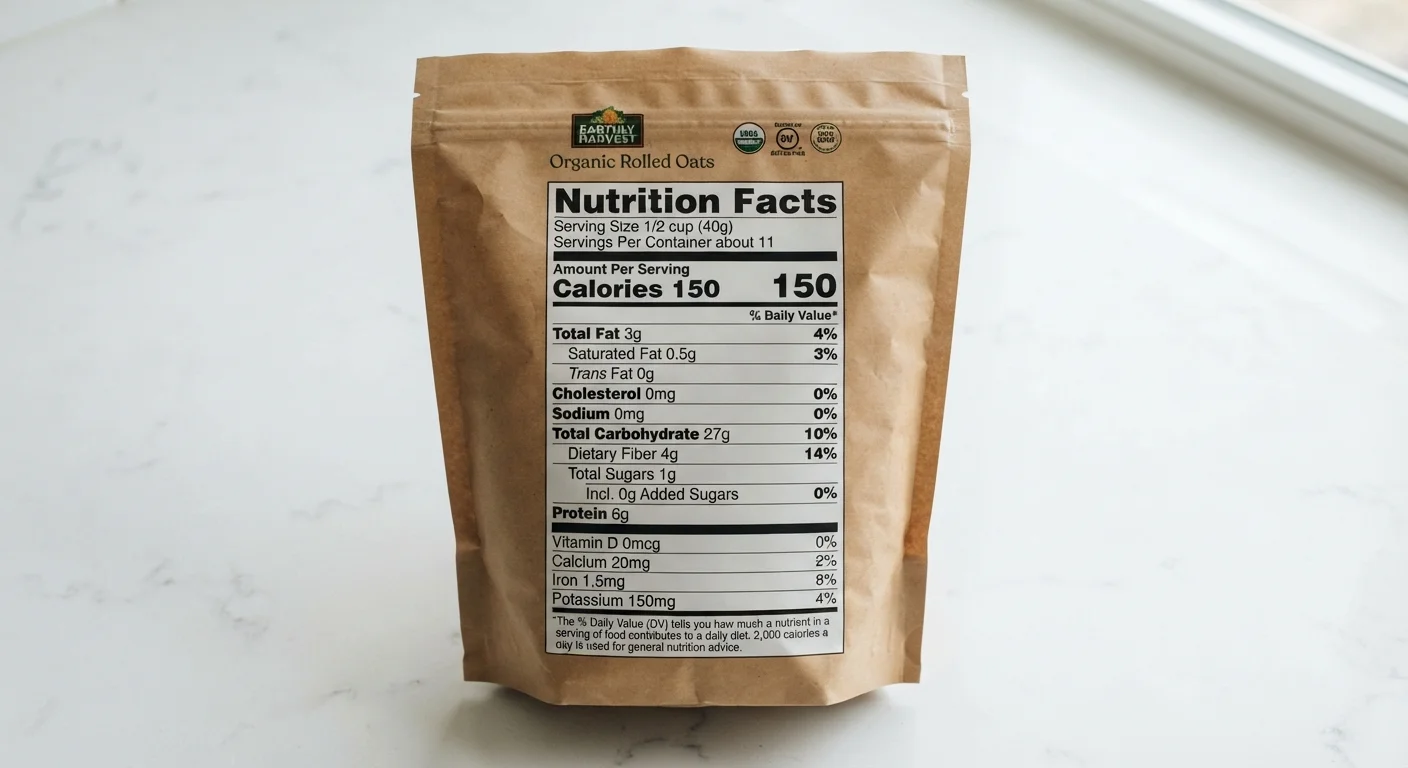
Photo credit: SkripTee.com | Search. Explore. Learn.
Learn what each section of a nutrition facts panel actually means and how to use that information when choosing foods.
Key Takeaways
- Serving size is the foundation of every number on the label - always check it first.
- The % Daily Value column shows how a nutrient fits into a 2,000-calorie reference diet.
- Nutrients to limit include saturated fat, sodium, and added sugars; nutrients to seek include fiber, potassium, and key vitamins.
- Ingredient lists are ordered by weight - the first few ingredients dominate the product.
- Front-of-package claims are marketing; the Nutrition Facts panel is the regulated, reliable source.
Why the Nutrition Facts Panel Exists
The Nutrition Facts panel is a federally standardized tool regulated by the U.S. Food and Drug Administration (FDA). It was introduced on most packaged foods in 1994 and significantly updated in 2020 to reflect current nutritional science - including the addition of an 'Added Sugars' line and updated serving sizes based on how people actually eat. Understanding what's on it is genuinely useful for making informed food choices without relying on front-of-package marketing.
Front-of-Package Claims Are Not Regulated the Same Way
Words like 'natural,' 'wholesome,' or 'light' on the front of a package are largely marketing language and are not held to the same regulatory standards as the Nutrition Facts panel. Always flip to the panel and ingredients list for verified information. The FDA regulates what appears in the Nutrition Facts panel; front-of-package language operates under looser rules.
If you find yourself confused by terms like macronutrients, daily values, or nutrient density, the plain-language nutrition glossary is a practical starting point. And for a broader framework on what balanced eating actually involves, see what 'balanced diet' actually means.
What you will need
How to Read the Label: Step by Step
Start With Serving Size
Every number on the Nutrition Facts panel - calories, fat, sodium, everything - refers to one serving as defined on the label. Before reading anything else, find the Serving Size line at the very top and note the number of servings per container. If a container holds three servings and you eat the whole thing, you must multiply all values by three.
Check the Calorie Count
Calories appear prominently just below the serving size. This figure tells you how much energy one serving delivers. Context matters here: a 200-calorie serving of oatmeal and a 200-calorie serving of cookies carry very different nutritional profiles. See our full explainer on calories for a grounded look at what the number does and doesn't tell you.
Identify Nutrients to Limit
Scan the panel for saturated fat, sodium, and added sugars. Dietary guidance from the U.S. Departments of Agriculture and Health and Human Services consistently identifies these as nutrients most Americans consume in excess. Trans fat, when present, should also be noted - even small amounts listed as '0g' may reflect rounding on very low quantities, so check the ingredient list for 'partially hydrogenated oils.' For a deeper look at fat types, see saturated vs. unsaturated fats explained.
Identify Nutrients to Seek
Look for dietary fiber, potassium, calcium, iron, and vitamin D - nutrients that many Americans fall short on. Higher % Daily Values for these are generally advantageous. Fiber in particular supports digestive health and satiety; our article on dietary fiber shortfalls explains why most people don't get enough and how to close the gap.
Use the % Daily Value Column
The % Daily Value (%DV) column on the right side of the panel shows what percentage of a nutrient's recommended daily amount one serving provides, based on a 2,000-calorie reference diet. This reference point won't match everyone's exact needs, but it provides a consistent benchmark for comparison across products. Use it to quickly gauge whether a food is a meaningful source of a beneficial nutrient or a significant contributor of one to limit.
Read the Ingredient List
The ingredient list is ordered by weight from most to least. If refined flour or added sugar appears among the first three ingredients, those are the primary components of the product. Watch for multiple sugar synonyms (corn syrup, cane juice, dextrose, maltose) that may appear spread across the list - their combined contribution can be significant even when no single entry looks prominent. For foods with added vitamins or minerals, our guide to fortified foods provides useful context on what those additions mean.
Use % Daily Value as a Quick Benchmark
A general rule of thumb from nutrition guidance: 5% DV or less is considered low for a nutrient; 20% DV or more is considered high. Use this shortcut when you want to quickly assess whether a food is a meaningful source of something beneficial - or a significant contributor of something to limit.
Packages With Multiple Servings Add Up Fast
A bag of chips or bottle of juice labeled as '2.5 servings' means every number on the panel must be multiplied if you consume the whole container. This is one of the most common sources of calorie and sodium underestimation. Check serving size against realistic portion behavior before drawing conclusions.
Understanding macronutrients in context - how carbohydrates, proteins, and fats function in your body - can make these label numbers more meaningful. Our macronutrients explainer provides that foundation. It's also worth knowing that nutrition science itself has nuances: if you want to understand why dietary recommendations sometimes shift, where nutrition science gets complicated explains how to evaluate the evidence behind headline claims.

Author
Food Editorial Team
Food Editorial Team is the collective byline for our editorial team and contributor network. Articles published under this byline or an editorial pen name are researched, written, and reviewed according to our editorial standards for clarity, consistency, and independence before publication.
View all articles →