
Reading a Nutrition Label Without Getting Confused
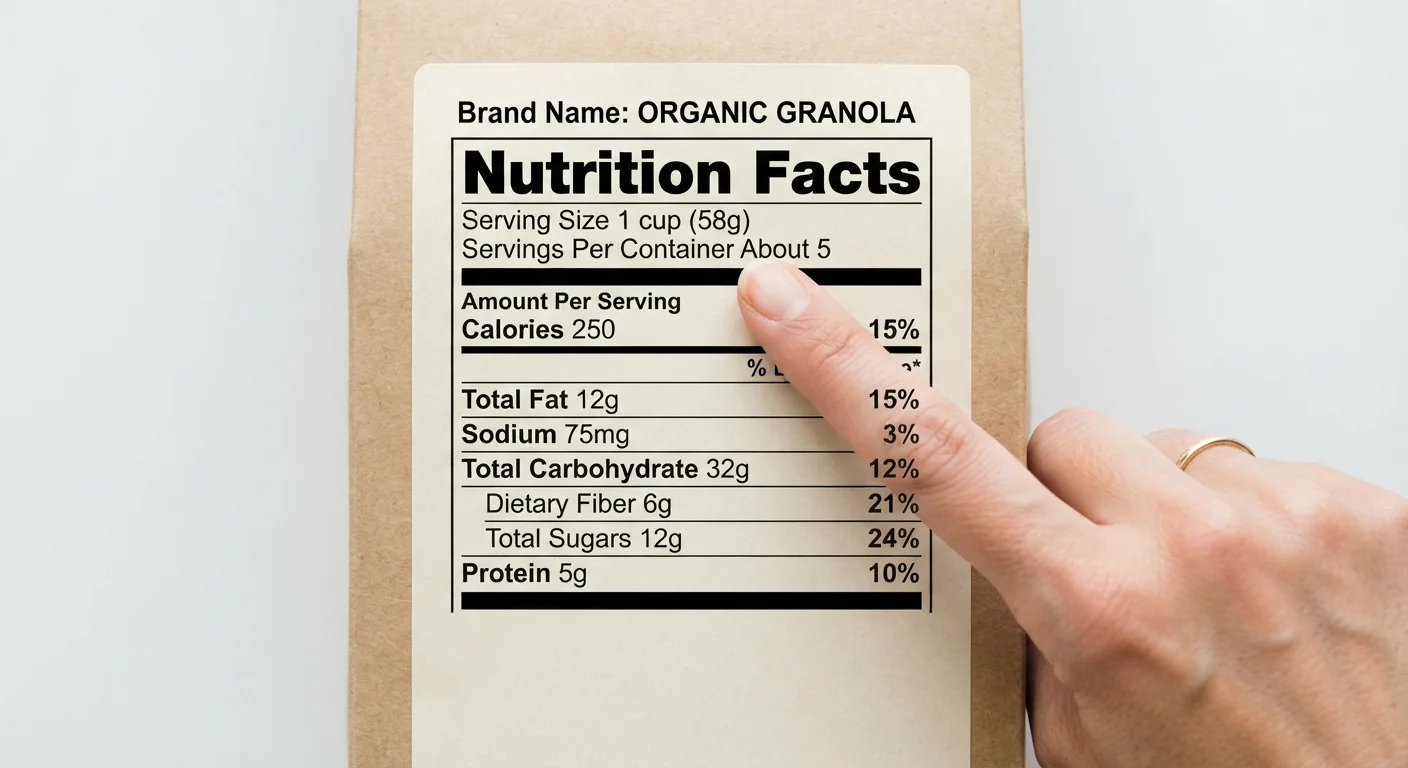
Photo credit: SkripTee.com | Search. Explore. Learn.
In this article
Learn what each section of a food nutrition label actually means — from serving sizes to daily values — so you can make informed choices.
Key Takeaways
- Serving size is the reference unit for every number on the label - always check it first.
- Percent Daily Value (%DV) tells you how much a nutrient contributes to a 2,000-calorie reference diet.
- Aim to limit saturated fat, sodium, and added sugars; look for adequate fiber, vitamins, and minerals.
- Ingredients are listed by weight, so the first few ingredients dominate the product.
- No single number defines a food's quality - context and overall diet pattern matter most.
Why Nutrition Labels Exist and What They Cover
Nutrition Facts panels on packaged foods in the United States are regulated by the Food and Drug Administration (FDA). The current label format, updated in 2020, is designed to give consumers standardized, comparable information across every packaged product. Understanding the structure helps you use the label as a genuine decision-making tool rather than a wall of numbers to ignore.
The label is divided into several distinct zones: serving information, calorie count, nutrient breakdown, percent daily values, and the ingredients list. Each zone answers a different question. For a plain-language breakdown of the terms you'll encounter, see our nutrition terms glossary. For a deeper look at how macronutrients function in the body, Macronutrients Decoded is a useful companion read.
What you will need
Step-by-Step: Reading the Label
Work through the label in order - each section builds on the last. Skipping straight to calories without checking serving size, for example, is one of the most common sources of confusion.
Start with Serving Size
The serving size is listed at the very top of the panel, directly under "Nutrition Facts." It shows the amount the label's numbers are based on - for example, "2/3 cup (55 g)" or "1 slice (28 g)." The number of servings per container appears just below it.
Every single figure on the label - calories, fat grams, sodium milligrams - reflects one serving, not the entire package. If you eat two servings, you double every number.
Check the Calorie Count
Calories are displayed prominently in large type. This number tells you how much energy one serving provides. It is a useful starting point but not the whole story - Understanding Calories explains why energy balance is more nuanced than a single count.
Use calories as one signal among many, not as the sole measure of a food's nutritional value.
Review the Nutrient Breakdown
Below calories, nutrients are grouped in a consistent order:
- Total Fat - broken down into saturated fat and trans fat (both listed separately because they carry distinct health implications)
- Cholesterol
- Sodium
- Total Carbohydrate - broken down into dietary fiber, total sugars, and added sugars
- Protein
Nutrients in the upper section (saturated fat, sodium, added sugars) are ones most Americans consume in excess; nutrients lower on the label (fiber, vitamin D, calcium, iron, potassium) are ones many fall short on.
Interpret Percent Daily Value (%DV)
The right-hand column shows %DV - the share of a daily recommended amount that one serving provides, based on a 2,000-calorie reference diet. This benchmark won't match everyone's exact needs, but it is a useful relative guide.
- 5% DV or less is generally considered low for a nutrient
- 20% DV or more is generally considered high
Use these thresholds to quickly gauge whether a product is a meaningful source of a nutrient you want more of, or a notable contributor to one you want to limit.
Scan the Ingredients List
The ingredients list appears separately, usually below the Nutrition Facts panel. Ingredients are listed in descending order by weight - the first ingredient is present in the greatest amount.
A short ingredients list doesn't automatically mean a food is healthier, and a long one doesn't mean the opposite. What matters is the nature of the ingredients. Look for whole-food ingredients near the top and be aware of multiple names for the same substance (sugar, for instance, appears as cane syrup, dextrose, maltose, and several other terms).
Use %DV as a Quick Comparison Tool
When comparing two similar products, scan the %DV column rather than converting grams and milligrams in your head. A higher %DV for fiber or potassium, and a lower %DV for sodium or saturated fat, is a quick signal that one option may align better with general dietary guidance. This works best when serving sizes are similar between products.
Common Pitfalls and What They Mean in Practice
Even readers who understand the label structure can be misled by a few recurring issues.
- Multi-serving containers that look single-serving. A bottle of juice or a small bag of chips often contains two or more servings. All label numbers multiply accordingly.
- "Per serving" vs. "per container" columns. The updated FDA label requires some packages to show both columns side by side, which helps - but not all products have triggered this requirement yet.
- "0 g trans fat" doesn't mean zero. FDA rules allow products to list 0 g if the amount per serving is less than 0.5 g. If partially hydrogenated oils appear in the ingredients list, trace amounts are present.
- Added sugars vs. total sugars. Total sugars include naturally occurring sugars (in fruit or dairy), while added sugars are those incorporated during processing. The distinction matters for context. For more on how dietary fats are categorized, see Saturated Fat vs. Unsaturated Fat.
Nutrient Claims on Packaging Can Be Misleading
Front-of-pack claims like "low fat," "reduced sodium," or "multigrain" are regulated by the FDA but can still create a misleading impression of overall nutritional quality. A product labeled "low fat" may be high in added sugars. Always read the Nutrition Facts panel and ingredients list rather than relying on front-label marketing language.
If you'd like to understand how fortified nutrients - vitamins and minerals added back during processing - appear on labels, Fortified Foods and Supplements explains when they add genuine value. And for broader context on putting individual food choices in perspective, What 'Balanced Diet' Actually Means is worth reading alongside this guide.
This article is for informational purposes only and is not a substitute for personalized dietary advice. Consult a registered dietitian or qualified healthcare professional for guidance specific to your health needs.

Author
Health Editorial Team
Health Editorial Team is the collective byline for our editorial team and contributor network. Articles published under this byline or an editorial pen name are researched, written, and reviewed according to our editorial standards for clarity, consistency, and independence before publication.
View all articles →