
What Pet Microchipping Actually Does - and What It Can't Do
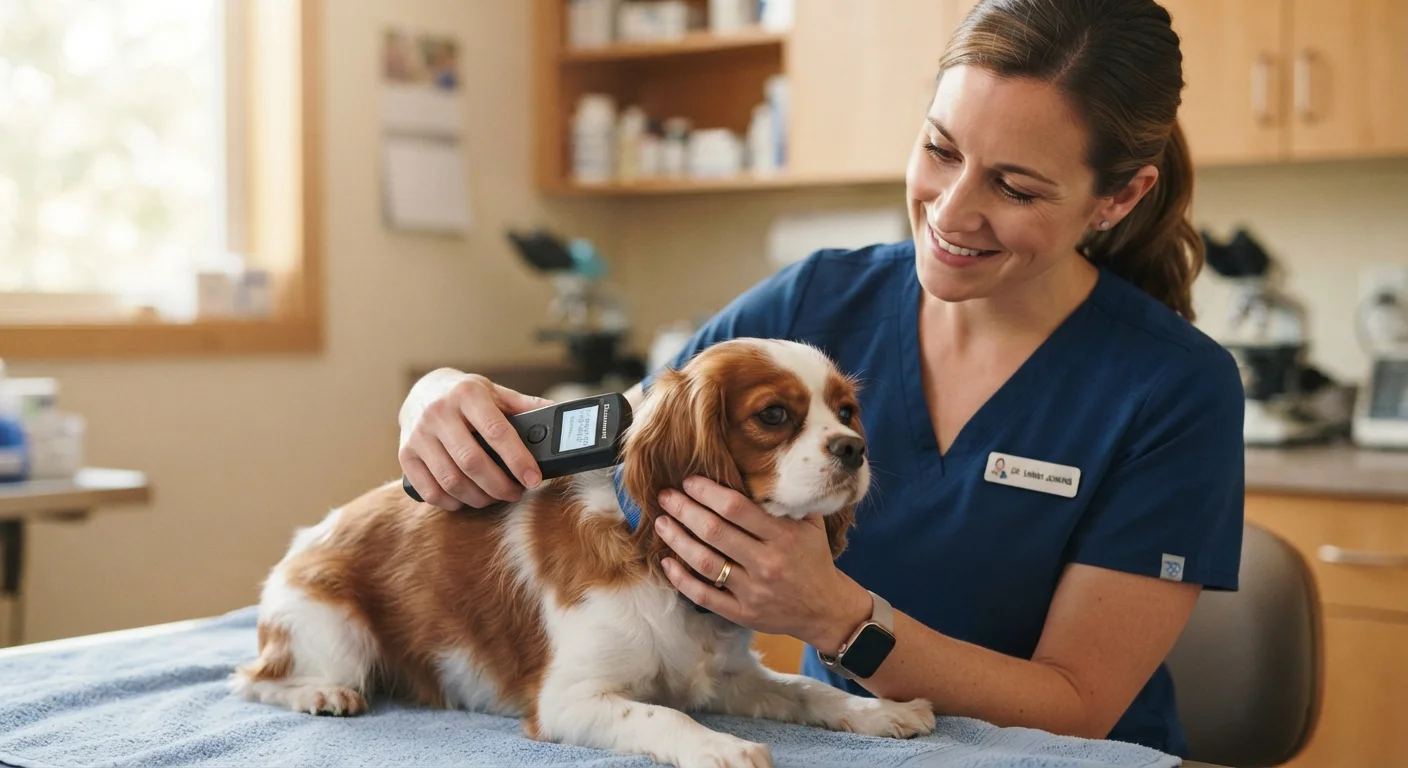
Photo credit: SkripTee.com | Search. Explore. Learn.
In this article
Microchipping is widely recommended, but many owners misunderstand how it works. Get clear on what a chip can and cannot do for your pet's safety.
Key Takeaways
- A microchip is a passive ID tag, not a GPS tracker - it doesn't transmit your pet's location.
- Registering the chip in a searchable database is the step most owners forget, making it ineffective.
- A chip is permanent and cannot fall off, unlike collars and ID tags.
- Keeping your contact information updated in the registry is just as important as getting the chip implanted.
How a Microchip Actually Works
A pet microchip is a tiny passive radio-frequency identification (RFID) device - roughly the size of a grain of rice - implanted just beneath the skin, typically between the shoulder blades. It contains no battery and produces no signal on its own. When a veterinarian, shelter worker, or animal control officer scans the chip with a compatible RFID reader, the chip emits a unique numeric code. That number can then be looked up in a microchip registry to find the registered owner's contact details.
The implantation process is quick - comparable to a routine vaccination injection - and requires no anesthesia for most healthy pets. The chip is designed to last the lifetime of the animal. Because it's entirely passive, there is nothing to charge, replace, or maintain on the device itself.
Understanding this basic mechanism clears up the single biggest source of confusion: a microchip is an identification tool, not a tracking device. It cannot alert you when your pet leaves the yard, and it cannot be used to locate a lost animal in real time.
Myth
A microchip lets me track my pet's location in real time if they go missing.
Fact
Microchips are passive RFID devices with no GPS capability and no ability to transmit location data.
This is by far the most common microchip misconception. A microchip only responds when physically scanned by a compatible reader held close to the animal. It has no battery, no signal, and no connection to satellites or cellular networks. If you want live location tracking, you'd need a separate GPS pet collar - a different product category entirely. The microchip's value is in identification after a lost pet is found, not in locating them before they're recovered.
Myth
Once a chip is implanted, my pet is automatically protected - no further action needed.
Fact
Implanting the chip is step one; registering it in a database with current contact details is what actually enables reunification.
An unregistered chip number is essentially a dead end for whoever finds your pet. The chip must be enrolled in a searchable registry, and that record must stay current. Veterinarians sometimes register the chip at the time of implantation, but owners should confirm this happened and verify that their own contact information - not the clinic's - is on file. Make it a habit to review your registration any time you move or change your phone number.
Myth
My pet doesn't need a collar and tags if they have a microchip.
Fact
A microchip and visible ID tags serve different purposes and work best together.
A collar tag gives a Good Samaritan immediate, visible contact information the moment they find your pet - no scanner required. A microchip is the durable backup that remains even if a collar slips off or a tag becomes unreadable. Veterinary and shelter professionals consistently recommend using both. Think of the microchip as the permanent safety net and the ID tag as the fast, first-line solution.
Myth
All microchip scanners can read any chip, so brand or standard doesn't matter.
Fact
Scanner compatibility has historically been an issue, though universal scanners are now widely used across U.S. shelters and clinics.
Older scanners sometimes couldn't read chips operating on a different radio frequency. The American Animal Hospital Association (AAHA) and other organizations have worked to promote adoption of universal scanners that detect chips across the most common frequency standards used in the U.S. (125 kHz, 128 kHz, and 134.2 kHz). Most shelters and veterinary clinics now use these universal devices, but it's worth asking your vet to confirm your pet's chip is being read correctly at routine visits.
Myth
Microchipping is painful and stressful for pets.
Fact
For most pets, microchip implantation causes brief, mild discomfort similar to a standard injection.
The procedure uses a slightly larger needle than a typical vaccine, but it's fast and does not require sedation for most healthy animals. Many pets show little to no reaction. If your pet is particularly anxious about veterinary procedures, discuss this with your vet - they can advise on ways to minimize stress. The one-time discomfort is generally considered well worth the lifelong identification benefit.
The Step Every Owner Must Take After Chipping
Getting a chip implanted is only half the job. The number encoded in the chip is meaningless until it's linked to your current contact information in a registry database. This is where many well-meaning owners fall short.
~58%
Microchipped pets returned to owners
A study published in the Journal of the American Veterinary Medical Association found that microchipped dogs were returned to their owners about 52% of the time, compared to 22% for those without chips - highlighting registration as a key variable.
35%
Chips with incorrect or missing registry data
Research has found that a significant proportion of microchipped animals brought to shelters have chips that are either unregistered or linked to outdated contact information, making reunification impossible.
There are multiple microchip registries operating in the United States, and they don't automatically share data with one another. Veterinary clinics and shelters typically use universal scanners and lookup tools - such as the AAHA Universal Pet Microchip Lookup Tool - that can search across multiple registries simultaneously. But if your pet's chip number isn't registered anywhere, a scan will return nothing actionable.
Equally important: update your registration whenever your address, phone number, or email changes. A chip linked to a disconnected phone number is nearly as unhelpful as no chip at all. The cost of registering or updating your record is typically low or free - it's a simple but critical step that's easy to overlook when life gets busy. For a broader look at responsibilities that sneak up on new owners, see the hidden costs of pet ownership.
Don't Assume Your Vet Registered the Chip
Many veterinary clinics provide a registration form or handle enrollment as part of the microchipping appointment - but practices vary. Always confirm in writing that your chip number is registered under your name and current contact details, not just the clinic's. Ask for a copy of the registration confirmation for your records.
Microchipping in Context: One Layer of a Bigger Safety Net
A microchip works best as part of a layered approach to pet identification and safety. A properly fitted collar with a current ID tag is still valuable - it gives a finder immediate, visible contact information without needing a scanner. Microchipping complements that: it's the backup that can't be removed, lost, or become illegible from wear.
It's also worth knowing that microchips don't verify ownership in any legal sense on their own. They connect a chip number to whoever is listed in the registry - which is why keeping your registration accurate matters, and why shelters follow documented intake and hold procedures before rehoming a found animal.
If you're in the process of welcoming a new pet into your home, confirming that a microchip is present and properly registered should be on your early checklist - whether you're adopting from a shelter or working with a breeder. Learn more about what that decision involves in our guide to adopting vs. buying a pet.
This article provides general educational information about pet microchipping and is not a substitute for guidance from your veterinarian.

Author
Pets Editorial Team
Pets Editorial Team is the collective byline for our editorial team and contributor network. Articles published under this byline or an editorial pen name are researched, written, and reviewed according to our editorial standards for clarity, consistency, and independence before publication.
View all articles →