
How Earnest Money Works and What Happens If a Deal Falls Through
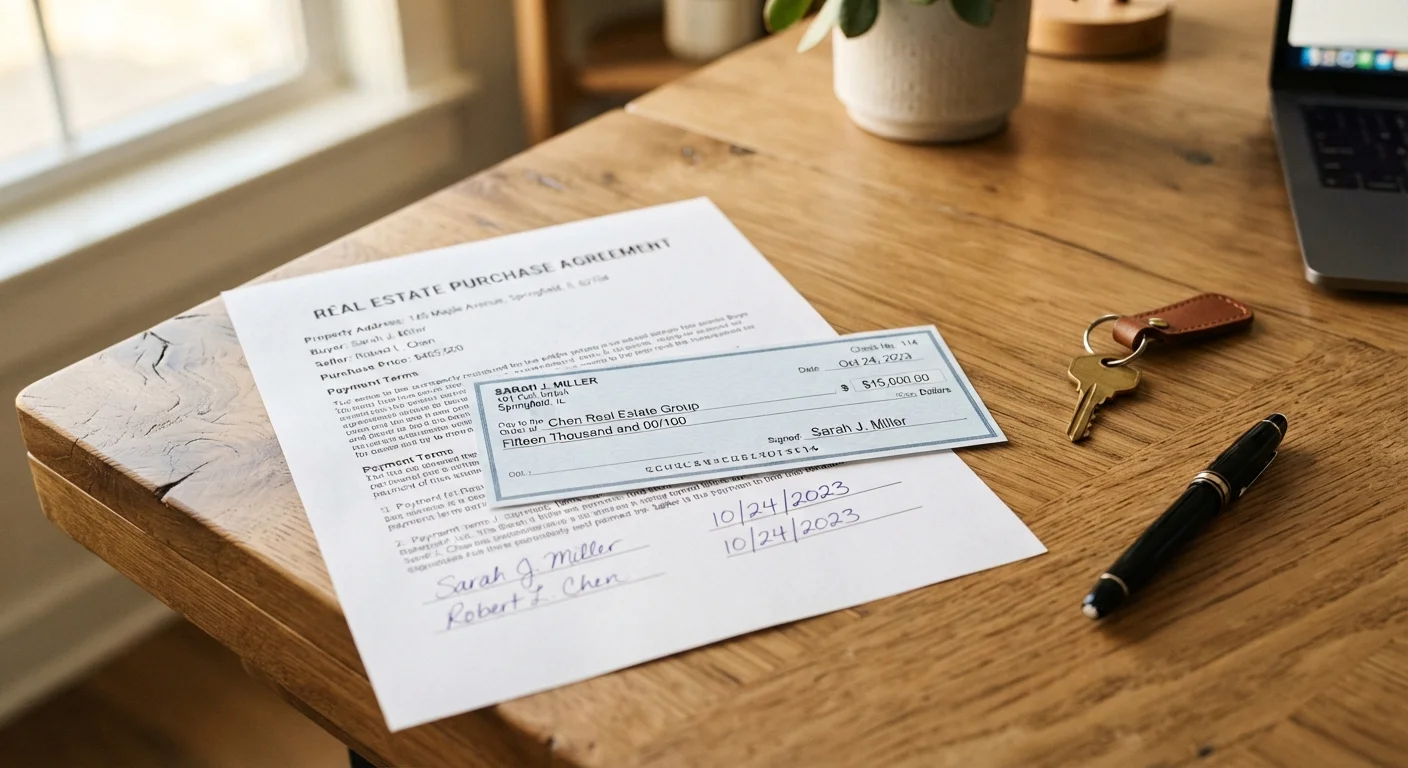
Photo credit: SkripTee.com | Search. Explore. Learn.
In this article
Earnest money signals commitment but comes with conditions. Learn how deposits are held, when they're refundable, and what contingencies protect buyers.
Key Takeaways
- Earnest money is a good-faith deposit held in escrow, not paid directly to the seller.
- The typical deposit ranges from 1% to 3% of the purchase price, though this varies by market.
- Contingencies written into the contract determine whether a buyer can recover the deposit if the deal falls through.
- Waiving contingencies increases a buyer's risk of forfeiting their earnest money.
- Sellers can keep the deposit if a buyer backs out without a valid contractual reason.
The Purpose of Earnest Money in a Home Purchase
When a seller accepts a buyer's offer, both parties enter a period during which the home is taken off the market and a range of inspections, appraisals, and financing steps take place. Earnest money - sometimes called a good-faith deposit - compensates the seller for that risk. It signals that the buyer is serious enough to put real money on the line.
Without earnest money, sellers would have little protection against buyers who tie up a property, then walk away without consequence. The deposit creates a financial incentive for buyers to close, and it gives sellers a measure of security during the escrow period.
The funds are never paid directly to the seller at this stage. Instead, they go into an escrow account managed by a neutral third party. This arrangement protects both sides: buyers know their money is not accessible to the seller prematurely, and sellers know the funds exist and are committed.
Earnest Money vs. Security Deposits
Earnest money is specific to home purchases and is distinct from a rental security deposit, which is paid to a landlord before moving into a rental property. The rules governing each are quite different. If you are navigating the rental side of things, see our overview of security deposit rules every renter should know.
How Deposit Amounts Are Determined
Earnest money amounts are not standardized by law - they are negotiated between buyer and seller and vary considerably by location and market conditions. In most U.S. markets, buyers offer between 1% and 3% of the purchase price. On a $400,000 home, that translates to $4,000 to $12,000.
In highly competitive markets, buyers sometimes offer higher deposits to make their offers more attractive. However, a larger earnest money deposit also means more is at stake if the deal unravels without a contractual protection in place. Before deciding on an amount, buyers should understand what contingencies they plan to include - and consult with their real estate agent about local norms.
1%-3%
Typical earnest money deposit range
Most U.S. real estate transactions involve earnest money deposits in this range, though amounts vary by region and market competition.
~30-60 days
Typical escrow period for residential sales
Earnest money remains in escrow throughout the closing process, which commonly takes one to two months depending on financing and local practice.
Contingencies: The Conditions That Protect Your Deposit
Contingencies are clauses in the purchase contract that allow a buyer to exit the agreement - and recover their deposit - under specific, defined circumstances. The three most common are the inspection contingency, the financing contingency, and the appraisal contingency.
- Inspection contingency: Allows the buyer to withdraw if a home inspection reveals significant defects, or to renegotiate repair terms with the seller.
- Financing contingency: Protects the buyer if their mortgage application is denied. Without this clause, a buyer who loses their loan approval could also lose their deposit.
- Appraisal contingency: Lets the buyer exit or renegotiate if the home appraises for less than the agreed purchase price.
For a deeper look at how each of these works and the risks of removing them, see our guide on contingencies in a home purchase contract. And before you submit an offer, consider reviewing questions worth asking before you make an offer to reduce the chance of surprises that could put your deposit at risk.
Keep Contingency Deadlines in Writing
Every contingency in your purchase contract should specify a deadline by which it must be exercised or waived. Missing these deadlines - even accidentally - can mean forfeiting your protection. Work with your agent to track each deadline carefully and communicate any concerns to the seller in writing well before they expire.
When Earnest Money Is Forfeited - and When It Is Returned
The question of who keeps the earnest money when a deal collapses depends almost entirely on why the deal fell apart and what the contract says.
Buyers typically get their deposit back when:
- A contingency in the contract is triggered (e.g., the home fails inspection and the buyer exercised the inspection contingency).
- The seller is unable or unwilling to fulfill their obligations under the contract.
- The transaction fails to close within agreed timelines due to the seller's actions.
Sellers typically keep the deposit when:
- The buyer backs out without invoking a valid contingency.
- The buyer waived contingencies to win a competitive bid and then walked away.
- The buyer simply changed their mind after the contingency period expired.
Disputes over earnest money can be contentious, and in some cases, both parties may need to reach a written agreement before the escrow agent will release the funds. State laws and contract language vary, so buyers and sellers in complex situations should seek guidance from a qualified real estate attorney.
This article is for general informational and educational purposes only and does not constitute legal, financial, or real estate advice. Consult a licensed real estate professional or attorney regarding your specific situation.
Frequently Asked Questions

Author
Real Estate Editorial Team
Real Estate Editorial Team is the collective byline for our editorial team and contributor network. Articles published under this byline or an editorial pen name are researched, written, and reviewed according to our editorial standards for clarity, consistency, and independence before publication.
View all articles →