
Jet Lag: Separating Myth from What the Science Actually Shows
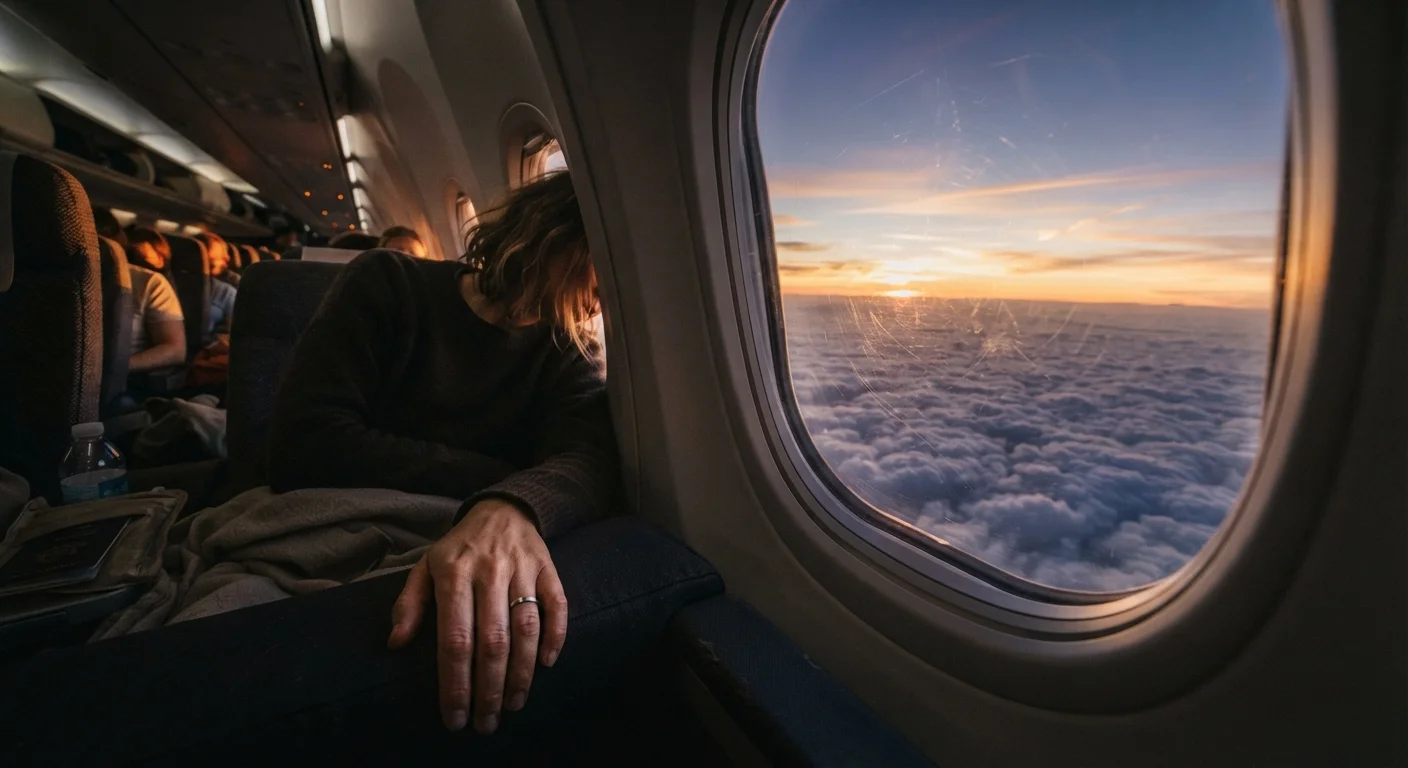
Photo credit: SkripTee.com | Search. Explore. Learn.
In this article
Sorting genuine jet lag remedies from popular misconceptions, with evidence-based context on sleep, light exposure, and timing strategies.
Key Takeaways
- Jet lag is a genuine circadian rhythm disruption, not simply tiredness from a long flight.
- Light exposure timing is one of the most evidence-supported tools for resetting your body clock.
- Alcohol and sleeping pills can worsen jet lag recovery, despite being popular in-flight choices.
- Eastward travel typically causes more severe jet lag than westward travel for most people.
- Melatonin may help, but timing and dosage matter - consult a healthcare professional first.
What Jet Lag Actually Is
Jet lag - medically termed desynchronosis - occurs when your internal body clock, or circadian rhythm, falls out of sync with the local time at your destination. It is a physiological condition recognized by sleep researchers, not a vague feeling of being tired after a long journey. Symptoms commonly include difficulty falling or staying asleep, daytime fatigue, difficulty concentrating, digestive disruption, and mood changes.
The severity depends on how many time zones you cross, the direction of travel, and individual biology. Understanding what jet lag truly is - and isn't - helps travelers choose strategies that are grounded in evidence rather than popular folklore. For a deeper look at how disrupted sleep reshapes how you feel, see how sleep and mood are connected.
Myth
Jet lag is just tiredness from sitting on a plane for hours - rest will fix it quickly.
Fact
Jet lag is a circadian rhythm disruption that persists even after rest, because the underlying body clock remains misaligned with local time.
Physical fatigue from travel can overlap with jet lag, but they are distinct. Fatigue from sitting resolves with sleep; jet lag persists because your body's internal clock - which regulates hormone release, digestion, and core temperature - is still synchronized to your departure time zone. Research shows recovery typically takes roughly one day per time zone crossed, though this varies by individual and direction of travel.
Myth
Drinking alcohol on the plane helps you sleep and reduces jet lag.
Fact
Alcohol disrupts sleep architecture and can worsen dehydration at altitude, likely prolonging jet lag rather than easing it.
Alcohol may help some people fall asleep faster, but it suppresses REM sleep and increases sleep fragmentation - meaning overall sleep quality drops. Cabin air at altitude is also exceptionally dry, and alcohol accelerates fluid loss. Sleep researchers generally advise against alcohol as a sleep aid during travel, as the net effect on jet lag recovery is negative rather than helpful.
Myth
Flying westward and eastward cause the same degree of jet lag.
Fact
Eastward travel is typically harder on most people because it requires advancing the body clock, which runs slightly longer than 24 hours.
The human circadian clock has a natural period slightly longer than 24 hours for most people, making it easier to delay sleep (travel west) than to advance it (travel east). Studies on shift workers and frequent flyers consistently show that eastbound travelers report more severe symptoms and take longer to adapt. This is why a New York-to-London flight often feels harder to recover from than the return trip.
Myth
Melatonin is a proven cure for jet lag and can be taken at any time.
Fact
Melatonin can support circadian adaptation, but its effectiveness depends heavily on when it is taken relative to the destination time zone.
Melatonin is a hormone naturally produced in the evening to signal sleep onset. Research, including reviews published in sleep medicine literature, suggests that taking melatonin at the correct local bedtime of the destination - rather than simply at any bedtime - can accelerate resynchronization, particularly for eastward travel. Taking it at the wrong time can shift the clock in the wrong direction and worsen symptoms. Dosage, formulation, and individual response also vary. Travelers should consult a healthcare professional before using melatonin as part of a jet lag strategy.
Myth
Staying awake on the entire flight will ensure you sleep well when you land.
Fact
Excessive sleep deprivation during travel can impair judgment and recovery without reliably resetting the circadian clock.
While timing sleep strategically during a flight can help align you with your destination's schedule, total sleep deprivation is not an effective reset mechanism. The circadian clock is primarily driven by light cues, not by when you last slept. Arriving severely sleep-deprived can impair cognitive function and decision-making on arrival, without meaningfully accelerating clock adaptation. A better approach is to aim for sleep windows that match the destination's nighttime hours during the flight.
Strategies That Actually Work
Once you strip away the myths, a clearer picture emerges. The most consistently supported approaches center on light exposure, sleep timing, and behavioral adjustments before and after travel.
~1 day
Estimated recovery per time zone crossed
Circadian sleep researchers commonly cite a recovery rate of approximately one day per time zone crossed, though individual variation is significant.
24.2 hrs
Average human circadian clock period
Research published in sleep science literature indicates the average human circadian period is slightly longer than 24 hours, explaining why westward adaptation is generally easier.
3-5 days
Typical full adaptation for long-haul eastbound travel
Studies on transmeridian travel suggest full circadian adaptation after crossing six or more time zones eastward can take three to five days or longer.
Strategic light exposure is the cornerstone of evidence-based jet lag management. Because light is the dominant signal that resets the circadian clock, deliberate exposure to bright natural light - or avoidance of it - at the right times relative to your new time zone can accelerate adaptation. Apps and online calculators based on circadian science can suggest when to seek or avoid light for a specific itinerary, though individual results vary.
Gradual schedule shifting before departure - adjusting sleep and wake times by 30-60 minutes per day in the direction of your destination - is supported by circadian research as a way to reduce the adaptation burden on arrival. It requires planning, but is practical for trips of a week or more.
For trip planning logistics beyond jet lag, the Trip Planning hub offers a range of practical guidance for getting the most from your itinerary.
Sleep Medication Isn't a Straightforward Fix
Prescription or over-the-counter sleep aids may help you fall asleep on a plane but do not reset the circadian clock. Some sedatives can also cause prolonged grogginess and, in rare cases, increase the risk of deep vein thrombosis by reducing movement during long flights. Speak with a qualified healthcare professional before using any sleep medication for travel purposes.

Author
Travel Editorial Team
Travel Editorial Team is the collective byline for our editorial team and contributor network. Articles published under this byline or an editorial pen name are researched, written, and reviewed according to our editorial standards for clarity, consistency, and independence before publication.
View all articles →