
What Your Credit Score Actually Does to Your Auto Loan
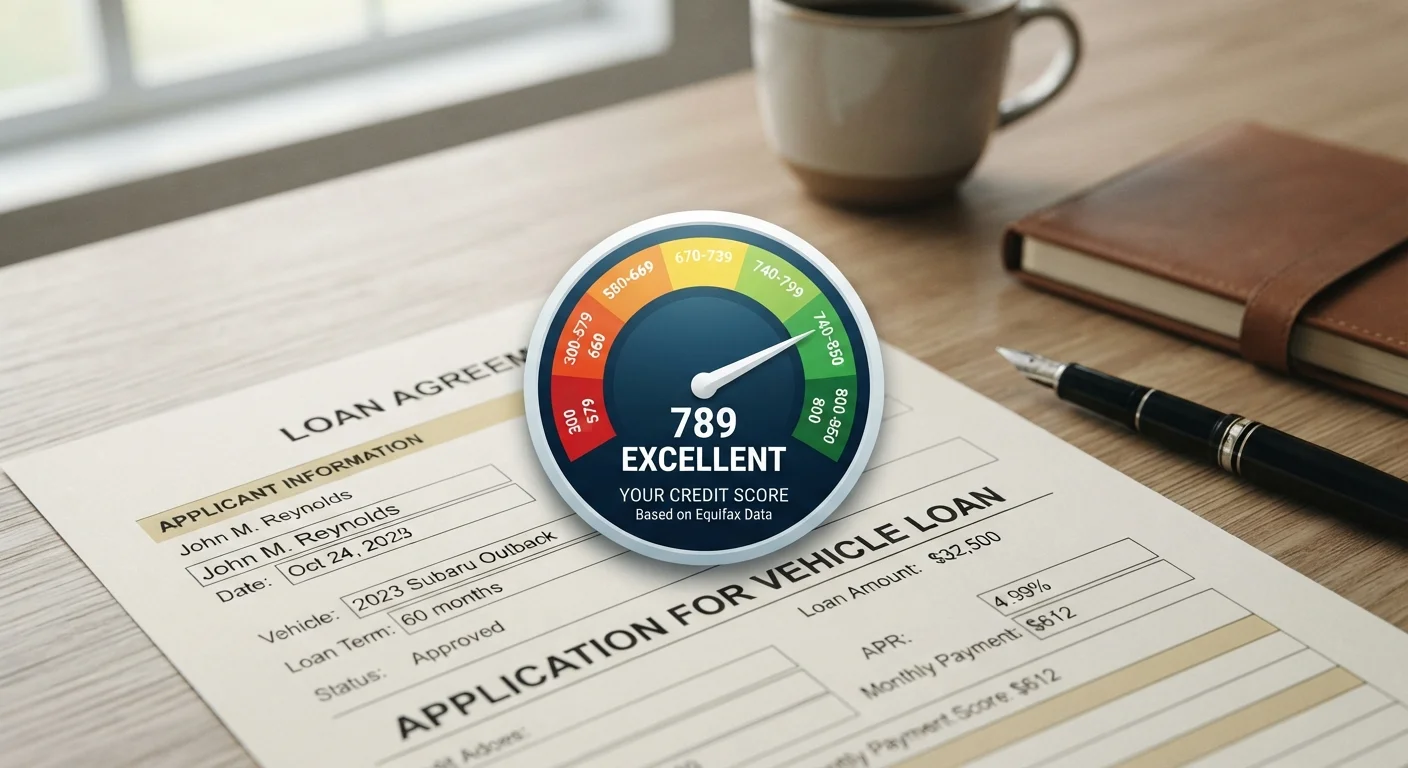
Photo credit: SkripTee.com | Search. Explore. Learn.
In this article
Understand how lenders use your credit score to set interest rates and loan terms — and what that means for the total cost of your vehicle.
Key Takeaways
- Your credit score directly influences the interest rate a lender offers on an auto loan.
- Even a small rate difference can translate into hundreds or thousands of dollars over a loan term.
- Lenders group borrowers into risk tiers - your tier determines your loan options.
- You can often improve your score before applying, which may unlock better loan terms.
- Shopping multiple lenders within a short window limits the credit-score impact of hard inquiries.
How Lenders Read Your Credit Score
When a lender receives your auto loan application, your credit score is one of the first figures they examine. It serves as a shorthand for risk: a high score signals that you've consistently met your repayment obligations; a low score indicates a history of missed payments, high debt loads, or limited credit history. To understand the full picture of what goes into that number, see our breakdown of how credit scores are calculated.
Lenders sort applicants into risk tiers - typically labeled prime, near-prime, and subprime - based on score ranges. Each tier carries a corresponding interest rate band. Your placement in a tier is less a judgment about you as a person and more a statistical grouping the lender uses to price the loan's risk.
Auto Scores Differ From General Credit Scores
Many lenders pulling credit for auto loans use FICO Auto Scores rather than a standard consumer FICO score. These specialized versions place extra weight on past auto loan repayment behavior, meaning your auto-specific score can differ from the number you see on a general credit monitoring app. It's worth knowing this discrepancy exists so you aren't surprised if the score a lender pulls looks different from what you've been monitoring.
What the Interest Rate Difference Actually Costs You
The rate attached to your tier is where the real financial impact becomes visible. Consider a $28,000 auto loan over 60 months. A borrower in the prime tier might receive a rate around 6%, while a subprime borrower might be quoted 15% or higher. At 6%, total interest paid over the loan term is roughly $4,500. At 15%, that figure climbs to over $12,000 - a difference of more than $7,500 on the same vehicle.
This is why focusing solely on the monthly payment figure can obscure what you're truly spending. Our article on why monthly payment focus can cost you more explains this dynamic in detail.
~$7,500+
Potential interest cost difference between prime and subprime auto loans
Based on illustrative calculations for a $28,000, 60-month loan comparing rates typical of prime and subprime tiers.
35%
Portion of standard FICO score tied to payment history
According to FICO, payment history is the single largest factor in the standard FICO scoring model.
14-45 days
Rate-shopping window before multiple inquiries count separately
FICO and VantageScore models generally group auto loan inquiries made within this window as a single credit event.
Steps You Can Take Before You Apply
If your score places you in a higher-cost tier, there are well-established ways to improve it before you apply for a loan - but they require lead time, typically three to six months at minimum.
- Reduce revolving balances: Your credit utilization ratio - how much of your available credit you're using - is one of the most influential factors in your score. Paying down credit card balances can produce noticeable score improvements.
- Dispute inaccuracies: Errors on credit reports are more common than many people realize. Reviewing your reports from all three major bureaus and disputing verified errors can remove items unfairly dragging down your score.
- Avoid opening new credit accounts: Each new application triggers a hard inquiry. Multiple inquiries in a short period (outside rate-shopping windows) can temporarily lower your score.
Get Pre-Approved Before Visiting a Dealership
Securing a pre-approval from a bank or credit union before you shop gives you a concrete rate benchmark. If a dealership's financing comes in lower, you can take it. If not, you already have a workable offer in hand. This approach keeps the conversation focused on the vehicle price rather than monthly payment arithmetic.
It's also worth separating fact from fiction before you take action. Many common beliefs about credit scores - including some strategies people use to try to improve them - are actually myths. Our piece on widely believed credit score myths is a useful reference.
Where You Get Your Loan Matters Too
Your credit score determines your risk tier, but the lender you choose determines which rates within that tier you're actually offered. Banks, credit unions, and dealership financing arms each set their own rate structures. Credit unions, for example, are member-owned nonprofits and in many cases offer more competitive rates than commercial lenders for borrowers across the credit spectrum.
Shopping your loan before visiting a dealership gives you a benchmark rate and reduces the likelihood of accepting terms that don't reflect your actual creditworthiness. For a detailed look at how these financing sources compare, see our guide on dealer financing versus bank or credit union loans.
Understanding the full scope of credit and debt - beyond just auto loans - also helps you manage your financial profile more strategically. Our Credit & Debt hub covers the broader fundamentals.
This article is for general informational and educational purposes only and does not constitute financial or legal advice. For guidance specific to your situation, consult a qualified financial professional.
Frequently Asked Questions

Author
Autos Editorial Team
Autos Editorial Team is the collective byline for our editorial team and contributor network. Articles published under this byline or an editorial pen name are researched, written, and reviewed according to our editorial standards for clarity, consistency, and independence before publication.
View all articles →