
Driving in Heavy Rain: Managing Visibility, Hydroplaning, and Stopping Distance
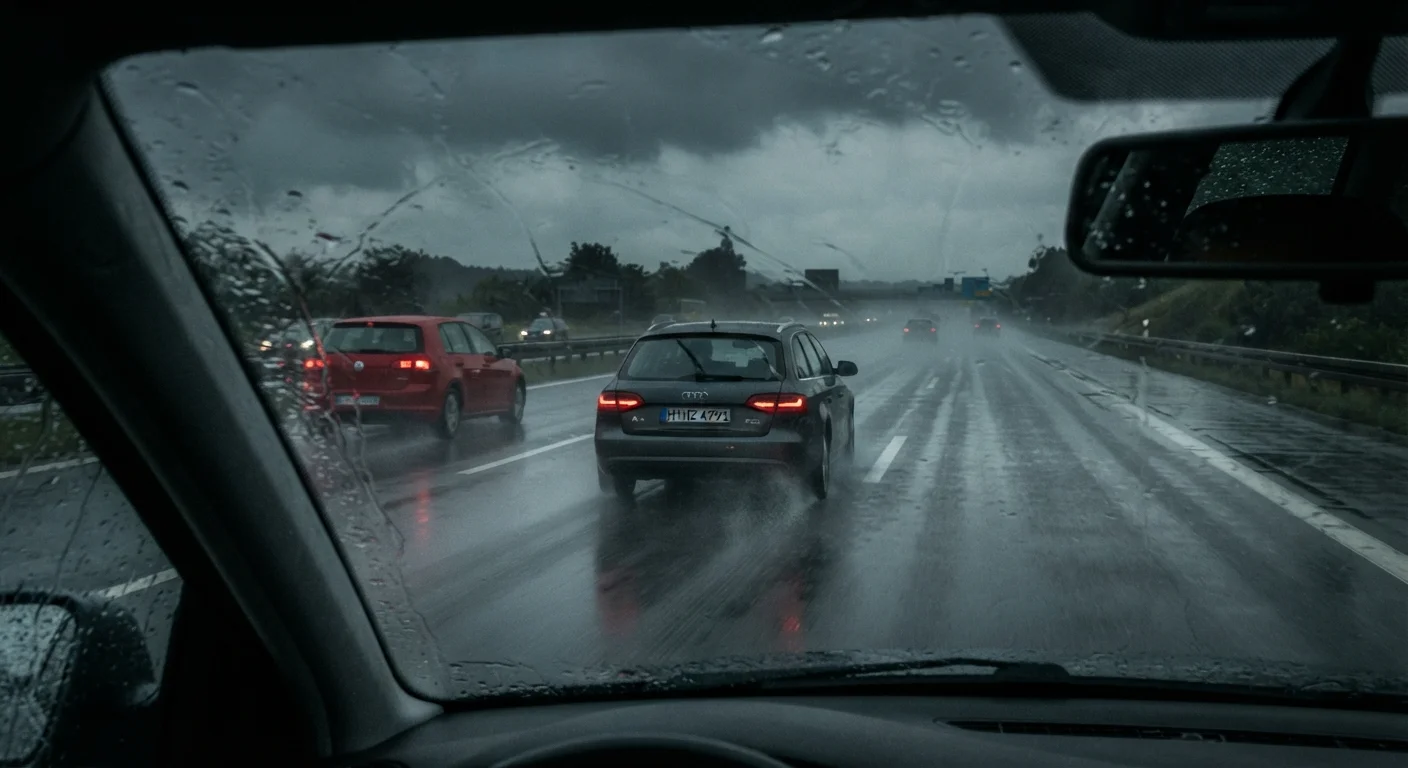
Photo credit: SkripTee.com | Search. Explore. Learn.
In this article
Rain changes everything about how your vehicle handles. Here's what drivers need to understand before conditions deteriorate.
Key Takeaways
- Wet roads can double or triple your stopping distance compared to dry conditions.
- Hydroplaning occurs when tires lose contact with the road surface due to standing water.
- Reducing speed is the single most effective action in heavy rain.
- Low-beam headlights improve both your visibility and your visibility to others.
- Tire tread depth and wiper condition directly affect your safety in wet weather.
Why Rain Changes Everything About How Your Car Handles
Water on the road does more than reduce friction - it fundamentally changes the relationship between your tires and the pavement. Tread patterns exist specifically to channel water away from the contact patch (the small area where rubber meets road), but that system has limits. The faster you travel, the more water your tires must displace per second. When the volume of water exceeds what the tread can manage, tires begin to ride on the water itself - that is hydroplaning.
Rain also reduces visibility in multiple directions at once: your windshield fills with water, spray from other vehicles reduces sight lines, and oncoming headlight glare scatters through wet glass. Combined, these factors make rain one of the most demanding environments a driver can face - and yet it rarely gets the same attention as winter road hazards like ice and snow.
Understanding the physics isn't academic. It directly informs why the steps in this guide work: speed reductions, increased following distances, and gentle inputs all account for reduced traction, longer stopping distances, and compromised steering response. For a broader look at how environment shapes driving demands, our complete safe-driving guide covers the full range of road conditions.
Stopping Distance Doubles - or Worse - in Rain
At 60 mph on dry pavement, a typical passenger vehicle needs roughly 240 feet to stop. On wet roads, that distance can double depending on tire condition, road surface, and vehicle weight. This is not a marginal difference - it is the difference between stopping safely and a collision. Adjust your speed and following distance accordingly every time rain begins.
Step-by-Step: How to Drive Safely in Heavy Rain
Follow these steps in order - the earlier steps set you up for success in the later, more demanding ones. Preparation before you drive is as important as technique while driving.
What you will need
Windshield Wipers
Clear rain from your windshield to maintain forward visibility - inspect blades before driving in wet weather.
Low-Beam Headlights
Improve your sight line and make your vehicle visible to oncoming traffic and those ahead of you in rain.
Tire Pressure Gauge
Properly inflated tires maintain better road contact and reduce hydroplaning risk.
Defrost/Rear Defroster
Clear fogged windows caused by humidity and temperature differences during rainfall.
Check your vehicle before driving in rain
Before you leave, confirm your wiper blades are in good condition - streaking or skipping means they need replacing. Check that all lights work, including headlights and brake lights. Verify your tire tread using the quarter test: insert a quarter into a tread groove; if you can see the top of the head, tread is low. For a comprehensive pre-drive routine, see our pre-long-drive vehicle check.
Slow down - more than you think is necessary
Speed limits are set for ideal conditions. In heavy rain, reduce your speed by at least 5-10 mph below the posted limit and more if visibility drops significantly. The faster you travel, the less time water has to escape from under your tires, and the harder it is to stop safely. This is not optional - it is the most consequential adjustment you can make.
Turn on your low-beam headlights
Many U.S. states require headlights when wipers are in use - but beyond the legal requirement, lights are a safety necessity. Use low beams rather than high beams; high beams reflect off rain and reduce forward visibility. Daytime running lights alone are often insufficient because they may not activate your tail lights, leaving you less visible from behind.
Increase your following distance significantly
Under dry conditions, a three-second following distance is a common baseline. In rain, extend this to at least five to six seconds. Wet brakes take longer to engage fully, and standing water on the road extends stopping distances considerably. This extra space also gives you time to react to spray from large vehicles ahead - see our guide on driving safely around large trucks for additional spacing strategy.
Recognize and respond to hydroplaning
Hydroplaning occurs when a tire rides on a thin film of water rather than the road surface, causing a momentary loss of steering and braking control. Signs include the steering wheel going light or unresponsive, or the rear of the vehicle beginning to slide. If you hydroplane:
- Ease off the accelerator gradually - do not brake hard or jerk the wheel.
- Hold the steering wheel straight and allow the car to slow naturally.
- Once tires regain traction, gently steer to correct course.
Vehicles with ABS (Anti-lock Braking System) allow you to apply steady brake pressure without pumping - but ABS cannot restore traction when tires are not touching the road.
Manage visibility inside the cabin
Rain raises humidity, which fogs windows from the inside. Use your defrost settings - front and rear - and consider using the air conditioning simultaneously, as AC dehumidifies cabin air faster than heat alone. Keep a microfiber cloth accessible for quick wipe-downs. If your side mirrors are heavily fogged or covered in water, use brief pauses at stops to clear them.
Wet-Weather Driving Is a Habit, Not a Reaction
The most effective wet-weather drivers adjust before they notice a problem - not after. Build the habit of slowing down, turning on lights, and increasing following distance as soon as rain starts, rather than waiting until visibility deteriorates. Anticipation, not reaction, is the core skill.
Never Drive Through Flooded Roads
Moving water as shallow as six inches can knock a person down; twelve inches can float many small vehicles. Road surfaces under floodwater may be undermined or entirely washed away. If you cannot clearly see the road surface beneath water, do not attempt to cross - turn around and find an alternate route.
Rain at night compounds all of these challenges. The principles in this guide apply, but visibility and reaction time face additional pressure - our article on night driving habits that increase risk covers the specific adjustments worth making when darkness and rain combine.

Author
Autos Editorial Team
Autos Editorial Team is the collective byline for our editorial team and contributor network. Articles published under this byline or an editorial pen name are researched, written, and reviewed according to our editorial standards for clarity, consistency, and independence before publication.
View all articles →