
Winter Road Conditions: Ice, Snow, and Black Ice Explained
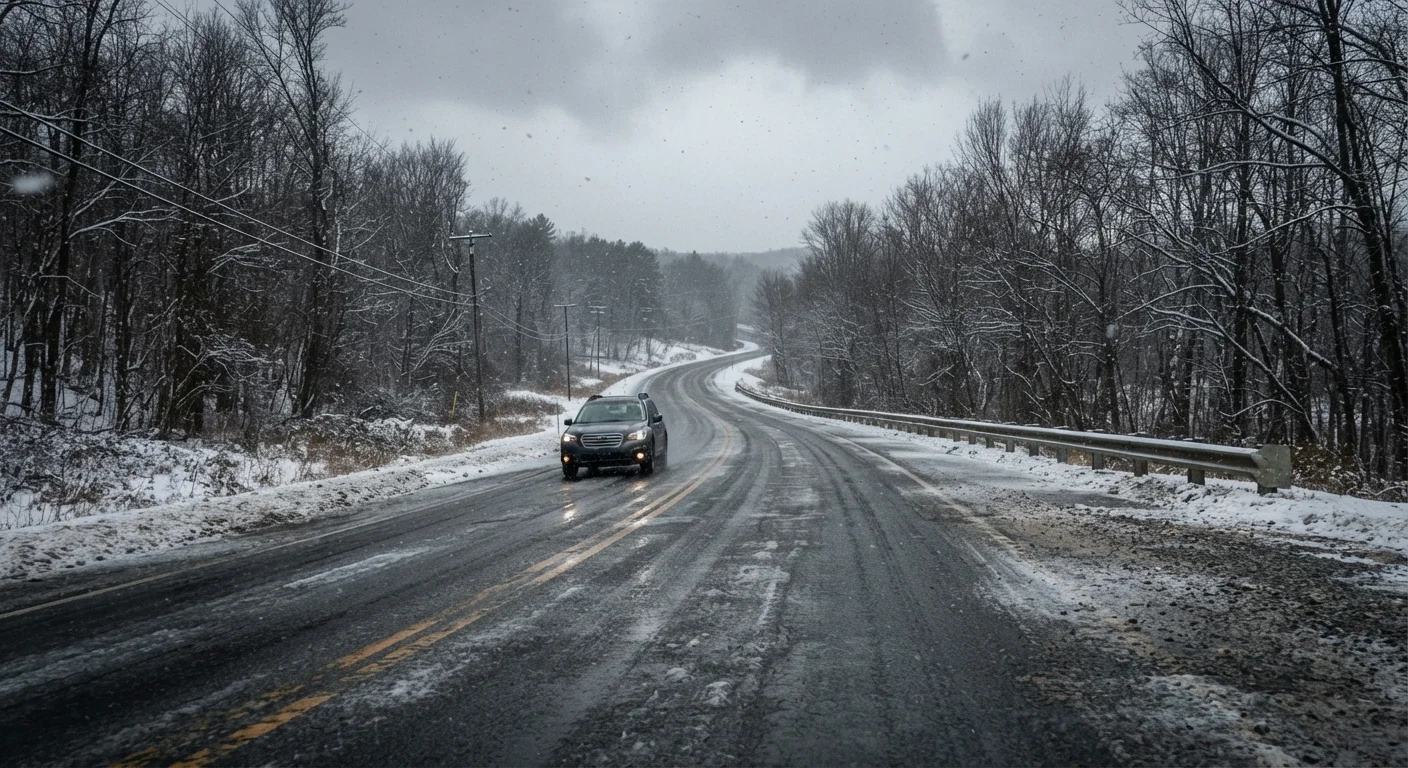
Photo credit: SkripTee.com | Search. Explore. Learn.
In this article
Black ice, packed snow, and slush behave very differently under your tyres. Learn how to identify and respond to each winter surface hazard.
Why Winter Surfaces Aren't All the Same
Most drivers treat winter roads as a single hazard category - slippery and slow down. In reality, ice, snow, slush, and black ice each behave differently under your tyres and call for different responses. Misreading the surface beneath you is one of the most common factors in winter crashes. This reference guide breaks down each surface type, how to identify it, and what it means for vehicle control.
For a broader picture of year-round hazard awareness, see our complete guide to safe driving in all conditions.
| Primary black ice formation temperature | At or just below 32°F (0°C) |
| Stopping distance on packed snow vs. dry road | Up to 2-3x longer (General industry estimate; varies by speed, tyre type, and vehicle) |
| High-risk zones for black ice | Bridges, overpasses, shaded roads, intersections |
| Risk temperature threshold (ice possible) | Below 38°F (3°C) |
| Slush refreeze hazard | Occurs rapidly as evening temperatures fall |
| Winter tyre advantage on packed snow | Significantly improved grip vs. worn all-season tyres |
Surface Types: What You're Actually Driving On
Black Ice
Black ice is a thin, transparent layer of ice that forms directly on the pavement surface, making it nearly invisible to drivers. It earns its name because the dark road beneath shows through, giving the surface a normal - or just slightly glossy - appearance. It typically forms when temperatures hover near or just below 32°F (0°C) and moisture is present: morning dew, light rain, or snowmelt that refreezes. Bridges, overpasses, shaded roadways, and intersections are particularly prone to it because they cool faster or receive less friction from traffic.
Why it's dangerous: Black ice offers almost no traction. A vehicle traveling at normal winter speeds may have no ability to steer or stop effectively. Because it's largely invisible, drivers rarely adjust their speed in advance.
Packed Snow
Packed snow forms when loose snow is compressed by repeated traffic. It has a white, matte appearance and can look deceptively safe. Traction on packed snow is significantly reduced compared to dry pavement - stopping distances can be two to three times longer - but it is generally more predictable than ice if your tyres are in good condition. Winter or all-season tyres with adequate tread depth perform notably better here than worn all-season tyres.
Loose Snow
Fresh, unploughed snow reduces traction and visibility simultaneously. Deeper accumulations can cause your vehicle to lose directional control or become stuck. On highways, loose snow can be obscured by blowing and drifting, making depth difficult to judge. Slow, steady inputs - gradual acceleration, light braking - help maintain control.
Slush
Slush is a partially melted mix of water and snow. It creates a spray that reduces visibility and can pull at your steering as tyres cut through uneven patches. Slush also refreezes quickly when temperatures drop in the evening, turning a manageable surface into sheet ice. Drivers who navigate slush safely in the afternoon can encounter dangerous glaze ice on the same roads a few hours later.
Black Ice
A thin, transparent layer of ice that forms on pavement and is nearly invisible to drivers. It provides almost no traction and typically forms on bridges, overpasses, and shaded road sections when temperatures are near freezing.
Packed Snow
Snow that has been compressed by vehicle traffic into a dense, white layer on the road. It reduces traction significantly compared to dry pavement but is more predictable than glare ice when tyres are in good condition.
Slush
A partially melted mixture of snow and water on the road surface. Slush reduces traction, impairs visibility through spray, and can refreeze rapidly into sheet ice when temperatures drop.
Glare Ice
A smooth, nearly frictionless sheet of ice on the road surface, often formed when slush or snowmelt refreezes. Sometimes used interchangeably with black ice, though glare ice may be more visible due to its shiny surface.
Following Distance
The space maintained between your vehicle and the vehicle ahead. On winter surfaces, safety-focused driving requires substantially increasing following distance to allow for longer stopping distances.
Wheel Spin
The rapid, uncontrolled rotation of a driven wheel when it loses traction with the road surface. On snow and ice, wheel spin reduces forward progress and can worsen loss of control.
Reading the Road and Adjusting Your Driving
Surface identification starts before you leave. Check road condition reports from your state DOT and observe air temperature: anything below 38°F (3°C) means ice formation is plausible, even if roads look clear. Once driving, look for visual cues - a wet-looking sheen on a cold, clear day often signals ice rather than water.
Black Ice Is Often Felt, Not Seen
Many drivers only recognise black ice after the vehicle has already begun to slide. A sudden lightness in steering response or a subtle sideways drift with no visible cause are the most reliable in-the-moment cues. If you suspect black ice, ease off the accelerator smoothly and avoid any abrupt steering or braking inputs until you sense traction returning. If conditions warrant it, pull safely off the road and wait.
Key Adjustments by Surface
- Black ice: Reduce speed well before reaching known risk zones (bridges, shaded curves). If you feel the steering go light or your car begin to drift with no apparent cause, ease off the accelerator gently - do not brake sharply.
- Packed snow: Increase following distance substantially. Brake early and progressively. Avoid sudden lane changes.
- Loose snow: Use slow, deliberate acceleration to avoid wheel spin. If stuck, avoid prolonged spinning - it worsens the situation.
- Slush: Maintain a firm, relaxed grip; slush can tug at the wheel unexpectedly. Plan for refreezing and adjust return-trip timing if possible.
Winter driving hazards also intensify after dark, when road surfaces are harder to read. Our article on night driving habits that increase risk covers how reduced visibility compounds these challenges.
Tyre condition plays a major role in how your vehicle responds to every surface listed here. The seasonal car maintenance guide explains what to inspect before winter arrives.
Rain presents its own distinct hazards, including hydroplaning - a risk that is sometimes confused with ice loss of traction. See driving in heavy rain for a comparison.

Author
Autos Editorial Team
Autos Editorial Team is the collective byline for our editorial team and contributor network. Articles published under this byline or an editorial pen name are researched, written, and reviewed according to our editorial standards for clarity, consistency, and independence before publication.
View all articles →