
Dietary Fibre: Why Most People Fall Short and What to Do About It
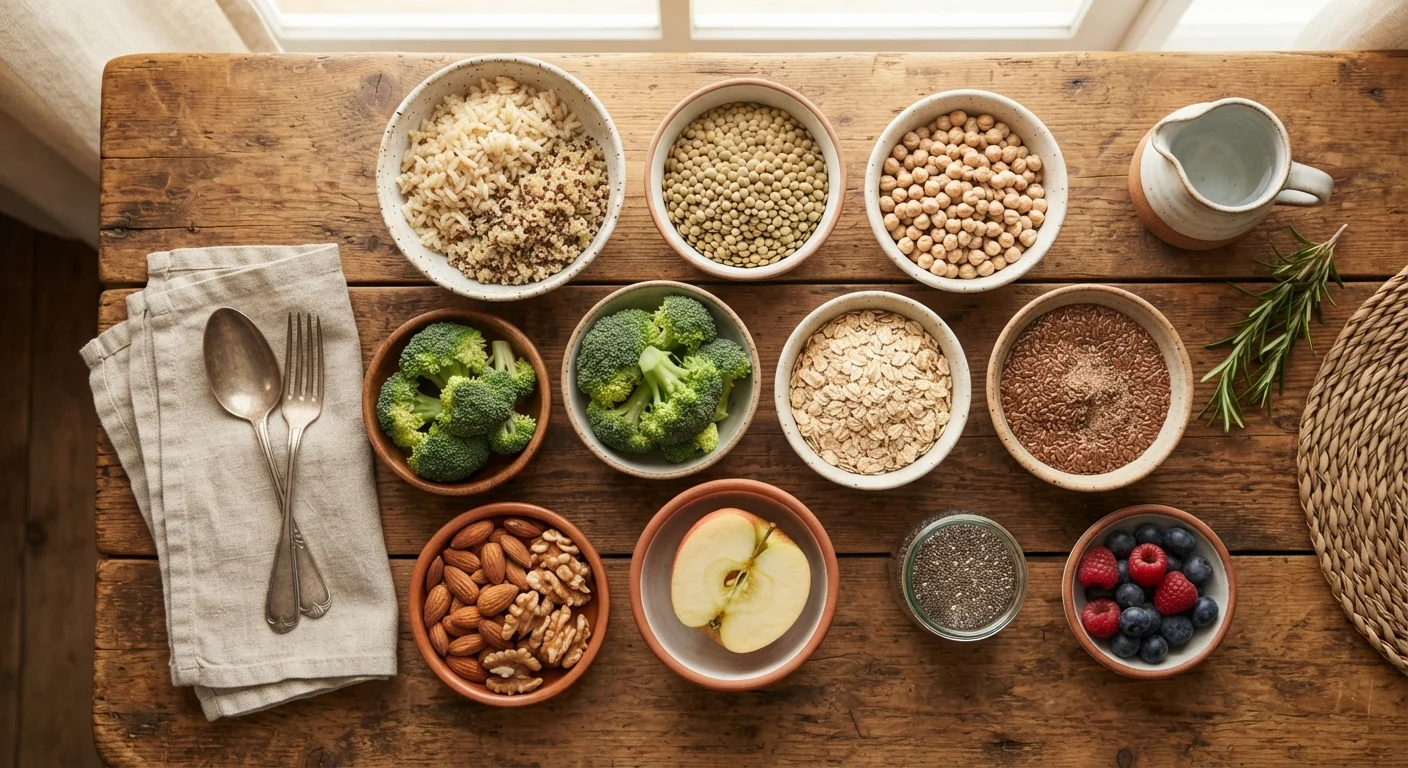
Photo credit: SkripTee.com | Search. Explore. Learn.
In this article
Explore what dietary fibre is, the difference between soluble and insoluble types, and practical ways to eat more of it.
Key Takeaways
- Most U.S. adults consume only about half the recommended daily fibre intake.
- Soluble fibre helps regulate blood sugar and lower LDL cholesterol; insoluble fibre supports bowel regularity.
- Legumes, whole grains, vegetables, and fruits are the most reliable fibre sources in everyday diets.
- Increasing fibre intake gradually and drinking adequate water prevents digestive discomfort.
- Food sources of fibre are generally preferable to supplements, as whole foods deliver additional nutrients.
Why Fibre Intake Lags - and Why It Matters
Despite decades of public health messaging, dietary fibre remains one of the most consistently under-consumed nutrients in the American diet. Data from national nutrition surveys suggest that fewer than 10% of U.S. adults meet recommended daily fibre targets - a pattern nutritionists sometimes call the "fibre gap."
The reasons are structural. Ultra-processed foods, which make up a large share of U.S. calorie intake, are almost entirely devoid of fibre. Refined grains - white bread, white rice, standard pasta - have had much of their fibre-containing bran and germ removed during milling. When convenience foods crowd out vegetables, legumes, and whole grains, fibre is the first casualty.
~7%
U.S. adults meeting daily fibre targets
According to analysis of National Health and Nutrition Examination Survey (NHANES) data, fewer than one in ten American adults consume adequate dietary fibre.
15-17g
Average daily fibre intake in the U.S.
National dietary data consistently shows average American fibre consumption is roughly half the recommended 25-38 grams per day for adults.
19%
Lower colorectal cancer risk with high-fibre diets
A landmark meta-analysis published in the British Medical Journal found each 10-gram daily increase in dietary fibre was associated with a roughly 10% reduction in colorectal cancer risk.
The consequences extend well beyond digestion. A substantial body of research links chronically low fibre intake to elevated risk of cardiovascular disease, type 2 diabetes, colorectal cancer, and poor gut microbiome diversity. Understanding what fibre is and where to find it is a practical first step - and one that goes well beyond digestive health.
Soluble vs. Insoluble: Two Types, One Goal
Fibre is not a single compound - it is an umbrella category covering dozens of plant-derived carbohydrate structures that resist human digestive enzymes. The most clinically useful distinction is between soluble and insoluble fibre, though most whole plant foods contain both.
Soluble Fibre
Soluble fibre dissolves in water, forming a viscous gel in the digestive tract. This gel slows the absorption of glucose, blunting post-meal blood sugar spikes, and binds to bile acids, which forces the liver to draw on circulating LDL cholesterol to produce more - effectively lowering blood cholesterol levels. Oats, barley, apples, citrus, flaxseeds, and legumes are particularly rich sources.
Insoluble Fibre
Insoluble fibre does not dissolve. It adds physical bulk to stool and accelerates transit through the large intestine, reducing the time that potential carcinogens spend in contact with the colon wall. Wheat bran, the skins of vegetables and fruits, and whole-grain cereals are the most common dietary sources.
Increase Fibre Gradually to Avoid Discomfort
Adding large amounts of fibre too quickly can cause bloating, gas, and cramping as gut bacteria adjust. Increase intake by no more than 5 grams per week and drink at least 6-8 glasses of water daily. Most people find their digestive systems adapt within two to four weeks.
For most people, the practical goal is not to track soluble versus insoluble grams separately - it is simply to eat a wider variety of minimally processed plant foods, which naturally delivers a useful balance of both types.
The Best Food Sources, Ranked by Practicality
Reaching the recommended 25-38 grams of fibre daily is achievable through food alone, but it requires deliberate choices. The most fibre-efficient foods are those that deliver a high quantity per serving without requiring large volumes of food.
- Legumes: Cooked lentils, black beans, chickpeas, and split peas each provide 12-16 grams of fibre per cup - making them the single most efficient fibre source in most diets.
- Whole grains: Oats, barley, bulgur, and whole-grain pasta contribute 4-8 grams per serving and have the advantage of being familiar and versatile.
- Vegetables: Artichokes, broccoli, Brussels sprouts, and sweet potatoes offer 4-7 grams per serving alongside a broad range of micronutrients.
- Fruits: Raspberries, pears, and avocados stand out, providing 6-9 grams per serving. Most whole fruits contribute 2-4 grams.
- Nuts and seeds: Chia seeds and flaxseeds are especially fibre-dense at 5-10 grams per two-tablespoon serving.
When reviewing packaged products, the fibre content is listed on the Nutrition Facts panel. Reading that label carefully helps distinguish genuinely high-fibre products from those with minimal fibre despite marketing claims like "made with whole grain."
Practical Steps to Close the Fibre Gap
Dramatically overhauling a diet overnight rarely works. A more effective strategy is incremental substitution - replacing low-fibre foods with higher-fibre equivalents at each meal until new patterns become habitual.
Fibre and Medication Absorption
Very high fibre intake - particularly from supplements - can potentially interfere with the absorption of certain medications, including some thyroid drugs and cholesterol-lowering agents. If you take prescription medications, consult your healthcare provider or pharmacist before substantially increasing fibre intake, especially through concentrated supplement forms.
Several reliable approaches include:
- Anchor breakfast with oats or high-fibre cereal. A bowl of rolled oats delivers roughly 4 grams of fibre before 8 a.m. Adding a tablespoon of chia seeds brings that closer to 9 grams.
- Swap refined grains for whole grains. Whole-wheat bread, brown rice, and whole-grain pasta can replace their refined counterparts in almost any recipe with minimal adjustment to cooking time or taste.
- Add legumes to two or three meals per week. Stirring canned beans into soups, salads, or pasta sauces requires almost no cooking skill and significantly increases fibre density.
- Eat fruit rather than drink juice. Juicing removes most of the fibre. A whole apple provides roughly 4-5 grams; apple juice provides nearly none.
- Leave skins on where safe. Potato skins, cucumber skins, and apple skins each contain a disproportionate share of the food's total fibre.
These principles align closely with the broader framework of building a nutritionally balanced plate - one that prioritises plant diversity rather than any single nutrient in isolation.
This article is for general informational purposes only and does not constitute personalised medical or dietary advice. Consult a registered dietitian or qualified healthcare professional for guidance specific to your health circumstances.
Frequently Asked Questions

Author
Food Editorial Team
Food Editorial Team is the collective byline for our editorial team and contributor network. Articles published under this byline or an editorial pen name are researched, written, and reviewed according to our editorial standards for clarity, consistency, and independence before publication.
View all articles →