
Protein Quality and Completeness: What Amino Acids Tell You About a Food
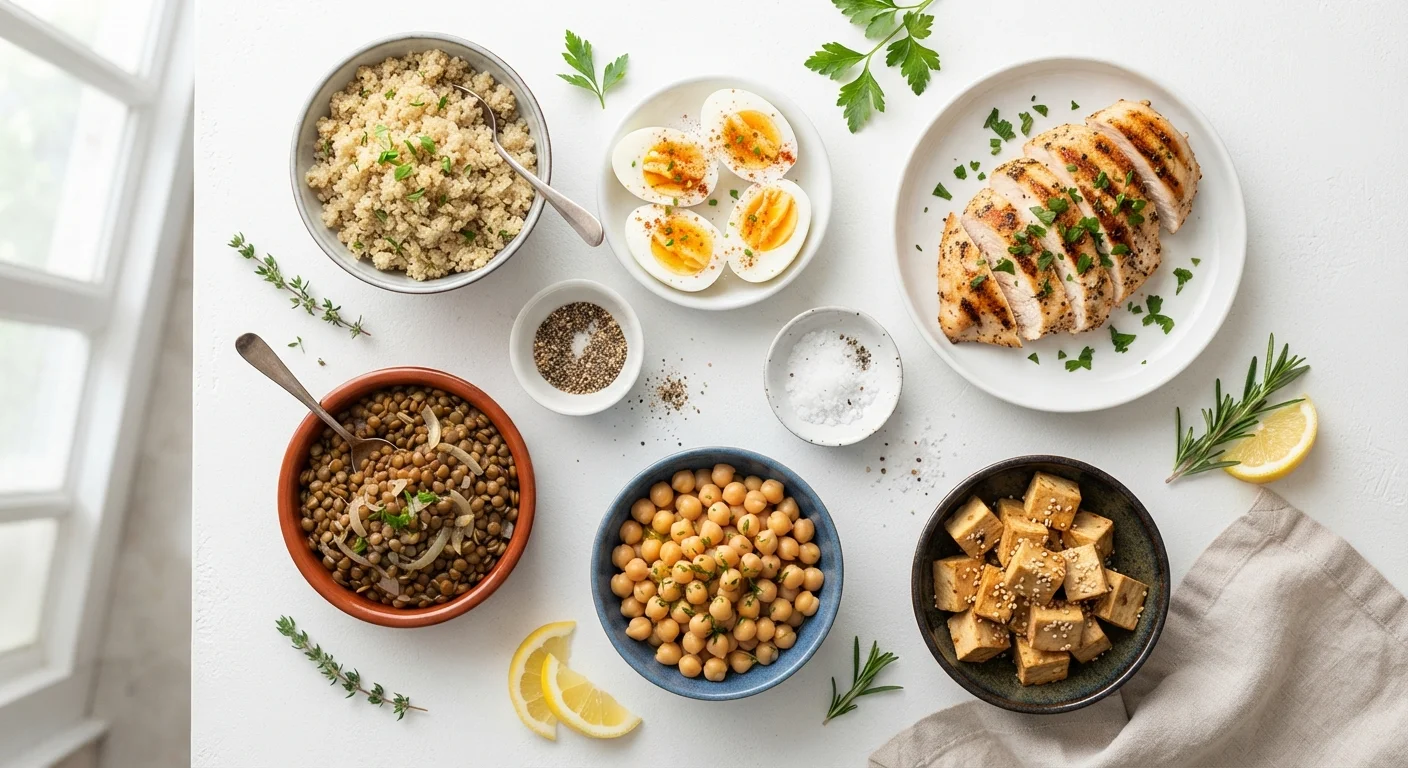
Photo credit: SkripTee.com | Search. Explore. Learn.
In this article
Learn what makes a protein 'complete,' how amino acid profiles differ across foods, and why it matters for varied diets.
Key Takeaways
- Nine essential amino acids must come from food because the body cannot synthesize them.
- Complete proteins contain all nine essential amino acids; incomplete proteins are low in one or more.
- Most animal foods are complete proteins; most plant foods are incomplete but can complement each other.
- Digestibility matters - how well the body absorbs amino acids is as important as raw content.
- Eating a varied diet across the day generally ensures adequate amino acid intake for most people.
- Plant-based eaters can meet all amino acid needs without combining proteins at every single meal.
Why Amino Acids Are the Real Story Behind Protein
When people talk about protein in food, they often focus on grams per serving. But the more nutritionally meaningful question is: which proteins, made of which amino acids? Protein is not a single nutrient - it's a category of molecules built from chains of amino acids, and the body treats each amino acid differently.
Of the 20 amino acids humans use, nine are classified as essential - meaning the body cannot synthesize them in sufficient quantities and must obtain them from food. The other 11 are nonessential or conditionally essential, meaning the body can produce them under normal circumstances. This distinction drives the entire concept of protein quality.
Understanding amino acid profiles helps explain why two foods with identical protein gram counts can have very different nutritional value. It also helps clarify some common misconceptions about plant versus animal eating - misconceptions addressed in more depth in our protein sources comparison.
9
Essential amino acids required from food
According to established nutritional science, humans cannot synthesize these nine amino acids in sufficient quantities, making dietary intake essential.
~0.8 g/kg
Recommended dietary protein per body weight
The U.S. Dietary Reference Intakes set this as the Recommended Dietary Allowance for healthy adult sedentary individuals; active individuals may require more.
DIAAS
Gold-standard protein quality scoring method
The Food and Agriculture Organization of the United Nations (FAO) endorsed DIAAS as the preferred protein quality evaluation metric in a 2013 expert report.
What Makes a Protein 'Complete'?
A protein is called complete when it contains all nine essential amino acids in amounts adequate for human needs. Most animal-derived foods - including meat, poultry, fish, eggs, and dairy - meet this standard. A few plant foods also qualify: quinoa, soy, hemp seeds, and buckwheat are commonly cited examples.
By contrast, most individual plant foods are incomplete proteins, meaning they're low or deficient in at least one essential amino acid. Grains like wheat and rice tend to be low in lysine. Legumes like beans and lentils tend to be low in methionine. This is where the concept of complementary proteins comes in - pairing foods so their amino acid profiles make up for each other's gaps.
Classic complementary pairings include rice and beans, or hummus with whole grain pita. However, research over the past few decades has relaxed the earlier requirement that these combinations happen at the same meal. The body maintains a pool of amino acids that can be drawn from across the day, meaning variety over time is what matters most - not perfect meal-by-meal accounting.
You Don't Need to Combine at Every Meal
The long-standing advice to eat complementary plant proteins at every meal has been revised by most nutrition authorities. As long as you're eating a variety of plant proteins throughout the day - legumes, grains, nuts, seeds - your body can assemble the amino acids it needs from the pool it maintains. Variety over time is the practical goal.
Digestibility: The Factor Protein Labels Don't Show
Raw amino acid content is only part of the equation. The body must actually be able to digest and absorb those amino acids for them to be useful - a property called bioavailability. This is why nutrition scientists developed metrics like the DIAAS, which scores proteins based on both their amino acid profile and how efficiently the small intestine absorbs each indispensable amino acid.
By DIAAS standards, dairy proteins like whey and casein, as well as eggs, score exceptionally well. Many plant proteins score lower, partly because plant cell walls, fiber, and compounds like phytates and tannins can reduce amino acid absorption. Cooking and food processing can significantly improve plant protein digestibility - cooked lentils are considerably more bioavailable than raw.
This doesn't mean plant proteins are inadequate - it means quantity and variety become important levers. Someone relying primarily on plant protein may benefit from eating somewhat more total protein to account for differences in digestibility. For individualized guidance, consulting a registered dietitian is worthwhile. See also our broader look at separating nutrition evidence from trends for context on how these metrics are interpreted.
“The quality of dietary protein is determined not just by its amino acid composition but also by how well those amino acids are digested and absorbed - two foods with the same protein content on paper can have meaningfully different nutritional impacts.”
— Food and Agriculture Organization of the United Nations, Expert Consultation on Protein Quality Evaluation in Human Nutrition, FAO Food and Nutrition Paper 92
Putting It Together: Protein Quality Across a Varied Diet
For most people eating a mixed, varied diet, meeting essential amino acid needs is not a daily challenge that requires active management. The concern is most relevant in specific situations: strict plant-based diets with limited variety, elderly populations with reduced protein absorption, or individuals with elevated protein needs such as athletes or those recovering from illness.
Practical strategies that nutrition experts consistently support include:
- Including legumes - lentils, chickpeas, edamame, black beans - as regular protein anchors in plant-forward meals.
- Rotating protein sources rather than relying on a single food repeatedly.
- Incorporating soy foods, which are complete plant proteins with strong DIAAS scores.
- Treating animal proteins (if consumed) as one component among many, rather than the default primary source.
Protein quality fits naturally into the broader framework of building a nutritionally balanced plate - one where variety, whole foods, and dietary pattern matter more than obsessing over any single nutrient. The amino acid picture reinforces rather than complicates this message: eat widely, and the pieces tend to fall into place.
This article is for general informational and educational purposes only and does not constitute medical or dietary advice. Consult a registered dietitian or qualified healthcare professional for guidance specific to your health needs.
Frequently Asked Questions

Author
Food Editorial Team
Food Editorial Team is the collective byline for our editorial team and contributor network. Articles published under this byline or an editorial pen name are researched, written, and reviewed according to our editorial standards for clarity, consistency, and independence before publication.
View all articles →