
Training Across Life Stages: Puppies, Adults, and Senior Dogs
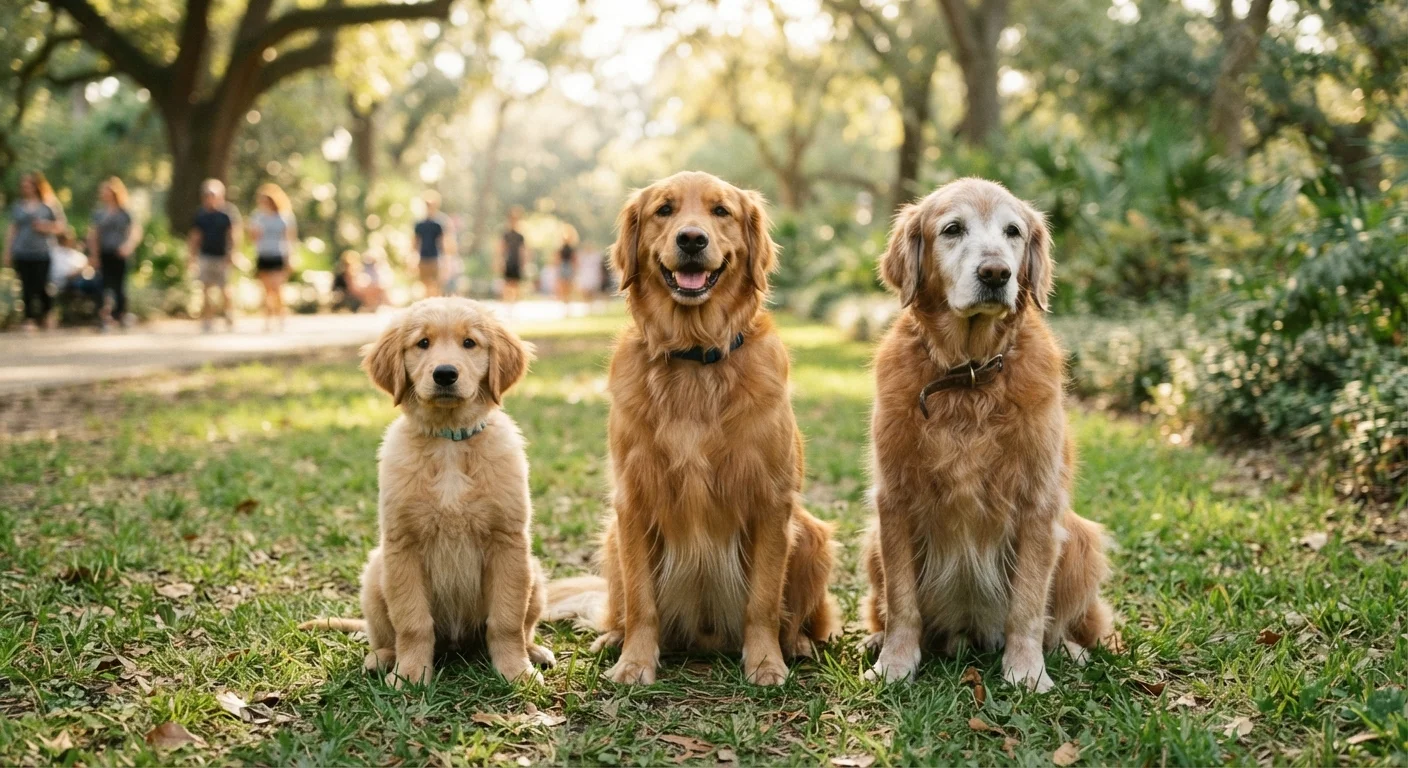
Photo credit: SkripTee.com | Search. Explore. Learn.
In this article
How a dog's capacity and motivation for learning shifts with age, and what owners should prioritise at each stage of their pet's life.
Key Takeaways
- Puppies have a sensitive socialization window (roughly 3-14 weeks) when positive experiences shape behavior for life.
- Adult dogs are fully capable of learning new skills - consistency and motivation matter more than age.
- Senior dogs benefit from shorter, gentler sessions; cognitive and physical changes require training adaptations.
- Positive reinforcement is effective and appropriate across all life stages.
- A veterinary checkup is valuable before starting or changing training at any age.
Why Life Stage Matters in Dog Training
Dogs are lifelong learners, but how they learn - and what they need most - shifts meaningfully as they age. Neuroscience and animal behavior research both confirm that a dog's brain changes in structure and chemistry from puppyhood through old age, influencing memory, motivation, stress tolerance, and the speed at which new associations form.
Understanding these changes isn't about lowering expectations. It's about meeting your dog where they actually are, so your time together is rewarding rather than frustrating. Whether you've just brought home an eight-week-old puppy or adopted a ten-year-old rescue, there's always a productive next step in training - you just need to know which door to open first.
For a strong grounding in the core concepts that apply at any age, our introduction to pet training covers timing, consistency, and reward-based principles that underpin everything discussed here.
3-14 weeks
Puppy socialization sensitive period
Veterinary behaviorists broadly recognize this window as the most influential period for shaping a dog's long-term behavioral profile.
~50%
Senior dogs showing cognitive changes
Studies suggest roughly half of dogs over age 11 show some signs of canine cognitive dysfunction, underscoring the value of continued mental engagement.
5 min
Ideal session length for puppies and seniors
Animal learning researchers consistently find that short, frequent training sessions produce better retention than infrequent longer ones, especially in young and aging dogs.
Training Puppies: The Critical Window
The period between approximately 3 and 14 weeks of age is what behaviorists call the sensitive socialization period. During this window, a puppy's brain is primed to accept new experiences - people, sounds, surfaces, animals - as normal parts of the world. Positive exposures during this time build a behavioral foundation that's remarkably durable.
This doesn't mean training in the traditional sense starts at week three. But it does mean that from the moment a puppy arrives in your home, every interaction is teaching something. Keep lessons short (two to three minutes), end on success, and prioritize these goals:
- Name recognition - the gateway to all future communication
- Sit, down, and come - core safety behaviors that should feel like games
- Bite inhibition - learning to control jaw pressure, critical for safe interaction
- Crate and alone-time comfort - preventing the distress patterns linked to separation anxiety
Socialization extends beyond commands. Introduce your puppy to children thoughtfully - our guide on pets and young children offers age-appropriate guidelines for safe early introductions.
During the socialization window, prioritize breadth of positive experience over depth of obedience work. One calm, happy encounter with a new surface or sound is worth more at eight weeks than a perfect sit.
The sensitive period closes whether or not you've used it intentionally - experiences that happen naturally during this time shape emotional responses for life, making proactive positive exposure a high-return investment.
For senior dogs, try nose work as a low-impact mental workout. Hiding a favorite treat in a small area and letting your dog search engages the olfactory system intensely - tiring in the best possible way.
Scent-based activities require minimal physical exertion but generate high cognitive engagement, making them well-suited to dogs with arthritis or reduced stamina.
Training Adult Dogs: Building on the Foundation
The idea that adult dogs are set in their ways is one of the most persistent myths in dog ownership - and one of the most limiting. Research in animal learning consistently shows that adult dogs retain robust capacity for operant and classical conditioning. What changes is context: an adult dog may have established habits (some unhelpful) that require patient counter-conditioning alongside new skill-building.
Adult dogs often bring real advantages to training: longer attention spans, better impulse control than puppies, and a clearer communication style once you've learned to read them. The keys to success at this stage are:
- Identifying the right motivator - food, play, praise, or access to something they love. Not every dog is equally food-motivated.
- Addressing existing behaviors before adding new ones - if leash reactivity or jumping is a daily friction point, start there.
- Keeping sessions structured but varied - our article on structuring training sessions for long-term learning explains how session length and reward variety affect retention.
Avoid Rushing Past Unwanted Behaviors
It can be tempting to simply add new commands on top of problem behaviors - but unaddressed issues like reactivity or resource guarding tend to persist and can escalate. If your adult dog shows any behavior that involves fear, aggression, or significant distress, consult a certified professional before proceeding with general training. Attempting to suppress these behaviors without understanding their cause can make them worse.
If your adult dog came from a rescue or shelter, allow a decompression period of two to four weeks before beginning formal training. Many dogs need time to feel safe before they can learn efficiently.
Training Senior Dogs: Adapting Without Giving Up
A dog is generally considered a senior from around age seven, though this varies by breed and size - large breeds age faster than small ones. Senior dogs may experience cognitive changes (sometimes called canine cognitive dysfunction, or CCD), reduced hearing or vision, arthritis, and lower energy. None of these automatically disqualify a dog from training, but they all inform how you approach it.
The most important adaptation is physical compassion. If sitting or lying down causes pain, asking for those positions repeatedly is counterproductive and unkind. A veterinary checkup before changing or intensifying a senior dog's training routine can identify comfort issues that, once managed, open new possibilities. See our senior pet care guide for a fuller picture of how needs evolve with age.
What senior dogs often benefit from most:
- Mental enrichment over physical intensity - nose work, scatter feeding, and puzzle feeders keep aging minds active
- Refreshing familiar cues - revisiting known behaviors maintains neural pathways and strengthens the dog-owner bond
- Very short sessions - five minutes or fewer, with generous rest between
- High-value, easy-to-eat rewards - dental issues or reduced smell sensitivity may affect what treats are motivating
Principles That Work at Every Stage
Across puppyhood, adulthood, and senior years, a handful of principles remain constant. Positive reinforcement - rewarding the behaviors you want to see more of - is supported by decades of animal learning research and is appropriate for dogs of every age and background. Punishment-based methods, by contrast, carry documented risks of increasing fear and aggression, regardless of the dog's age.
Consistency matters more than intensity. Five minutes of clear, calm practice every day outperforms a single exhausting weekend session. And your emotional state is part of the environment: dogs are sensitive readers of human body language and tension.
Train the Dog in Front of You
Every dog - regardless of age - will have days when they're distracted, tired, or simply not in learning mode. On those days, shortening the session or switching to a simple, well-known behavior is not failure; it's good training. Ending on a positive note preserves the dog's enthusiasm for the next session, which is always the real goal.
If you're ever unsure whether a behavior issue stems from training gaps or an underlying medical or psychological cause, a consultation with a veterinary behaviorist or a certified applied animal behaviorist (CAAB) is a worthwhile investment. These professionals bridge the gap between medicine and behavior in ways that general advice cannot.
For a comprehensive view of what responsible ownership looks like across your dog's entire life, our complete owner's handbook walks through every major stage. And if any common training assumptions are holding you back, popular training myths debunked may be the reset you need.
This article is for general informational purposes only and does not constitute veterinary or behavioral advice. Always consult a qualified veterinarian or certified animal behaviorist for guidance specific to your dog's health and circumstances.

Author
Pets Editorial Team
Pets Editorial Team is the collective byline for our editorial team and contributor network. Articles published under this byline or an editorial pen name are researched, written, and reviewed according to our editorial standards for clarity, consistency, and independence before publication.
View all articles →