
Fixed-Rate vs. Adjustable-Rate Mortgages
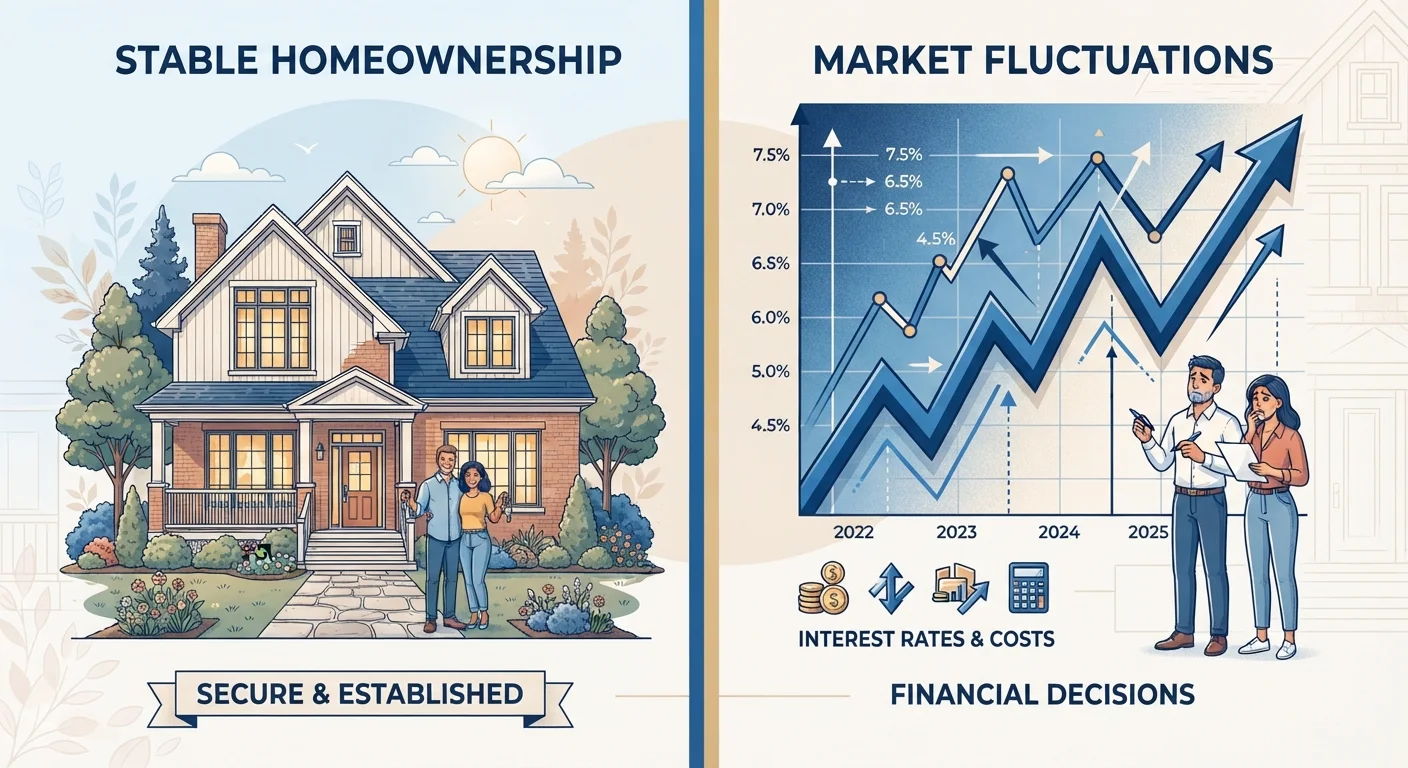
Photo credit: SkripTee.com | Search. Explore. Learn.
In this article
How fixed and adjustable mortgage rates differ, when each structure tends to work in a buyer's favour, and what the trade-offs look like over time.
Key Takeaways
- Fixed-rate mortgages lock in an interest rate for the life of the loan, eliminating payment uncertainty.
- Adjustable-rate mortgages typically start with a lower rate that resets periodically after an initial fixed period.
- ARMs carry rate-change risk; federal consumer protections cap how much rates can rise per adjustment and over the loan's lifetime.
- Your expected time in the home is one of the most important factors in choosing between the two structures.
- Neither structure is universally superior - the right choice depends on your financial situation, risk tolerance, and goals.
How Each Structure Works
A fixed-rate mortgage carries the same interest rate for the entire repayment term - typically 15 or 30 years. Your principal and interest payment never changes, though escrow portions covering taxes and insurance may shift annually. This structure makes a mortgage behave like a classic fixed expense in your household budget.
An adjustable-rate mortgage (ARM) starts with an initial fixed-rate period - commonly 5, 7, or 10 years - then resets periodically based on a benchmark index (such as the Secured Overnight Financing Rate, or SOFR) plus a lender margin. A "5/1 ARM," for example, holds its initial rate for five years, then adjusts once per year thereafter. Federal regulations require lenders to disclose periodic and lifetime rate caps, which limit how dramatically your rate can move at each adjustment or over the full loan term.
| Criterion | Fixed-Rate Mortgage | Adjustable-Rate Mortgage (ARM) |
|---|---|---|
| Interest rate | Locked for life of loan | Fixed initially, then adjusts periodically |
| Initial rate level | Typically higher than ARM | Typically lower than fixed at outset |
| Monthly payment stability | Fully predictable (P&I) | Predictable during fixed period only |
| Rate-change risk | None | Present after initial fixed period |
| Regulatory rate caps | Not applicable | Periodic and lifetime caps required by law |
| Best time horizon | Long-term ownership (10+ years) | Short-to-medium term (5-7 years) |
| Refinancing incentive | If market rates fall significantly | May reset naturally with market |
Because the mortgage is secured by the property itself, defaulting on either loan type carries serious consequences - a point examined in detail in our piece on secured and unsecured debt.
The Real Trade-Offs Over Time
The central tension is straightforward: fixed-rate loans offer certainty at a cost, while ARMs offer a lower initial rate in exchange for future uncertainty.
30 years
Most common fixed-rate mortgage term in the US
The 30-year fixed-rate mortgage has been the dominant home loan product in the US market for decades, according to the Consumer Financial Protection Bureau.
5/1, 7/1, 10/1
Most common ARM structures by initial fixed period
These ARM configurations - indicating years fixed followed by annual adjustment frequency - are among the most widely offered, per Federal Reserve mortgage disclosure guidelines.
2%/6%
Typical ARM periodic cap / lifetime cap example
Many ARMs cap rate increases at 2 percentage points per adjustment period and 6 points over the loan's life, though actual caps vary by lender and loan product.
In a rising-rate environment, a fixed-rate borrower is insulated - their payment stays flat while new buyers face higher costs. In a falling-rate environment, an ARM borrower may see their payment decrease at adjustment, but the same outcome is achievable through refinancing a fixed-rate loan (though refinancing carries closing costs).
The break-even calculation matters. If the initial rate difference between an ARM and a fixed-rate loan saves you $200 a month, and your ARM's fixed period is five years, that's $12,000 in savings before any adjustment occurs. Whether that advantage holds after adjustments begins depends entirely on where market rates move - something no lender or analyst can guarantee.
For buyers still weighing whether to purchase at all, our article on renting vs. buying a home examines the broader financial and lifestyle factors at play.
Key Factors to Weigh Before Deciding
How long you'll stay in the home is arguably the single most decisive factor. If you're confident you'll sell or refinance before the ARM's fixed period expires, the rate risk largely disappears. If your timeline is uncertain, the predictability of a fixed rate has clear value.
Your financial cushion matters too. An ARM payment could increase meaningfully at adjustment. Buyers with limited income flexibility or tight debt-to-income ratios may face real hardship if rates rise sharply - a form of "payment shock" that regulators have historically flagged as a consumer risk.
Current rate environment provides context. When fixed rates are historically low, locking in makes intuitive sense. When fixed rates are elevated relative to historical norms, the rate discount offered by an ARM - and the possibility of refinancing later - becomes more compelling. That said, predicting rate direction is speculative, and buyers should be cautious about making major financial decisions on the assumption that rates will move in any particular direction.
Before closing on any mortgage, it's worth understanding how lenders verify your financial picture right up to the settlement date - our guide on keeping your mortgage approval intact covers the common missteps that put deals at risk.
This article is for general informational purposes only and does not constitute personalised financial or mortgage advice. Consult a licensed mortgage professional or financial adviser before making decisions based on your individual circumstances.

Author
Real Estate Editorial Team
Real Estate Editorial Team is the collective byline for our editorial team and contributor network. Articles published under this byline or an editorial pen name are researched, written, and reviewed according to our editorial standards for clarity, consistency, and independence before publication.
View all articles →