
Interior Paint Finishes Decoded: Matte, Eggshell, Satin, and Gloss Compared
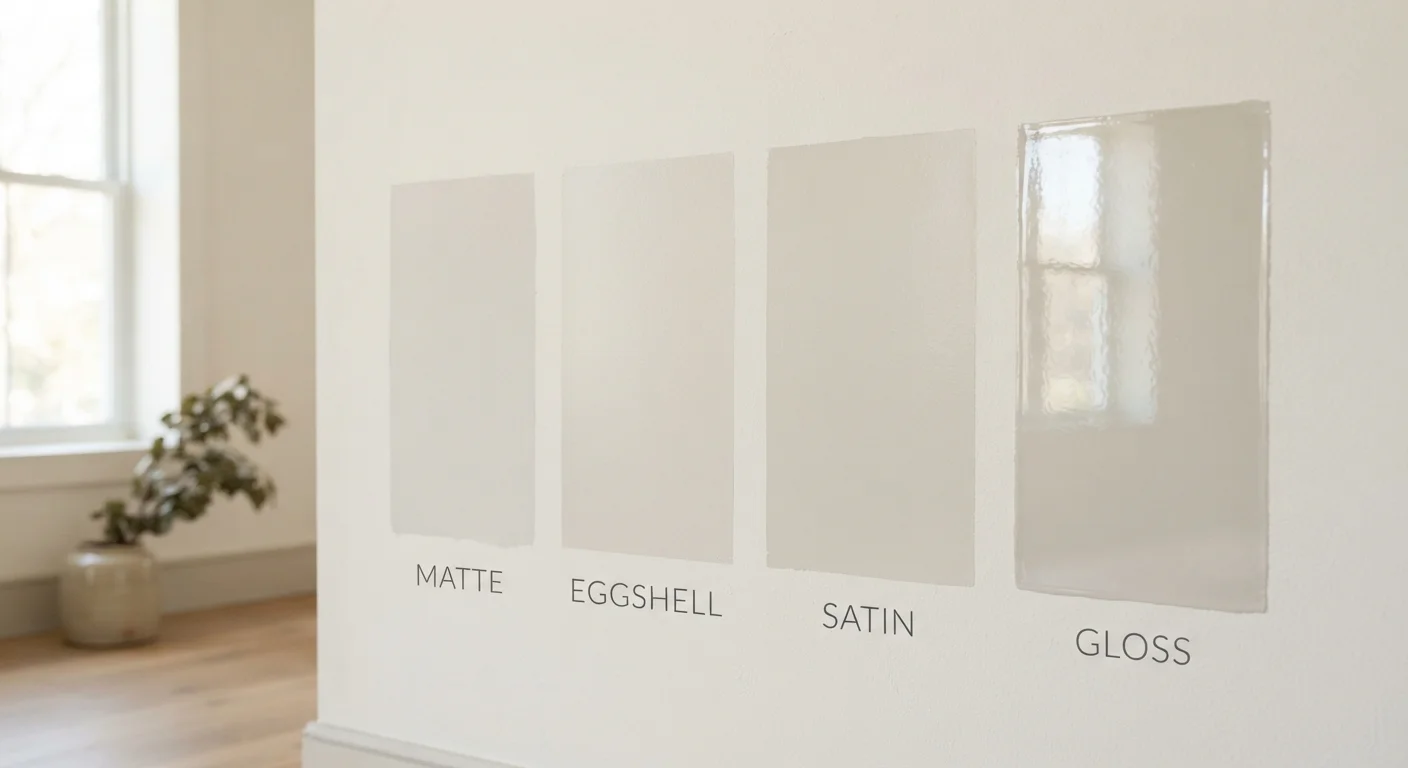
Photo credit: SkripTee.com | Search. Explore. Learn.
In this article
The finish you choose affects durability and cleanability, not just appearance. Find out which sheen level suits each room in your home.
Key Takeaways
- Sheen level directly influences durability, moisture resistance, and how easily a surface cleans.
- Matte and flat finishes suit low-traffic areas but are difficult to wipe clean without damaging the surface.
- Satin and eggshell strike a practical balance for most living spaces, including family rooms and bedrooms.
- Semi-gloss and gloss finishes are standard choices for kitchens, bathrooms, trim, and doors.
- Lighting conditions and wall imperfections should influence your sheen choice as much as room function.
Why Paint Finish Matters as Much as Color
Most homeowners spend considerable time selecting a paint color while giving little thought to sheen level - the degree of light reflectance a dried paint surface produces. That's a costly oversight. Sheen affects durability, moisture resistance, and cleanability in ways that color simply does not.
Paint manufacturers typically offer four main interior finish categories: matte (or flat), eggshell, satin, and gloss (or semi-gloss). Each reflects a different percentage of light and carries a different practical profile. Choosing based on aesthetics alone often leads to surfaces that stain easily, show scuffs, or amplify every wall imperfection.
Just as material selection shapes long-term performance in flooring decisions - explored in our flooring material trade-offs guide - paint finish choices have compounding consequences for maintenance and longevity.
| Matte / Flat | Eggshell | Satin | Semi-Gloss / Gloss | |
|---|---|---|---|---|
| Sheen level | None to very low | Low, soft luster | Medium pearl sheen | High reflectance |
| Cleanability | Poor - easily damaged by scrubbing | Moderate - wipes clean gently | Good - handles light scrubbing | Excellent - fully washable |
| Hides wall imperfections | Best | Good | Moderate | Poor - highlights flaws |
| Moisture resistance | Low | Low to moderate | Moderate to good | High |
| Best rooms | Ceilings, formal rooms | Bedrooms, living rooms | Hallways, kids' rooms | Kitchens, baths, trim |
| Surface prep required | Minimal | Moderate | Moderate | Thorough - flaws show |
Matte and Flat: The Low-Sheen Option
Matte and flat finishes reflect very little light, producing a smooth, non-reflective surface that excels at hiding wall imperfections such as small dents, texture inconsistencies, and patch repairs. This makes them a practical choice for ceilings and older walls with uneven surfaces.
The trade-off is cleanability. Matte finishes absorb rather than repel liquids, meaning scrubbing can lift the paint and leave dull spots or visible marks. Most professionals recommend matte paints only for low-traffic zones - adult bedrooms, formal dining rooms, and ceilings - where walls are rarely touched.
Avoid Matte Paint in High-Moisture Zones
Using matte or flat paint in bathrooms, kitchens, or laundry rooms is a common mistake. Porous matte surfaces trap moisture and are prone to mildew over time. Once stained or affected by humidity, matte-painted surfaces typically require repainting rather than cleaning - adding unnecessary cost and effort.
Eggshell and Satin: The Everyday Workhorses
Eggshell finishes offer a subtle, low-luster sheen comparable to the surface of an actual eggshell. They reflect slightly more light than matte paints and are meaningfully easier to clean - a damp cloth removes most marks without damaging the surface. Eggshell is widely regarded as the standard finish for bedrooms, living rooms, and dining rooms.
Satin finishes push the sheen a step further, offering a soft pearl-like appearance with better moisture and stain resistance. Satin holds up well in higher-traffic corridors, children's bedrooms, and family rooms where walls see more direct contact. It also tolerates humidity better than eggshell, making it a workable choice in rooms that aren't full bathrooms.
Test Sheen Under Your Actual Lighting
Paint chips viewed in a store look different under your home's lighting conditions. Before committing to a finish, apply a sample patch and observe it under both natural daylight and artificial evening light. A satin finish that reads as subtle in a bright showroom may appear noticeably shiny in a bedroom lit by warm lamps.
Semi-Gloss and Gloss: High Performance for High-Demand Areas
Semi-gloss and high-gloss finishes reflect significantly more light, creating a noticeable sheen that highlights architectural details - which is why both are the standard choice for trim, baseboards, window casings, and doors. The higher resin content in these paints creates a hard, washable surface that withstands repeated cleaning without deterioration.
In kitchens and bathrooms, semi-gloss is broadly preferred by contractors because it resists moisture, grease, and steam without promoting mold growth the way more porous finishes can. Full gloss is typically reserved for trim and cabinetry rather than walls, as it amplifies every surface imperfection under direct light.
One practical note: higher sheen finishes require more careful surface preparation. Any dents, nail holes, or taping ridges will be more visible under a gloss finish than under matte or eggshell, making proper priming and patching essential before application.
~10-15%
Light reflected by matte paint
Paint industry sheen classifications generally place flat finishes at under 15% light reflectance, compared with 70-85% for high-gloss formulas.
2-3x
More scrub cycles withstood by semi-gloss vs. flat
Independent testing by paint research bodies consistently shows higher-sheen finishes withstand significantly more wash cycles before surface degradation becomes visible.

Author
Real Estate Editorial Team
Real Estate Editorial Team is the collective byline for our editorial team and contributor network. Articles published under this byline or an editorial pen name are researched, written, and reviewed according to our editorial standards for clarity, consistency, and independence before publication.
View all articles →