
Flooring Material Trade-Offs: Hardwood, Laminate, Vinyl Plank, and Tile
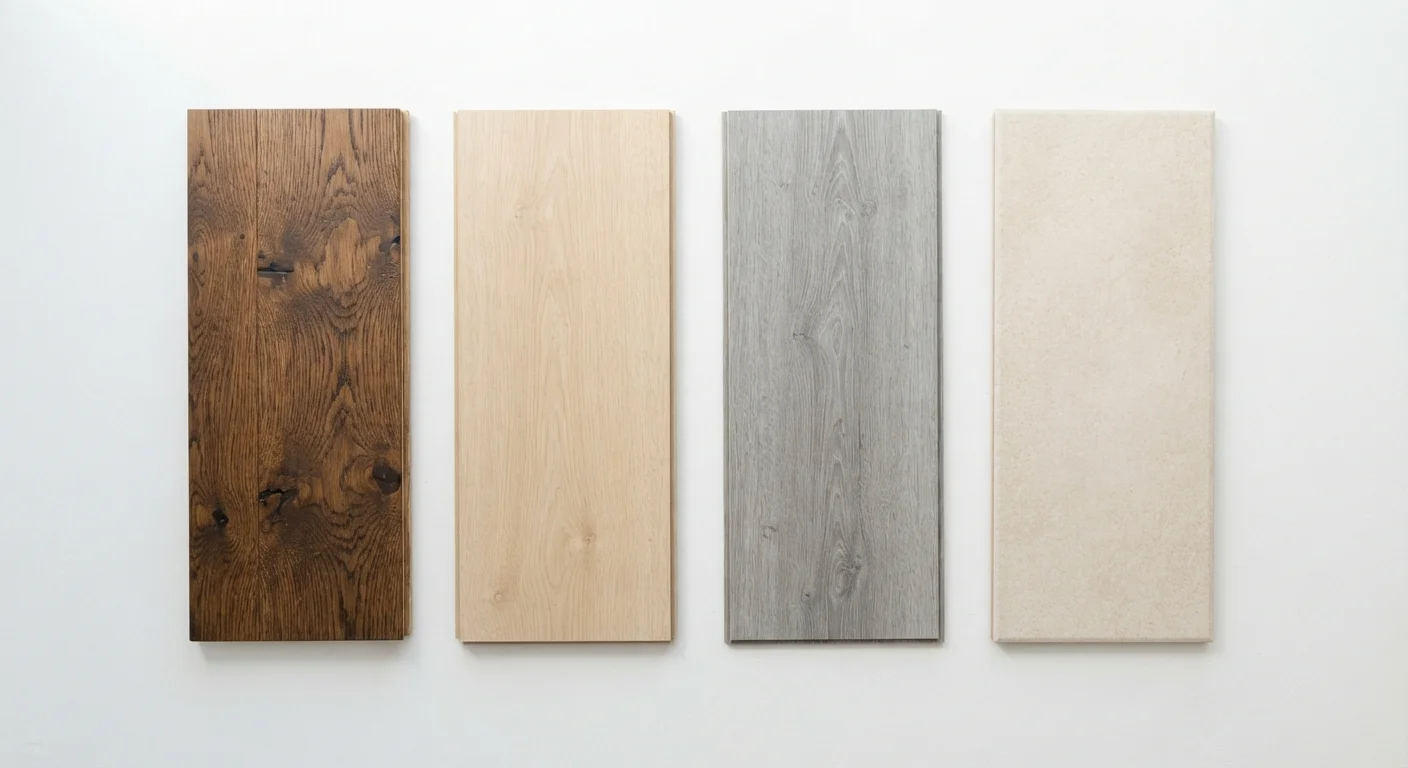
Photo credit: SkripTee.com | Search. Explore. Learn.
In this article
Each flooring type has genuine strengths and limitations. Compare durability, cost, moisture resistance, and maintenance across four popular options.
Key Takeaways
- Hardwood adds resale value but costs more upfront and is vulnerable to moisture damage.
- Laminate mimics wood convincingly at a lower price point but cannot be refinished.
- Vinyl plank is fully waterproof, making it the most practical choice for kitchens and bathrooms.
- Tile is the most durable and moisture-resistant option but requires skilled installation and can feel cold underfoot.
- Room function, subfloor condition, and household lifestyle should drive your flooring decision.
How These Four Flooring Types Compare
Flooring is one of the most consequential decisions in a home renovation - it affects comfort, maintenance, resale appeal, and how a space feels every day. Hardwood, laminate, vinyl plank, and tile each occupy a distinct position in the market, and each comes with genuine trade-offs that matter depending on where you're installing and how you live. This comparison focuses on the factors that most affect a homeowner's satisfaction: cost, durability, moisture resistance, and ease of maintenance.
| Hardwood | Laminate | Vinyl Plank | Tile | |
|---|---|---|---|---|
| Typical material cost (per sq ft) | $5-$15+ | $1-$5 | $2-$7 | $1-$10+ |
| Moisture resistance | Low | Low-Moderate | High (waterproof) | Very High |
| Durability / lifespan | Very High (refinishable) | Moderate (not refinishable) | Moderate-High | Very High |
| DIY installation ease | Difficult | Moderate | Easy-Moderate | Difficult |
| Comfort underfoot | Warm, firm | Moderate | Soft, warm | Hard, cold |
| Resale value impact | Positive | Neutral | Neutral-Positive | Neutral-Positive |
| Best room applications | Living areas, bedrooms | Bedrooms, living areas | Kitchens, baths, basements | Bathrooms, kitchens, entryways |
If you're weighing other home renovation decisions alongside flooring, our guide on open-plan versus defined room layouts explores how structural choices interact with design goals.
Hardwood: Premium Appeal With Real Limitations
Solid hardwood flooring - typically oak, maple, or hickory - commands attention in any room. It can be sanded and refinished multiple times over its lifespan, which is a genuine long-term value advantage. Real estate professionals generally regard hardwood as a positive selling point, particularly in living areas and bedrooms.
The trade-offs are significant, however. Hardwood is among the most expensive flooring options both for materials and installation, which typically requires a skilled professional. Solid hardwood expands and contracts with humidity, making it unsuitable for basements, bathrooms, or any space prone to moisture. Even engineered hardwood - which uses a real wood veneer over a plywood core and handles humidity better - carries a notable price premium over alternatives. Scratches are possible with heavy traffic or pets, though most surface damage can be addressed through refinishing.
Account for Acclimation Time With Hardwood
Solid hardwood flooring must acclimate to a room's temperature and humidity before installation - typically 3 to 5 days with planks laid flat in the space. Skipping this step can lead to warping, gapping, or buckling after installation. Ask your installer about the recommended acclimation period for the specific product you select.
Laminate: Budget-Friendly Wood Look With Key Compromises
Laminate flooring uses a photographic layer printed to resemble wood, stone, or tile, bonded over a high-density fiberboard (HDF) core. Modern laminate has improved dramatically in realism and can fool even attentive observers. It is significantly less expensive than hardwood in both materials and installation costs, and many products are designed for floating installation, making DIY feasible.
The primary limitation is irreversibility. Laminate cannot be refinished - once the surface wears through, replacement is the only option. Although some laminate products carry moisture-resistant coatings, the HDF core remains vulnerable to sustained water exposure, particularly at seams. It is not recommended for bathrooms or laundry rooms. Laminate also produces a somewhat hollow underfoot sound compared to solid hardwood, a difference that some homeowners find noticeable.
Vinyl Plank: Practical Performance for Modern Households
Luxury vinyl plank (LVP) has grown rapidly in popularity because it solves problems that hardwood and laminate cannot. Its construction - a rigid or flexible PVC core with a printed design layer and wear coating - makes it genuinely waterproof throughout, not just water-resistant. This opens it up for bathrooms, kitchens, laundry rooms, and basements without restriction.
LVP is softer and warmer underfoot than tile, installs quickly with click-lock systems, and handles subfloor imperfections better than hardwood. It is generally priced between laminate and hardwood. The meaningful limitation is ceiling on lifespan and refinishability: vinyl plank cannot be sanded or refinished, and while the wear layer resists scratches, deep gouges require plank replacement rather than repair. Some buyers also perceive it as less premium than real wood, which can be a consideration in high-end resale contexts.
~30%
US flooring market share held by resilient (vinyl) products
According to Floor Covering News market analyses, resilient flooring including LVP has become the largest single product category in the US flooring market by volume.
25-100 years
Typical hardwood floor lifespan with proper care
Industry guidance from the National Wood Flooring Association indicates solid hardwood, when refinished periodically, can last the life of the home.
Tile: Maximum Durability for the Right Spaces
Ceramic and porcelain tile are the oldest flooring materials in widespread use - and with good reason. Tile is effectively impervious to water, fire-resistant, and can outlast the structure it's installed in when properly maintained. It is the standard choice for bathrooms and kitchens globally, and its hardness makes it ideal for high-traffic entryways.
The trade-offs centre on comfort, installation, and cost. Tile is hard and cold underfoot, which makes it uncomfortable in bedrooms or living areas without radiant heating underneath. Professional installation is strongly recommended: proper substrate preparation, waterproofing membranes in wet areas, and correct grouting all require skill and are regulated or inspected in some jurisdictions. Grout lines require periodic sealing to prevent staining and mildew accumulation, adding to long-term maintenance. Installation costs are typically the highest of the four options discussed here.
For other decisions where material trade-offs have lasting financial consequences, the framework in our interior paint finish guide applies a similarly practical lens.
Choosing by Room: A Practical Framework
Room function should be the first filter in any flooring decision. Bathrooms and laundry rooms call for tile or vinyl plank - moisture resistance is non-negotiable. Kitchens tolerate all four materials, though hardwood requires diligent maintenance around sinks and appliances. Living rooms and bedrooms are well-suited to hardwood or laminate, where comfort and aesthetics take precedence over waterproofing. Basements, which face inherent moisture risk from below, are best served by vinyl plank or tile.
Budget matters alongside function. If per-square-foot material and installation costs are a constraint, laminate and vinyl plank typically offer the most value relative to performance. Hardwood and tile carry higher upfront costs but can deliver longer service lives when properly maintained - a calculation similar in structure to the trade-offs explored in our guide on fixed-rate versus adjustable-rate mortgages, where upfront stability costs more but may protect long-term.
Finally, verify that your subfloor condition and any local building codes or permit requirements are addressed before installation begins. Structural repairs or levelling work should always precede new flooring, and certain installations - especially tile over wet areas - may involve permitted work in some municipalities. Consult a licensed flooring professional when in doubt.

Author
Real Estate Editorial Team
Real Estate Editorial Team is the collective byline for our editorial team and contributor network. Articles published under this byline or an editorial pen name are researched, written, and reviewed according to our editorial standards for clarity, consistency, and independence before publication.
View all articles →