
Private Seller vs. Dealership: What Changes When You Buy from an Individual
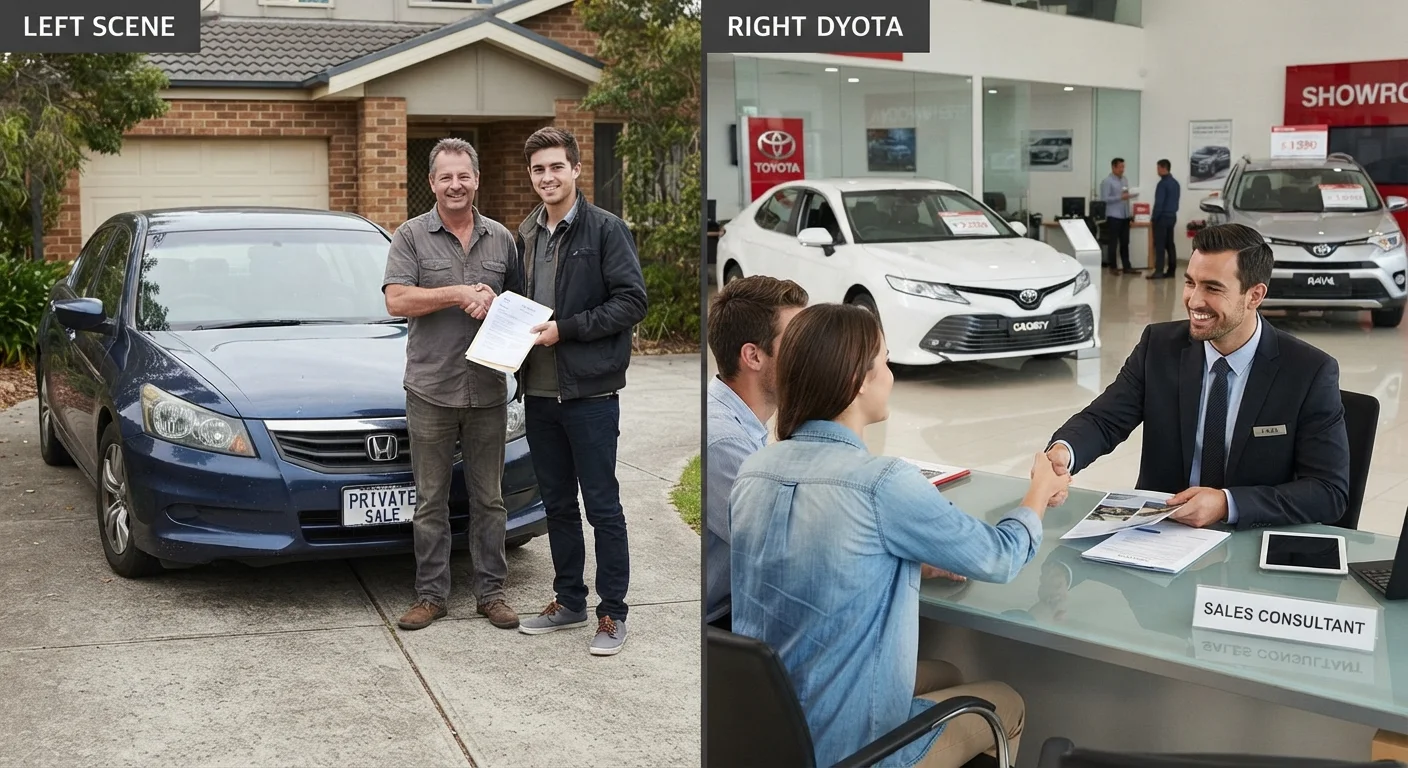
Photo credit: SkripTee.com | Search. Explore. Learn.
In this article
Understand the legal, financial, and practical differences of buying a car from a private seller versus an established dealership.
Key Takeaways
- Private sellers typically offer lower prices but provide no consumer protection warranties or recourse.
- Dealerships must comply with federal and state disclosure laws; private sales are generally sold as-is.
- Financing a private purchase requires pre-arranged loans; dealerships offer in-house financing options.
- Title transfer, taxes, and registration work differently depending on who you buy from.
- A pre-purchase inspection by an independent mechanic is strongly advisable for any used car, regardless of source.
Legal Protections: Where the Two Paths Diverge Most
The single biggest difference between buying from a private individual and a licensed dealership is legal accountability. When you purchase from a dealership, the transaction is governed by the Federal Trade Commission's Used Car Rule, which requires dealers to display a Buyers Guide disclosing whether the vehicle comes with any warranty. Most used cars are sold "as-is" even at dealerships, but the disclosure requirement is mandated - sellers can't simply omit that information.
Private sales carry no such obligation. A private seller is generally not required to disclose known defects in most states, and once you hand over payment, your recourse is extremely limited. Some states do impose a duty to disclose material defects even in private transactions, but enforcement is difficult and legal action against an individual is costly and uncertain.
Private Sale Fraud Is a Real Risk
Scams involving private vehicle sales are well-documented and range from title washing (concealing a vehicle's salvage or flood history) to outright fraudulent listings for cars the seller doesn't own. Never wire money, pay via gift card, or transfer funds before physically inspecting the vehicle and verifying the seller's identity matches the title. Meeting in a safe, public location and bringing a trusted person with you is a reasonable precaution.
This distinction matters most when something goes wrong after purchase. A dealership is a licensed business subject to state dealer regulations, consumer protection statutes, and potentially manufacturer certification requirements. A private seller is simply a person who no longer wants their car.
Pricing and Negotiation Dynamics
Private sellers often list vehicles below dealership retail prices because they have no overhead - no lot fees, no reconditioning costs, no sales staff to compensate. For a buyer who knows the market, this can translate to genuine savings. However, what appears to be a lower price can narrow once you factor in the cost of an inspection, any immediate repairs, and the absence of any warranty coverage.
Dealership pricing is typically higher, but it may include reconditioning, a limited warranty, and the administrative infrastructure to handle paperwork. Understanding what each price actually includes is essential before comparing figures side by side. Our guide on new versus used car trade-offs covers how purchase price interacts with long-term cost of ownership in more detail.
| Private Seller | Dealership | |
|---|---|---|
| Consumer legal protections | Minimal; mostly as-is by default | FTC Used Car Rule; state dealer regulations apply |
| Warranty availability | Rarely offered; not required | As-is or limited warranty disclosed; CPO option possible |
| Typical pricing | Often below retail market value | Retail or above; may include reconditioning |
| Financing options | Must arrange independently before purchase | In-house financing available at point of sale |
| Title and paperwork | Buyer and seller handle transfer themselves | Dealer typically manages DMV paperwork |
| Inspection access | Pre-purchase inspection strongly advised | History reports common; CPO vehicles inspected |
| Negotiation dynamic | Personal, flexible, timeline-driven | Structured, process-driven, margin-based |
Negotiation also works differently. Private sellers may be more emotionally invested in their vehicle or motivated by a timeline (relocation, financial need), which creates different leverage dynamics than a dealership floor. For a grounded look at how negotiation myths affect buyer behavior at dealerships, see our piece on common car negotiation myths.
Financing, Title, and Paperwork
Dealerships can arrange financing on the spot through their network of lenders, which simplifies the buying process - though it doesn't always mean the best rate. Before accepting dealer financing, it's worth comparing what a bank or credit union would offer independently. See our comparison of dealer financing versus bank loans for a detailed breakdown.
Private sales require you to arrange financing before you complete the purchase. Most banks and credit unions do offer private-party auto loans, but the process takes more preparation. Additionally, lenders may apply stricter requirements for older or high-mileage vehicles.
Always Verify a Clean Title Before Payment
In a private sale, run a VIN (Vehicle Identification Number) check through your state DMV or a vehicle history service to confirm the title is clean and free of liens before exchanging any money. A lien means a lender still has a financial claim on the vehicle, which can complicate or even invalidate your ownership. Never complete a private sale without holding a clean, correctly signed title in your hand.
Title transfer is another area where private purchases demand more attention. In a dealership sale, the dealer typically handles title work and submits paperwork to the state DMV. In a private sale, both buyer and seller are responsible for correctly completing and filing the title. Errors can delay registration and, in some cases, create legal complications if the title has liens, missing signatures, or odometer discrepancy issues.
Before committing to any purchase, review the full car-buying process from lot to keys and prepare the questions worth asking before signing any deal.
Due Diligence: What You Must Do Differently
Regardless of source, a pre-purchase inspection by an independent, qualified mechanic is one of the most valuable steps a used car buyer can take. With a private seller, this step is non-negotiable - there is no certified inspection history to rely on, and the seller has no regulated obligation to disclose mechanical issues. A seller who refuses to allow an independent inspection before sale should be treated as a red flag.
With dealerships, a vehicle history report (such as those from services like Carfax or AutoCheck) is more commonly provided, and certified pre-owned (CPO) vehicles come with manufacturer-backed inspection standards. Even so, reviewing the history report yourself and asking specific mechanical questions remains important. Our checklist of questions to ask before signing any car deal applies to both buying contexts.
For dealership purchases, it's also worth reviewing any finance-desk add-ons carefully. Products like extended warranties and gap insurance can have legitimate value, but understanding what you're agreeing to matters - see our overview of dealership add-ons and how to evaluate them.

Author
Autos Editorial Team
Autos Editorial Team is the collective byline for our editorial team and contributor network. Articles published under this byline or an editorial pen name are researched, written, and reviewed according to our editorial standards for clarity, consistency, and independence before publication.
View all articles →