
Synthetic vs. Conventional Motor Oil: What the Difference Means for Your Engine
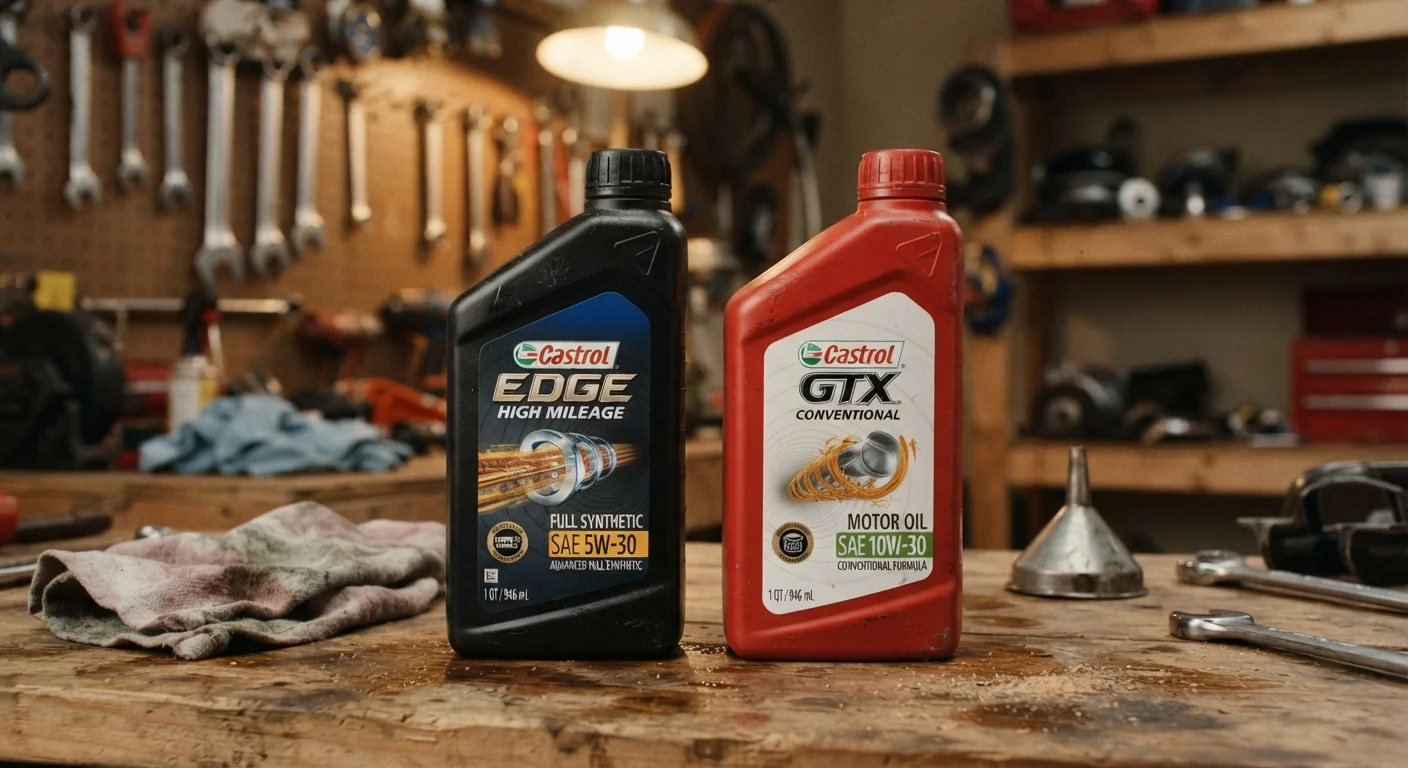
Photo credit: SkripTee.com | Search. Explore. Learn.
In this article
A clear breakdown of how synthetic and conventional motor oils differ, when each is appropriate, and what your owner's manual is really saying.
Key Takeaways
- Synthetic oil is chemically engineered for more consistent molecular structure, while conventional oil is refined directly from crude petroleum.
- Your owner's manual - not marketing - is the authoritative source for which oil type your engine requires.
- Synthetic oil generally lasts longer between changes, but that does not automatically justify its higher cost for every vehicle.
- Switching from conventional to synthetic in a high-mileage engine warrants a conversation with a qualified mechanic.
- Viscosity grade (e.g., 5W-30) matters as much as oil type - always match what the manufacturer specifies.
How Each Oil Is Made - and Why It Matters
Conventional motor oil starts as crude petroleum, which is extracted, refined, and blended with additives to meet lubrication standards. The refining process removes many impurities, but the resulting oil still contains molecules of varying sizes and shapes - a natural consequence of working with a complex organic material.
Synthetic oil is built differently. Chemists break down petroleum or other base stocks and reassemble the molecules into a more uniform structure. The result is a fluid with consistent molecular size, fewer impurities, and properties that can be precisely tuned for performance. Full synthetic refers to oil made entirely from these engineered base stocks; synthetic blend combines synthetic and conventional base oils at a lower cost.
This structural difference is not just chemistry for its own sake. Uniform molecules flow more predictably, resist breaking down under heat, and maintain their protective properties longer - factors that matter inside an engine running at high temperatures and pressures.
| Criterion | Synthetic Motor Oil | Conventional Motor Oil |
|---|---|---|
| Base material | Engineered chemical compounds | Refined crude petroleum |
| Molecular consistency | Highly uniform | Variable by nature |
| Cold-start performance | Flows faster in extreme cold | Thickens more in sub-freezing temps |
| Heat resistance | Resists oxidation and breakdown | Breaks down faster under high heat |
| Typical change interval | Often 7,500-10,000+ miles (per manual) | Often 3,000-5,000 miles (per manual) |
| Cost per quart | Generally higher | Generally lower |
| Required by some engines | Yes - many modern and turbo engines | Suitable for many older engines |
Performance in Real Driving Conditions
In everyday city and highway driving, both oil types provide adequate lubrication for engines designed to use them. The differences become more pronounced at the edges - extreme temperatures, hard acceleration, long highway trips, or extended intervals between oil changes.
Cold-weather starting is one area where synthetic oil has a consistent advantage. Conventional oil thickens in sub-freezing temperatures, which can slow lubrication to critical engine components during those first seconds after ignition. Synthetic oil flows faster in the cold, reducing wear during cold starts. In climates where temperatures regularly drop well below freezing, this is a meaningful distinction, not a marketing point.
High heat tells a similar story. Turbocharged engines and engines under heavy load generate substantial heat in the oil. Conventional oil oxidizes - breaks down chemically - faster under those conditions, which can lead to sludge buildup over time. Synthetic oil resists oxidation more effectively, keeping engine passages cleaner.
7,500-10,000+
Miles between synthetic oil changes (typical manufacturer guidance)
Many automakers specify extended drain intervals for full synthetic oil; always verify in your vehicle's owner's manual for the exact figure.
~10 seconds
Cold-start window of highest engine wear
Engineering research indicates the first seconds after ignition - before oil fully circulates - account for a disproportionate share of engine wear over a vehicle's life.
That said, for a driver with a naturally aspirated engine running normal errands in a temperate climate, the real-world gap narrows considerably. Both oils, changed on schedule, will protect the engine adequately when the manufacturer permits either.
What Your Owner's Manual Is Actually Telling You
The single most reliable guide to oil selection is not an advertisement, a mechanic's preference, or general internet advice - it is your owner's manual. Manufacturers specify both the oil type (conventional, synthetic blend, or full synthetic) and the viscosity grade (such as 5W-30 or 0W-20) based on how the engine was designed and tested.
Some engines require full synthetic - not as a premium upgrade, but because their engineering depends on it. Using conventional oil in an engine specified for synthetic is not a money-saving workaround; it is running the engine outside its design parameters. Reading your owner's manual carefully before your next service appointment can prevent this kind of costly misunderstanding.
Viscosity Grade Is Non-Negotiable
Even if you choose the correct oil type, using the wrong viscosity grade can affect engine protection and fuel economy. The grade printed in your owner's manual reflects what the engine's oil passages, clearances, and pump were designed for. Never substitute a thicker or thinner grade without explicit manufacturer guidance - and when in doubt, ask a qualified mechanic before your next oil change.
Viscosity grade deserves equal attention. A 0W-20 oil is thinner at low temperatures than a 10W-40, and that difference affects cold-start protection and fuel efficiency. Matching viscosity to specification is not optional - it is part of what keeps the manufacturer's warranty valid and the engine operating as designed.
The 3,000-mile oil change interval is one of the most persistent automotive myths. Many modern vehicles - particularly those requiring full synthetic - are engineered for intervals of 7,500 to 10,000 miles or more. Changing oil more frequently than recommended wastes money without adding protection. Separating automotive myths from evidence is one of the most useful things a driver can do for their wallet and their engine.
Switching Oil Types: What to Consider
Moving from conventional to synthetic in a newer engine is generally straightforward when the manufacturer permits it - the oil itself is compatible. The more nuanced situation involves older or high-mileage engines.
Engines with significant mileage may have worn seals that have adapted to conventional oil over time. There is a common concern that switching to synthetic in these cases can cause minor leaks, though research on this is not conclusive. What is consistent advice from mechanics: if you are unsure whether switching makes sense for a high-mileage vehicle, consult a qualified technician before changing. Knowing when to consult a mechanic rather than going it alone is a practical habit for any maintenance decision with real consequences.
If your vehicle already uses full synthetic and you switch to conventional due to availability or cost, you are not necessarily causing immediate harm - but you may be reducing protection and shortening the appropriate change interval. Always revert to the specified oil type as soon as possible and adjust your change schedule accordingly.

Author
Autos Editorial Team
Autos Editorial Team is the collective byline for our editorial team and contributor network. Articles published under this byline or an editorial pen name are researched, written, and reviewed according to our editorial standards for clarity, consistency, and independence before publication.
View all articles →