
Understanding Your Owner's Manual: The Most Underused Resource in Your Glovebox
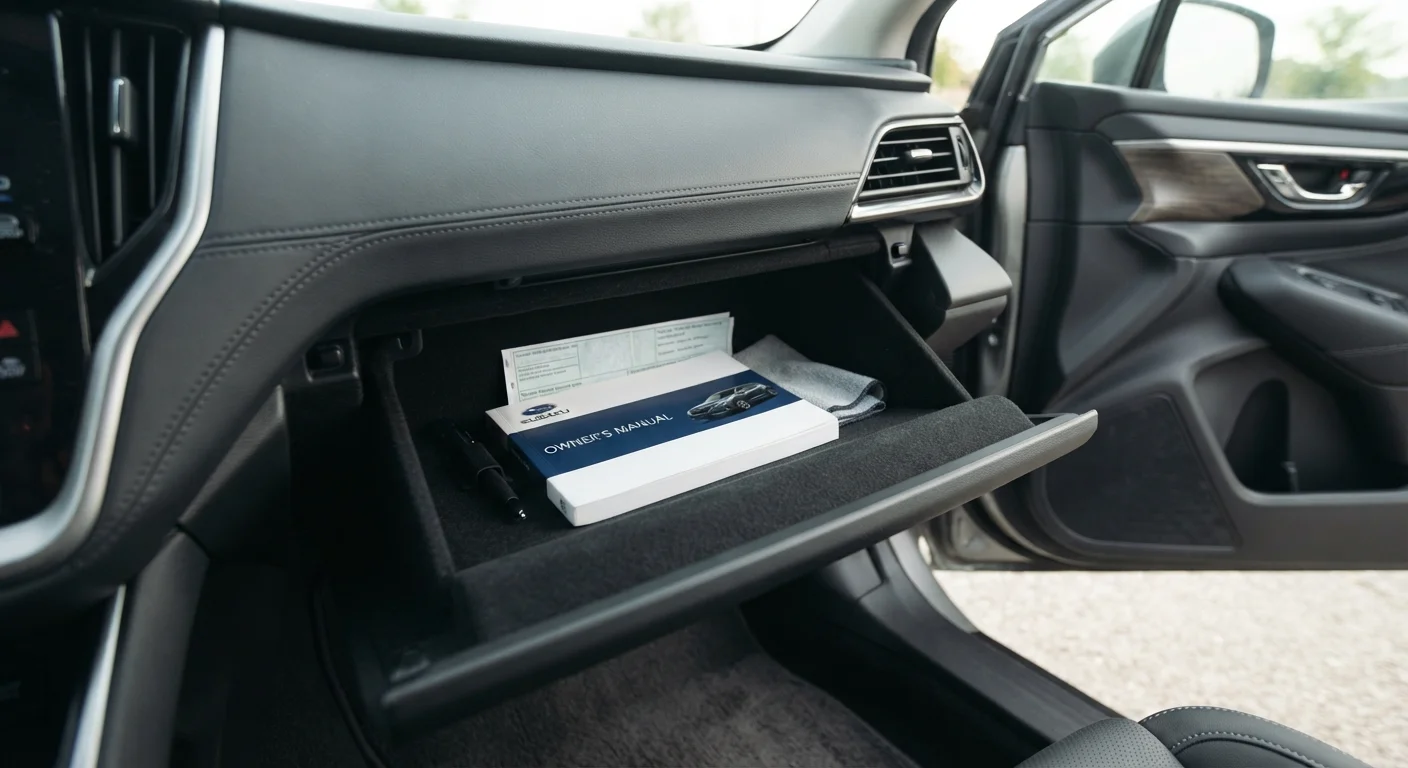
Photo credit: SkripTee.com | Search. Explore. Learn.
In this article
Your owner's manual holds manufacturer-specific maintenance schedules and specs. Learn how to read and use it before your next service appointment.
Key Takeaways
- Your owner's manual contains manufacturer-approved maintenance intervals specific to your vehicle's make, model, and engine.
- The maintenance schedule in the manual overrides generic mileage rules of thumb promoted elsewhere.
- Fluid viscosity grades, tire pressure specs, and fuel octane requirements vary by vehicle and are listed in the manual.
- Reading the manual before a service appointment helps you ask informed questions and avoid unnecessary upsells.
- Digital copies are widely available from manufacturer websites if the original is missing.
What's Actually Inside an Owner's Manual
Most drivers glance at the owner's manual once - if at all - then consign it to the glovebox for years. That's a missed opportunity. A vehicle's owner's manual is a precisely engineered document written specifically for your car's make, model, trim level, and engine configuration. No generic maintenance app or online guide can replicate that specificity.
A typical manual covers several distinct areas:
- Vehicle features and controls - how every button, lever, and system in your cabin works
- Instrument panel and warning indicators - what each dashboard symbol means and how urgent it is
- Maintenance schedules - exact intervals for oil changes, filter replacements, fluid checks, and inspections
- Fluid specifications - required oil viscosity, coolant type, transmission fluid grade, and more
- Capacities and torque specs - fuel tank size, oil capacity, and tire inflation values
- Safety systems - how features like traction control, stability assist, or driver assistance technology actually function
If you want to understand your adaptive cruise control or lane assist systems, the manual is where manufacturer-accurate descriptions live - not marketing materials.
Viscosity grade
A number code (like 5W-30) that describes how thick or thin an oil is at different temperatures. The correct grade for your engine is specified in your owner's manual.
Service interval
The manufacturer-recommended mileage or time period between specific maintenance tasks, such as oil changes or filter replacements.
Severe-duty schedule
An accelerated maintenance timeline for vehicles used in demanding conditions - including frequent short trips, extreme temperatures, or heavy traffic - as defined in your owner's manual.
Octane rating
A measure of gasoline's resistance to engine knock. Higher octane fuel is required by some engines; using a lower rating than specified can cause engine damage over time.
Door jamb sticker
A label affixed to the inside of the driver's door frame that lists key vehicle specifications, including the manufacturer's recommended tire inflation pressure.
The Maintenance Schedule: Your Vehicle's Service Roadmap
The maintenance schedule is the most practically valuable section of the manual. It lists every service interval your vehicle needs, expressed in mileage, months, or both - whichever comes first. Unlike the generic guidance you might encounter elsewhere, these intervals are calibrated to your engine's tolerances and the materials used in your vehicle's components.
Many manuals include two tracks: a normal schedule and a severe-duty schedule. Severe duty isn't reserved for fleet vehicles or off-road trucks - it applies to everyday drivers who frequently make short trips under 5 miles, drive in heavy stop-and-go traffic, operate in extreme heat or cold, or tow regularly. Many urban commuters technically fall under the severe-duty category without realizing it.
Understanding why timing matters - not just mileage - is covered in depth in our article on the logic behind preventive maintenance. The core principle is straightforward: fluids degrade with time even in a lightly driven car, and components wear with use regardless of how gently you drive.
Check Both Schedule Tracks Before Every Service
Before each service appointment, confirm whether the normal or severe-duty schedule applies to your driving pattern. If most of your driving consists of short urban trips or stop-and-go commuting, the severe-duty intervals are likely more appropriate - and they call for more frequent attention on key items like engine oil and filters.
For items like air filters, spark plugs, and drive belts, the manual will give you intervals that differ substantially from generic rules of thumb. Our companion piece on air filters, spark plugs, and belts explains what these components do and why their intervals appear where they do.
Fluid Specs, Tire Pressures, and Other Critical Numbers
Generic advice - "change your oil every 3,000 miles" or "keep tires at 32 psi" - is not tailored to your vehicle. Your manual contains the numbers that actually apply to your car, and getting them wrong has real consequences.
- Engine oil viscosity
- The manual specifies the exact grade required (e.g., 5W-20, 0W-40). Using the wrong viscosity can reduce lubrication efficiency. The manual will also indicate whether synthetic oil is required or recommended - an important distinction for modern engines.
- Tire inflation pressure
- The correct pressure for your tires is listed in the manual and on the driver's door jamb sticker. It is not the number printed on the tire's sidewall, which shows the tire's maximum capacity - not the vehicle manufacturer's target.
- Fuel octane requirement
- Many vehicles specify a minimum octane rating. Some engines require premium; others recommend it but don't require it. Using lower octane than specified in a vehicle that requires it can trigger engine knock and long-term damage.
- Coolant and brake fluid type
- Not all coolants or brake fluids are interchangeable. Using an incompatible type can degrade seals or reduce protection. The manual specifies which formulation is correct for your system.
For a hands-on guide to locating and reading these fluids in your engine bay, see our article on checking your own fluid levels.
How to Use It Before a Service Appointment
Walking into a service appointment without knowing what your vehicle actually needs puts you at a disadvantage. Spending ten minutes with your owner's manual beforehand changes that dynamic entirely.
Before your next visit, check the maintenance schedule and note which services are genuinely due based on your current mileage and the date of your last service. Then compare that list against what the service advisor recommends. If something is suggested that falls outside your manual's schedule, it's reasonable to ask why it's being recommended for your specific vehicle at that mileage.
Don't Rely Solely on the Reminder Light
Many vehicles include an oil life monitor or maintenance reminder system, but these algorithms are approximations - not a substitute for the manufacturer's printed schedule. Conditions like extreme heat, dusty environments, or short-trip driving can degrade fluids faster than the system accounts for. Always cross-reference with your manual's recommendations.
This isn't about being adversarial - technicians often identify legitimate wear that a schedule can't predict. But knowing your manual's baseline gives you the context to have an informed conversation rather than simply agreeing to everything on the estimate.
If you're newer to vehicle ownership, our guide for new drivers builds on this foundation with practical habits that prevent avoidable breakdowns. And once you've had work done, recording it properly matters - our article on keeping maintenance records explains what to save and why a service history adds real value over time.
Finding a Digital Copy If You've Lost the Original
If your manual is missing, you're not without options. Most vehicle manufacturers publish the full owner's manual on their official website, searchable by year, make, model, and trim. Some manufacturers also host manuals through dedicated owner portal apps. A direct search using your vehicle's year, make, model, and the phrase "owner's manual PDF" usually surfaces the right document quickly.
Your vehicle's dealership service department can also point you to the correct version. When downloading, confirm the document matches your specific trim and engine option - manuals sometimes vary between configurations of the same model year.
Once you have it, keep a digital copy accessible on your phone or saved to cloud storage. That way it's available even if you're away from the vehicle. Pair it with a habit of logging service records - as our article on keeping maintenance records explains, documentation is what transforms good intentions into a verifiable vehicle history.
Frequently Asked Questions

Author
Autos Editorial Team
Autos Editorial Team is the collective byline for our editorial team and contributor network. Articles published under this byline or an editorial pen name are researched, written, and reviewed according to our editorial standards for clarity, consistency, and independence before publication.
View all articles →