
Caffeine in Your Cup: Coffee, Tea, Matcha, and Energy Drinks Compared
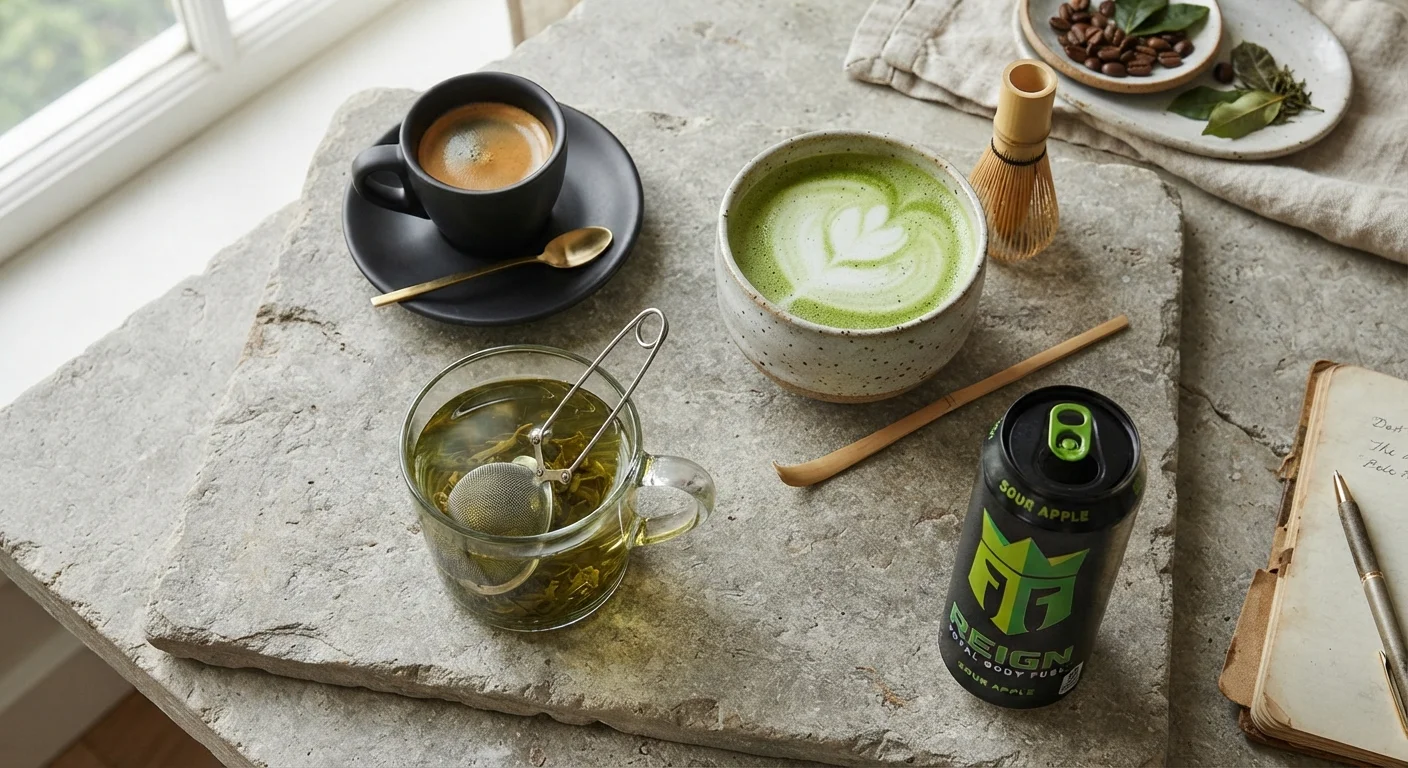
Photo credit: SkripTee.com | Search. Explore. Learn.
In this article
Not all caffeinated drinks are equal. See how caffeine levels vary across popular beverages and what that means day-to-day.
Key Takeaways
- A standard brewed coffee delivers roughly 95 mg of caffeine per 8-oz cup, more than most teas.
- Matcha contains moderate caffeine but is often consumed in smaller, concentrated servings.
- Energy drinks vary widely - some exceed 200 mg of caffeine per can.
- How caffeine is absorbed can differ by beverage, affecting how quickly you feel its effects.
- The FDA considers 400 mg of caffeine per day generally safe for healthy adults.
Why Caffeine Levels Vary So Much
Caffeine is a naturally occurring stimulant found in the seeds, leaves, and fruits of dozens of plant species. When it comes to your cup, the plant source is just the starting point. Serving size, brewing time, water temperature, and even the specific variety of plant all influence how much caffeine ends up in what you drink.
A few variables are worth understanding before comparing drinks head-to-head:
- Plant variety: Robusta coffee beans contain roughly twice the caffeine of Arabica. Learn how bean origin affects caffeine and flavor in our dedicated guide.
- Processing and oxidation: Black tea is more oxidized than green tea, which affects flavor dramatically - though oxidation alone doesn't determine caffeine. Explore how one plant becomes four distinct teas.
- Brew method: Longer steeping and hotter water extract more caffeine. Cold brew, for instance, concentrates caffeine over time despite using no heat - cold brew and iced coffee aren't interchangeable.
| Brewed Coffee | Espresso (per shot) | Black Tea | Green Tea | Matcha | Energy Drink | |
|---|---|---|---|---|---|---|
| Caffeine per serving (approx.) | 95 mg / 8 oz | 63 mg / 1 oz | 47 mg / 8 oz | 28 mg / 8 oz | 65 mg / 6 oz | 150+ mg / 16 oz |
| Caffeine source | Coffea plant bean | Coffea plant bean | Camellia sinensis leaf | Camellia sinensis leaf | Powdered whole leaf | Synthetic or natural blend |
| Notable co-compounds | Chlorogenic acids | Chlorogenic acids | Flavonoids, tannins | EGCG, L-theanine | L-theanine, EGCG | Taurine, B vitamins (varies) |
| Onset speed | Moderate-fast | Fast | Moderate | Moderate | Moderate | Fast |
| Label caffeine disclosure | No requirement | No requirement | No requirement | No requirement | No requirement | Required (FDA) |
| Typical daily limit risk | Low at 1-3 cups | Low at 1-3 shots | Low at most servings | Very low | Low-moderate | High with multiple cans |
Breaking Down Each Beverage
Coffee is the highest-caffeine natural option for most people. An 8-oz drip-brewed cup averages around 95 mg, though espresso - often assumed stronger - delivers roughly 63 mg per 1-oz shot. Because espresso is typically consumed in small quantities, total caffeine per drink depends heavily on serving size.
Black tea brews to approximately 47 mg per 8-oz cup, while green tea averages closer to 28 mg. White and herbal teas sit lower still, with many herbal infusions containing no caffeine at all. Brewing loose leaf tea doesn't necessarily mean more caffeine - steep time and leaf quantity matter more. See what actually changes between loose leaf and tea bags.
Matcha is a powdered green tea where the whole leaf is consumed, which raises caffeine delivery compared to steeped green tea. A standard ceremonial-grade serving (about 1 tsp in 6 oz water) contains roughly 60-70 mg. Matcha is also associated with L-theanine, an amino acid that many drinkers report produces a calmer, more sustained alertness - though individual responses vary. Separate matcha fact from marketing hype.
Energy drinks are the most variable category. Mainstream 16-oz cans commonly deliver 140-160 mg of caffeine, but some specialized products exceed 300 mg. Because these are manufactured beverages, labels are required to list caffeine content - always check before consuming more than one.
400 mg
Daily caffeine limit for healthy adults
The FDA identifies 400 mg per day as an amount generally not associated with dangerous or negative effects for healthy adults.
~95 mg
Caffeine in an average 8-oz brewed coffee
The USDA National Nutrient Database lists average brewed coffee at approximately 95 mg of caffeine per 8-oz serving.
2×
More caffeine in Robusta vs Arabica beans
Robusta coffee beans generally contain about twice the caffeine of Arabica beans, according to coffee science literature.
How Your Body Processes Caffeine From Different Sources
Caffeine from all these beverages is absorbed similarly through the gastrointestinal tract and typically peaks in the bloodstream within 30-60 minutes. However, the experience can differ:
- Coffee's caffeine hits quickly and is often accompanied by chlorogenic acids, which may affect digestion for sensitive individuals.
- Matcha's L-theanine content is widely cited as a moderating factor, though research on the magnitude of this effect in real-world servings is still developing.
- Energy drinks frequently add B vitamins, taurine, and other compounds, though evidence that these meaningfully enhance caffeine's effects beyond placebo is limited.
Energy Drinks and Daily Limits
Some energy drink products contain 200-300 mg of caffeine per can - meaning a single serving can account for half or more of the FDA's recommended daily ceiling. Consuming multiple cans, or combining energy drinks with other caffeinated beverages, can push total intake into ranges associated with adverse effects such as elevated heart rate, anxiety, and sleep disruption. Always read labels and account for all caffeine sources throughout the day.
The FDA advises that 400 mg of caffeine daily is generally recognized as safe for healthy adults. That's roughly four 8-oz cups of brewed coffee - or fewer if you're mixing sources throughout the day. Pregnant individuals, those with certain heart conditions, and adolescents should consult a healthcare professional about appropriate limits, as recommendations differ significantly.
This article is for general informational purposes only and is not medical or dietary advice. Consult a qualified healthcare professional about caffeine intake as it relates to your individual health circumstances.

Author
Food Editorial Team
Food Editorial Team is the collective byline for our editorial team and contributor network. Articles published under this byline or an editorial pen name are researched, written, and reviewed according to our editorial standards for clarity, consistency, and independence before publication.
View all articles →