
Natural, Washed, and Honey: How Coffee Processing Shapes Flavour
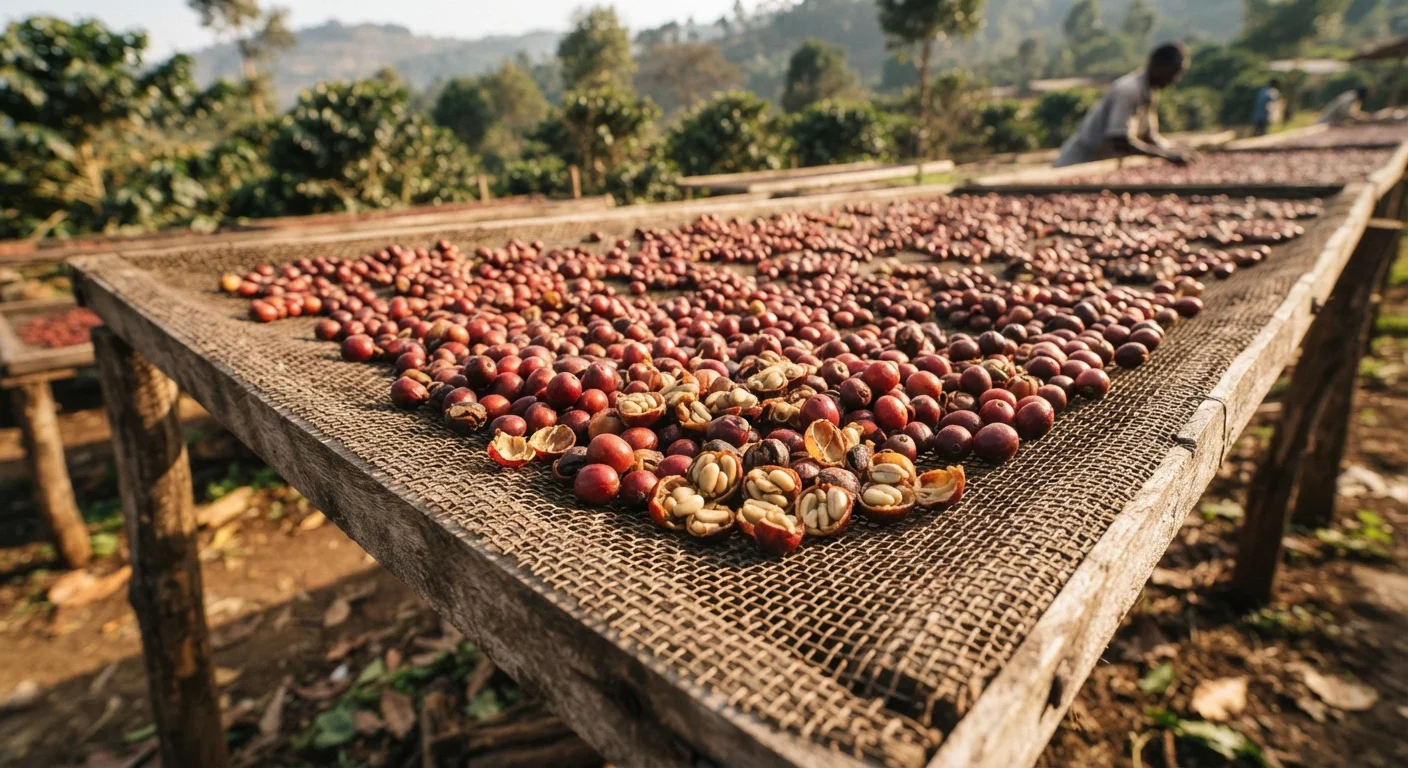
Photo credit: SkripTee.com | Search. Explore. Learn.
In this article
The way coffee cherries are processed after harvest has a dramatic effect on taste. Here's what each method actually does.
Key Takeaways
- Natural (dry) processing leaves the whole cherry intact during drying, producing fruit-forward, wine-like flavours.
- Washed (wet) processing removes all fruit before drying, yielding a cleaner, brighter, more acidic cup.
- Honey processing is a middle path - some mucilage is left on the bean, creating sweetness without the wildness of naturals.
- Processing method is often as influential on flavour as the country of origin or the roast level.
- Labels on specialty coffee bags frequently indicate the processing method - knowing what they mean helps you choose more intentionally.
Why Processing Matters More Than Most Drinkers Realize
Most coffee drinkers focus on roast level or country of origin when choosing a bag - but the processing method can be equally decisive in shaping what ends up in the cup. A coffee cherry is a fruit, and like any fruit, its sugars, acids, and aromatic compounds are deeply intertwined with the seed inside. How producers separate bean from fruit - and how quickly - determines which of those compounds transfer, ferment, or are washed away entirely.
Understanding the three main methods (natural, washed, and honey) gives you a practical framework for predicting what a coffee will taste like before you brew it. It also helps explain why two coffees from the same Ethiopian village can taste completely different. If you're already curious about how other variables shape your cup, our guide to water quality and brew taste is a useful companion read.
3-6 weeks
Typical drying time for natural-processed coffee
Extended drying periods are what allow fruit sugars to penetrate the bean in natural processing, according to specialty coffee industry guides.
~70%
Share of global coffee using washed processing
Washed processing dominates world coffee production, particularly across Latin America and East Africa, where consistency and cup clarity are prioritized.
3
Main honey-process grades by mucilage retention
Yellow, red, and black honey grades reflect progressively higher mucilage left on the bean, each producing a distinct flavour and body profile.
Natural Processing: Full Fruit, Full Flavour
The natural method - also called dry processing - is the oldest technique. Whole ripe cherries are spread on raised drying beds or patios and left to dry in the sun for several weeks, fruit and all. During this extended drying period, the bean absorbs sugars and flavour compounds directly from the fermenting fruit around it.
The result is a coffee with notable body, low-to-moderate acidity, and flavours that tend toward ripe berries, stone fruit, dark chocolate, and sometimes wine-like funk. Ethiopian naturals, for example, are celebrated for their blueberry and jasmine complexity. The tradeoff is consistency: naturals require careful management. Too much moisture or heat can tip fermentation into an unpleasantly sour or musty range.
Look for Processing on the Bag
Most specialty roasters print the processing method alongside origin and roast date. If it simply says 'natural,' expect fruit-forward flavour and fuller body. If you're new to specialty coffee, a natural from Brazil is often a gentler introduction than a more intense Ethiopian natural.
Washed Processing: Clarity Above All
In washed (or wet) processing, the fruit skin is removed mechanically within hours of harvest, and the remaining sticky mucilage layer is broken down through water-fermentation tanks before the bean is dried. By the time a washed bean reaches the drying bed, most of the fruit influence has been stripped away.
The flavour profile is markedly different: brighter acidity, a lighter body, and a cleaner cup where the bean's inherent character - its terroir - comes through without fruity interference. Washed coffees from Kenya often showcase vivid blackcurrant acidity; Colombian washed lots frequently highlight caramel sweetness and a crisp citrus finish. For drinkers who find naturals overwhelming, washed coffees offer precision. This is also why washed processing dominates in regions that prize consistency, such as Central America. If a coffee tastes unexpectedly bitter rather than bright, processing is rarely the culprit - our explainer on why coffee tastes bitter covers the more likely causes.
Honey Processing: The Middle Path
Honey processing sits deliberately between the other two. The cherry's outer skin is removed - as in washed processing - but a controlled amount of mucilage (the sticky layer beneath the skin) is left clinging to the bean during drying. No water fermentation tanks are used. The name refers to the honey-like stickiness of the mucilage, not to any ingredient added.
Producers can calibrate how much mucilage remains: yellow honey retains the least and dries fastest; red honey keeps more; black honey leaves nearly the full layer, approaching natural territory. The resulting cup typically offers sweetness and body comparable to a natural, alongside the clarity of a washed - making honey-processed coffees particularly approachable for specialty beginners. Costa Rica pioneered much of the modern honey-process technique, and it remains a regional specialty there.
Reading the Label and Choosing with Intent
Processing method is now routinely disclosed on specialty coffee packaging, and understanding the shorthand gives you a meaningful head start. If you enjoy fruit-forward espresso with full body, look for naturals from Ethiopia or Brazil. If you prefer a clean pour-over with crisp acidity that highlights origin character, seek washed coffees. If you want sweetness and balance with fewer variables, a honey-process coffee is worth exploring.
It's worth pairing this knowledge with an understanding of the bean itself - Arabica and Robusta differ fundamentally in flavour and caffeine, and processing amplifies or softens those traits rather than overriding them. Processing method is one layer of a multi-variable system, but it's one of the most accessible and immediately flavour-relevant levers a consumer can learn to read.
“Processing is where coffee's potential is either realised or squandered. The same cherry, handled differently, can produce a cup that tastes like fruit punch or one that tastes like a clean mountain spring - both valid, both the result of intentional craft.”
— World Coffee Research Editorial, Specialty coffee research and education organization
Frequently Asked Questions

Author
Food Editorial Team
Food Editorial Team is the collective byline for our editorial team and contributor network. Articles published under this byline or an editorial pen name are researched, written, and reviewed according to our editorial standards for clarity, consistency, and independence before publication.
View all articles →