
Indoor vs. Outdoor Pets: Weighing the Tradeoffs for Your Animal and Your Home
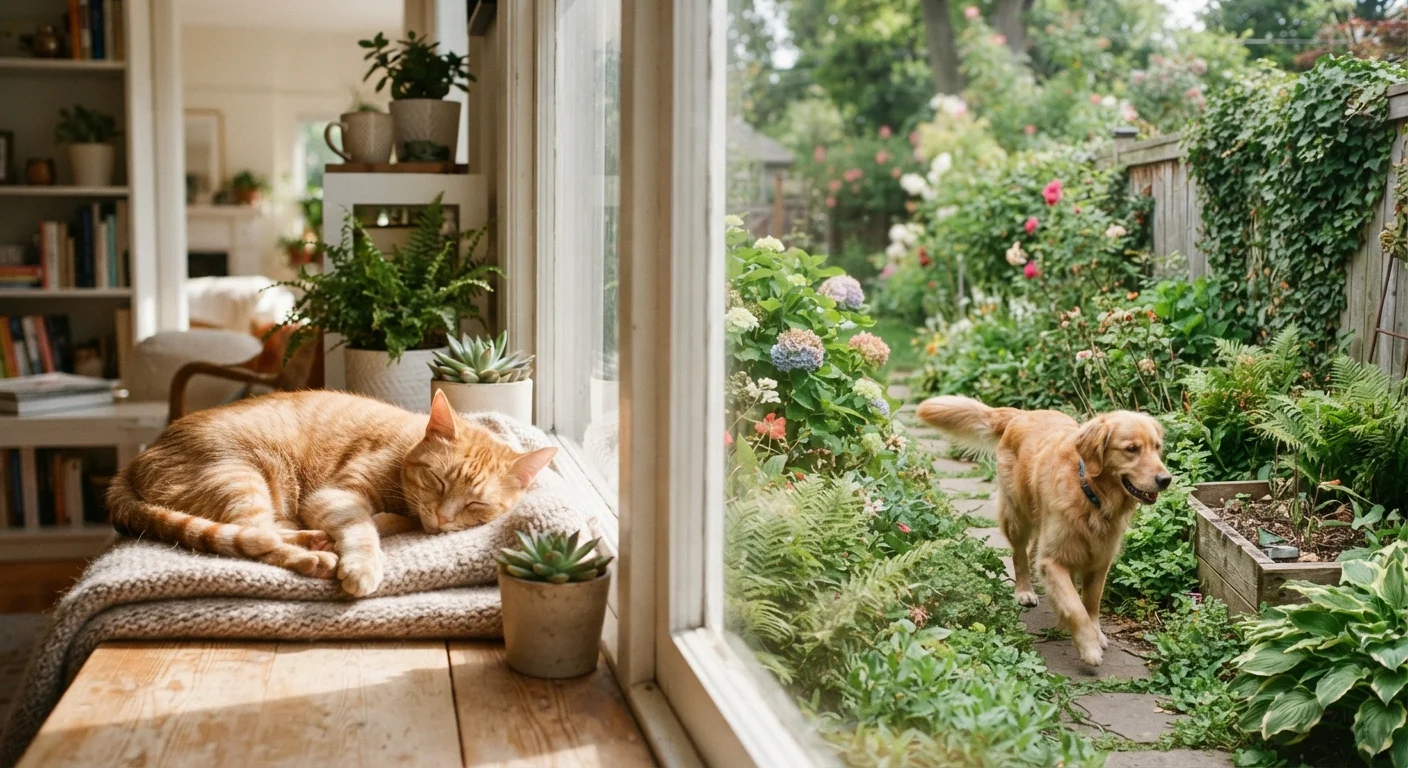
Photo credit: SkripTee.com | Search. Explore. Learn.
In this article
The indoor-outdoor debate is rarely black and white. Explore how each environment affects a pet's health, lifespan, and behaviour across different species.
Key Takeaways
- Indoor pets generally live longer on average, facing fewer predator, disease, and accident risks.
- Outdoor access can support mental enrichment and natural behavior, but introduces real safety tradeoffs.
- The right choice depends heavily on species, individual temperament, and your local environment.
- Hybrid arrangements - such as supervised outdoor time or secure enclosures - can offer meaningful benefits of both.
- Veterinary guidance should always inform your decision, particularly around parasite prevention and vaccinations.
Why the Indoor-Outdoor Question Matters
Where your pet spends most of its time shapes nearly everything: how long they live, what diseases they encounter, how they behave, and how much veterinary care they'll need. Yet the debate often gets reduced to a simple preference rather than a genuine welfare question grounded in evidence.
This isn't about judging how other owners make decisions. It's about giving you a clear, honest look at what each environment actually means for your animal - so you can choose thoughtfully, adjust as circumstances change, and feel confident in your approach. For a broader foundation on responsible ownership decisions, see the complete owner's handbook covering every major stage of pet care.
The Health and Lifespan Picture
The evidence on lifespan is fairly consistent for cats: indoor cats typically live significantly longer than cats with outdoor access. Outdoor cats face traffic, predators, infectious diseases, toxins, and extreme weather. The American Veterinary Medical Association and most veterinary organizations acknowledge these risks as real and substantial.
For dogs, the calculus is different. Dogs generally require outdoor exercise for physical and psychological health - keeping a dog entirely confined without adequate structured activity can lead to stress, destructive behavior, and weight-related health issues. The outdoor environment itself isn't the problem; uncontrolled, unsupervised outdoor access is.
10-15 years
Typical indoor cat lifespan
Veterinary sources broadly estimate indoor cats live 10-15+ years on average, compared to 2-5 years for free-roaming outdoor cats in many studies.
1-3 billion
Birds killed by US outdoor cats annually
Research published in Nature Communications estimated free-ranging cats kill between 1.3 and 4 billion birds annually in the contiguous United States.
Parasites - fleas, ticks, heartworm-carrying mosquitoes, and intestinal worms - are significantly more prevalent risks for outdoor pets. This doesn't mean outdoor pets can't be healthy, but it does mean consistent preventive care becomes non-negotiable. Consult your veterinarian about a parasite prevention protocol that fits your pet's actual exposure level. You might also find it useful to read about spaying and neutering evidence, since reproductive status can interact with outdoor roaming behavior, particularly in cats.
Behavioral Needs and Environmental Enrichment
A common concern about indoor-only pets - especially cats - is boredom and understimulation. Cats are predatory animals with a genuine need to stalk, pounce, and explore. Without outlets for these instincts, some indoor cats develop anxiety, compulsive behaviors, or destructive habits.
The good news: enrichment can be highly effective indoors. Puzzle feeders, vertical space, window perches, rotation of toys, and intentional interactive play sessions address many of these needs. The enrichment has to be active and varied - a single toy left on the floor indefinitely provides little stimulation.
Enrichment Works Best When It's Varied
Rotating toys every few days, adding a window bird feeder, and scheduling two to three short interactive play sessions daily can dramatically reduce boredom in indoor cats. The goal is to mimic the unpredictability of a natural environment - novelty and motion matter more than the number of items available. Talk to your veterinarian or a certified animal behaviorist if your pet shows signs of stress or compulsive behavior despite enrichment efforts.
Dogs generally need outdoor time structurally built into their routine regardless of living situation. The question isn't whether they go outside, but how safely and with how much supervision. Secure fencing, leashed walks, and monitored play areas address most of the safety concerns while meeting behavioral needs. If you're managing multiple animals, the guide to introducing pets to a multi-animal household offers strategies for keeping group dynamics healthy.
Comparing the Two Environments
The table below summarizes how indoor and outdoor environments compare across the criteria that matter most to pet owners. Keep in mind that "outdoor" here refers to unsupervised or free-roaming access - supervised outdoor time shifts several of these outcomes significantly.
| Criterion | Indoor | Outdoor (Unsupervised) | |
|---|---|---|---|
| Average lifespan (cats) | Longer (12-18+ years typical) | Shorter (often under 10 years) | |
| Parasite exposure | Low with standard prevention | High; consistent prevention essential | |
| Infectious disease risk | Low | Elevated (FIV, FeLV, parvovirus, etc.) | |
| Behavioral enrichment | Requires active owner effort | Natural stimulation available | |
| Injury and predator risk | Very low | Significant | |
| Environmental impact | Minimal | Cats can harm local wildlife populations | |
| Veterinary cost tendency | Generally lower over time | Higher due to injury and illness |
Hybrid approaches - catios (outdoor cat enclosures), leash-trained cats, fenced dog runs, or scheduled supervised outdoor sessions - can meaningfully shift the risk profile. They aren't always practical, but when they are, they represent a genuine middle ground rather than a compromise. For owners thinking carefully about how their environment affects their pet's health choices, the evidence-based look at diet decisions applies the same balanced approach to feeding.
Making the Right Call for Your Situation
Your local environment matters enormously. Urban and suburban settings with heavy traffic, coyote populations, or high stray-cat density present risks that rural settings may not - and vice versa. An honest look at your actual neighborhood is a necessary part of this decision.
Your pet's individual history also counts. A cat that was outdoors before adoption may experience significant distress if abruptly transitioned to full indoor living. A dog with high prey drive may pose risks to neighborhood wildlife if given unsupervised roaming access. Temperament, age, and prior experience all shape what arrangement will genuinely serve your animal.
Finally, consider your capacity as an owner. An indoor cat that isn't receiving adequate enrichment and attention is not necessarily better off than a carefully supervised outdoor pet. Commitment to enrichment, veterinary care, and observation is what makes the difference - not the environment label alone. If you're still in early stages of pet ownership decisions, understanding adoption vs. purchasing is a useful companion read.
This article provides general educational information about pet care environments and is not a substitute for personalized veterinary advice. Always consult a licensed veterinarian for guidance specific to your pet's health, history, and needs.

Author
Pets Editorial Team
Pets Editorial Team is the collective byline for our editorial team and contributor network. Articles published under this byline or an editorial pen name are researched, written, and reviewed according to our editorial standards for clarity, consistency, and independence before publication.
View all articles →