
Raw Diets vs. Commercial Pet Food: What the Evidence Says
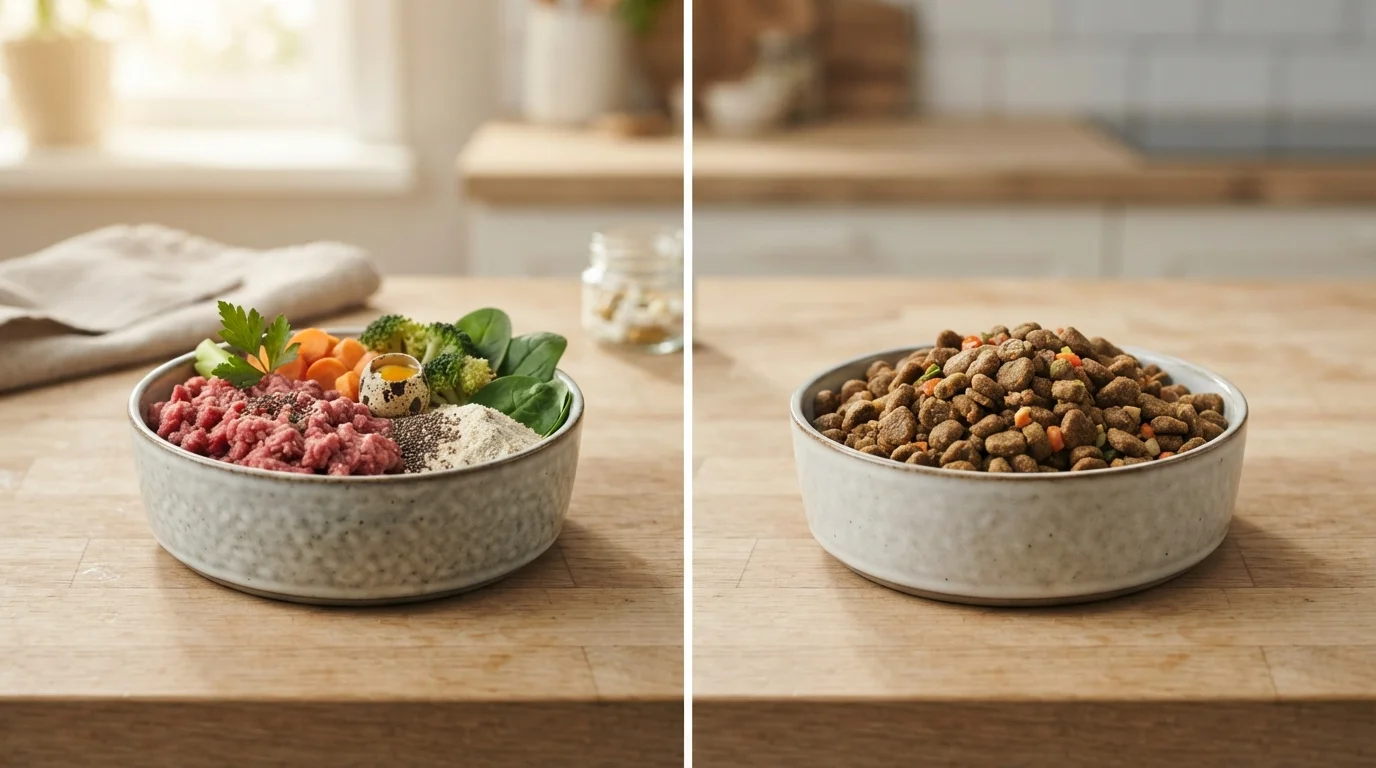
Photo credit: SkripTee.com | Search. Explore. Learn.
In this article
Raw feeding attracts strong opinions. This balanced look at both approaches covers nutritional completeness, food safety, and what vets consider when advising owners.
Key Takeaways
- Raw diets can pose genuine food safety risks for pets and the humans who handle them.
- Most commercial pet foods meeting AAFCO standards are formulated to be nutritionally complete.
- Neither approach is universally superior - the right choice depends on your pet's health, your household, and how carefully a diet is managed.
- Veterinary nutritionists are the most reliable resource for building a balanced raw diet if that's your chosen path.
- Transitioning diets should be done gradually and ideally with professional guidance.
Why This Debate Matters
Few topics in pet care generate more passionate discussion than what goes in the bowl. Advocates of raw feeding cite ancestral eating patterns and anecdotal coat and energy improvements, while proponents of commercial food point to decades of formulation science and safety oversight. The reality, as with most nutrition debates, sits somewhere more nuanced than either camp tends to acknowledge.
Understanding the actual evidence - rather than social media testimonials or brand marketing - helps you make a grounded decision for your specific animal. For a broader perspective on separating well-supported dietary guidance from passing trends, see our nutrition science overview.
Nutritional Completeness: What Each Approach Delivers
The Association of American Feed Control Officials (AAFCO) sets nutrient profiles that commercial pet foods must meet to carry a "complete and balanced" claim. Foods validated through AAFCO feeding trials or formulation standards have been assessed against established requirements for dogs and cats at different life stages. This doesn't guarantee perfection, but it provides a meaningful, documented baseline.
Raw diets - whether commercially prepared or home-assembled - vary enormously in nutritional profile. Studies published in veterinary nutrition journals have repeatedly found that a significant proportion of raw recipes, including those circulating online, fail to meet AAFCO minimums for key nutrients like calcium, phosphorus, zinc, and vitamins D and E. Bone content, sourcing decisions, and recipe consistency all influence the final nutritional picture.
Home-prepared raw diets formulated by a board-certified veterinary nutritionist are a different matter: these can be nutritionally complete, but the formulation process takes time and expertise. Understanding pet food labels and guaranteed analysis panels is a useful starting point for evaluating any food, raw or processed.
| Raw Diet | Commercial Pet Food | |
|---|---|---|
| Nutritional completeness | Variable; home recipes often incomplete | Consistent when AAFCO-validated |
| Food safety risk | Higher - pathogen exposure documented | Lower - heat processing reduces pathogens |
| Convenience | Low - requires sourcing, prep, storage | High - ready to serve |
| Cost | Often higher, especially if using quality proteins | Wide range from budget to premium |
| Professional oversight needed | Strongly recommended for balance | Less critical for AAFCO-labeled foods |
| Household safety considerations | Significant - especially with vulnerable people | Minimal under normal handling |
Food Safety: The Risk Profile of Raw Feeding
This is where the evidence is least ambiguous. Raw meat - including commercially sourced chicken, beef, and fish - commonly harbors pathogens such as Salmonella, Listeria monocytogenes, Campylobacter, and E. coli. Multiple studies, including surveillance work by the FDA's Center for Veterinary Medicine, have detected these organisms in raw pet food products at rates substantially higher than in processed foods.
Healthy adult pets may carry these pathogens without showing illness, but they shed them in feces and on surfaces - creating real exposure risk for people in the household. The concern is heightened in homes with infants, pregnant individuals, elderly people, or anyone with a compromised immune system.
Household Vulnerability Matters
Households with infants, pregnant individuals, elderly adults, or immunocompromised members face a meaningfully higher risk from raw pet food pathogens. Pets on raw diets shed bacteria in saliva and feces even when they appear healthy. If your household includes vulnerable individuals, discuss this risk explicitly with both your veterinarian and your family's healthcare provider before choosing raw feeding.
Commercial dry and wet foods are heat-processed in ways that largely eliminate bacterial contamination, though recalls do occur and no system is entirely foolproof. Checking the FDA's recall database periodically is a sensible habit regardless of the diet you choose.
What Vets and Veterinary Nutritionists Actually Say
Major veterinary organizations - including the American Veterinary Medical Association (AVMA) and the American Animal Hospital Association (AAHA) - have issued position statements discouraging raw protein diets, primarily on public health grounds and due to the nutritional inconsistency documented in research. This doesn't mean every veterinarian dismisses raw feeding outright, but it does reflect the weight of professional consensus.
Some veterinary nutritionists will work with owners committed to raw feeding to create properly balanced, pathogen-minimized protocols. Freeze-dried raw options are sometimes discussed as a middle ground: they retain much of the raw nutritional profile while reducing (though not eliminating) pathogen load through the freeze-drying process.
Working With a Veterinary Nutritionist
If you're committed to a raw diet, a board-certified veterinary nutritionist (Dipl. ACVN) can help create a recipe that meets your pet's specific nutrient needs. This is different from a general veterinarian consultation and worth seeking out for home-prepared diets. Many offer remote consultations, making the service more accessible than it used to be.
If you're weighing these options while thinking about your pet's overall care environment, our guide to indoor vs. outdoor pet considerations covers other health-relevant lifestyle factors worth considering alongside diet.
Making a Decision That Works for Your Household
There is no single correct answer here. A well-chosen commercial food meeting AAFCO standards, appropriate for your pet's life stage and health status, is a defensible and convenient choice backed by substantial research. A professionally formulated raw diet, handled with strict hygiene protocols, may work well for owners with the resources and commitment to do it properly.
What the evidence does not support is the assumption that raw is automatically more natural or nutritious, or that commercial food is inherently inferior because it's processed. Both approaches have real tradeoffs. For additional context on how processing affects nutritional quality in broader dietary discussions, the comparison of whole foods vs. ultra-processed foods offers a useful parallel framework.
Before making any significant dietary change, consult your veterinarian. They can account for your pet's individual health history, age, breed-specific considerations, and household circumstances - factors no general article can fully address.
This article is for general informational purposes only and does not constitute veterinary or nutritional advice. Always consult a qualified veterinarian before making significant changes to your pet's diet.

Author
Pets Editorial Team
Pets Editorial Team is the collective byline for our editorial team and contributor network. Articles published under this byline or an editorial pen name are researched, written, and reviewed according to our editorial standards for clarity, consistency, and independence before publication.
View all articles →