
Packing for a Cruise: What Seasoned Passengers Always Bring
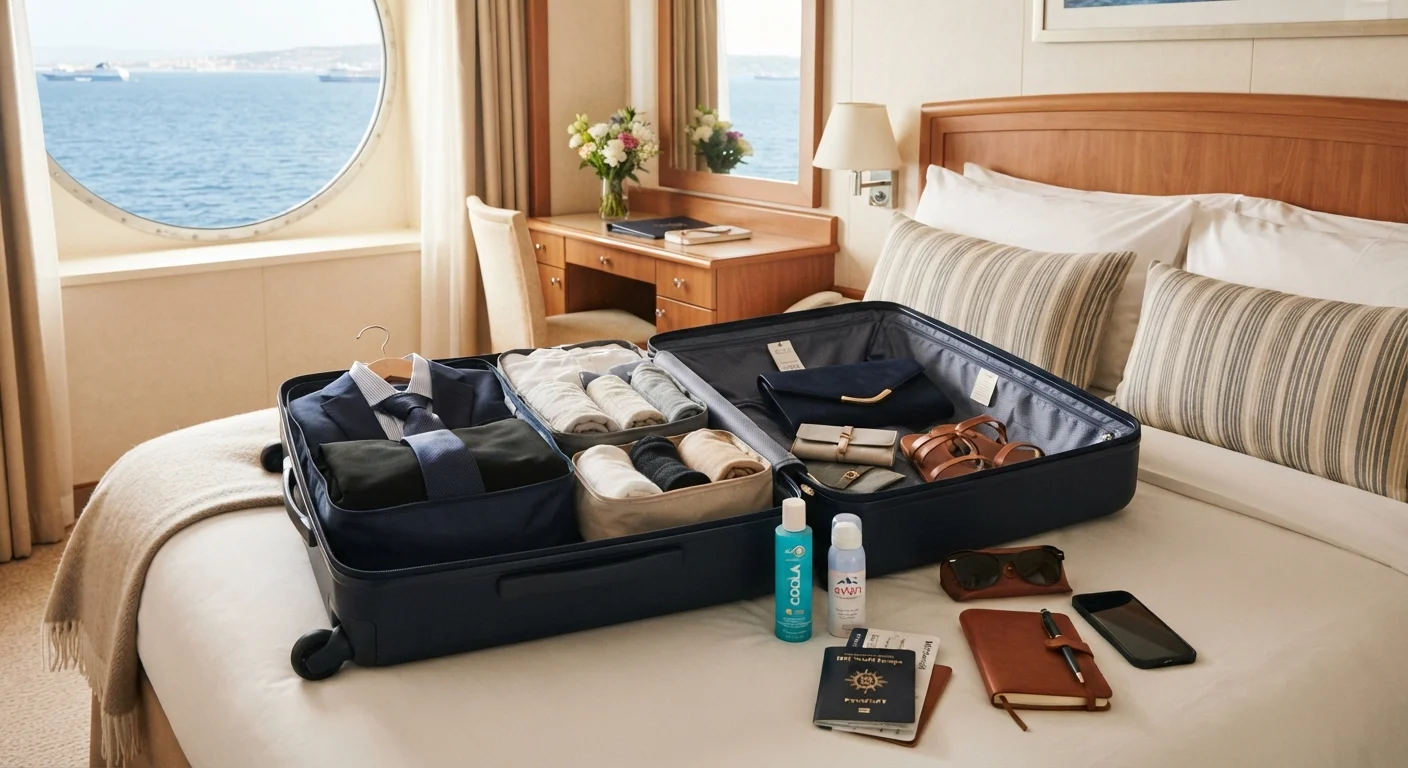
Photo credit: SkripTee.com | Search. Explore. Learn.
From formal night attire to power strips and seasickness bands — a practical look at what experienced cruisers consistently pack and why.
Key Takeaways
- A portable power strip with surge protection solves the limited-outlet problem in most cruise cabins.
- Formal night attire is still expected on many mainstream and luxury lines - confirm the dress code before you sail.
- Acupressure bands and over-the-counter motion sickness remedies are worth packing even if you rarely get seasick.
- A collapsible over-the-door organizer dramatically improves storage in compact staterooms.
- Bringing a refillable water bottle and a small day bag prevents constant onboard purchases during port days.
- Copies of travel documents - digital and physical - can save hours if your originals are lost or stolen.
Why Cruise Packing Demands a Different Approach
Packing for a cruise isn't the same as packing for a hotel stay or a backpacking trip. You're preparing for multiple environments at once: a formal dining room, a sun-drenched pool deck, humid port towns, and a stateroom that's functional but compact. First-time cruisers often over-pack clothing and under-pack practical gear. Repeat cruisers learn from that mistake quickly.
This list pulls from the collective wisdom of experienced passengers - the items that consistently earn their place in a cruise suitcase, and the reasoning behind each one. If you're still working through the broader pre-departure picture, see our pre-cruise checklist for what to confirm before embarkation day.
A Portable Power Strip with Surge Protection
Cruise ship cabins typically offer just one or two electrical outlets - often placed inconveniently near the vanity or desk. When you're charging a phone, camera, CPAP machine, and electric shaver simultaneously, that's a problem. A compact power strip with surge protection (and USB ports) solves this entirely. Check your cruise line's policy before packing: most permit non-heating strips, but extension cords with exposed heating elements are generally prohibited. A strip with a short, flat cord and a surge protector built in is the standard choice among experienced travelers.
A single outlet in your cabin stops being a problem the moment you pack a compact power strip.
Formal Night Attire (Verified Against the Dress Code)
Many mainstream and premium cruise lines still hold formal or "elegant" evenings in the main dining room. Showing up in shorts when the dress code calls for cocktail attire is an avoidable frustration. The key is confirming what your specific line and itinerary require - dress codes vary significantly between casual river cruises and traditional ocean voyages. For men, a blazer or sport coat covers most mid-tier requirements; full black tie is typically reserved for luxury lines. For women, a cocktail dress or dressy separates usually meet the standard. Pack these items in your carry-on or a garment bag to prevent heavy wrinkling in checked luggage.
Confirm the dress code before you sail - what counts as formal varies widely between cruise lines.
Motion Sickness Remedies
Even people who don't typically experience motion sickness can be caught off guard by unexpected swells, especially in the North Atlantic or during shoulder-season sailings. Seasoned cruisers pack acupressure wristbands, over-the-counter antihistamine-based tablets, and sometimes ginger chews as a layered approach. These are far cheaper purchased before departure than through the ship's medical center or gift shop. It's also worth knowing that cabin placement affects your experience - midship cabins on lower decks tend to feel the least movement. For a fuller picture of what works and what doesn't, consult our article on managing seasickness at sea.
Pack motion sickness remedies even if you've never needed them - open water is unpredictable.
A Collapsible Over-the-Door Organizer
Standard staterooms, even on newer ships, offer surprisingly limited drawer and shelf space for two people sharing a cabin. An over-the-door hanging organizer - the kind with multiple pockets - transforms the bathroom door or closet door into usable storage for sunscreen, medications, chargers, travel documents, and toiletries. Collapsible versions pack flat and add virtually no weight. This is one of those items veteran cruisers mention almost universally when asked what they wish they'd brought on their first sailing.
An over-the-door organizer is the single most impactful storage upgrade for a compact stateroom.
A Compact Day Bag for Port Visits
Your cruise line's beach tote or the bag you carry through embarkation probably isn't what you want navigating a cobblestone port town or a snorkeling excursion. A lightweight, water-resistant day pack - small enough to stay with you but spacious enough for sunscreen, a water bottle, a light layer, and your phone - is the practical choice. Look for one that folds into its own pocket when empty, so it takes up almost no space in your main luggage. Pair it with a smart packing checklist that accounts for port-day essentials specifically.
A foldable, water-resistant day bag is the workhorse of every port visit.
Backup Copies of All Critical Documents
Lost passports and stolen wallets happen at sea and in port. Experienced cruisers carry photocopies of their passport, visa pages, travel insurance policy, cruise booking confirmation, and emergency contacts - both as physical copies stored separately from the originals and as digital scans saved to cloud storage or emailed to themselves. Some also keep a small amount of US dollars and a backup credit card in a location separate from their wallet. If you haven't yet arranged travel insurance, our overview of cruise travel insurance coverage explains what types of protection are typically relevant for sea travel.
Store digital and physical document backups separately - losing originals at sea is costly and stressful.
A Refillable Water Bottle
Hydration on a cruise matters more than many passengers expect - sun exposure on deck, warm port climates, and alcohol consumption all compound the effect. Most ships have water stations or allow passengers to fill bottles at buffet drink stations. Bringing a refillable, insulated bottle means you're not constantly purchasing bottled water onshore or relying on small cabin cups. Stainless steel bottles with a wide mouth are popular for their durability and ability to hold ice. This small item pays for itself within the first day of a port visit.
A refillable water bottle is one of the highest-value, lowest-cost items in your cruise bag.
Pack Smart, Sail Better
The through-line connecting everything on this list is intentionality. Seasoned cruisers aren't packing more - they're packing smarter, anticipating the specific friction points of shipboard life rather than defaulting to what they'd bring on any trip. For strategies on reducing overall luggage volume without sacrificing essentials, our guide on packing light without leaving something essential behind covers practical techniques that translate directly to cruise travel.
Label Your Luggage Inside and Out
Cruise terminals process thousands of bags simultaneously during embarkation. In addition to an external luggage tag (provided by most lines), place a card with your name, cabin number, and contact details inside each bag. If an external tag tears off during handling, the internal label ensures your luggage still finds its way to your stateroom. Take a photo of each bag before dropping it off - this helps if a claim is needed.
And if motion sickness is a concern, don't rely on packing alone - read our in-depth look at seasickness at sea to understand what actually helps versus common myths. Ultimately, what you bring onboard shapes your entire experience - from how comfortable your cabin feels on day one to how easily you move through ports on day seven.

Author
Travel Editorial Team
Travel Editorial Team is the collective byline for our editorial team and contributor network. Articles published under this byline or an editorial pen name are researched, written, and reviewed according to our editorial standards for clarity, consistency, and independence before publication.
View all articles →