
Packing Light Without Leaving Something Essential Behind
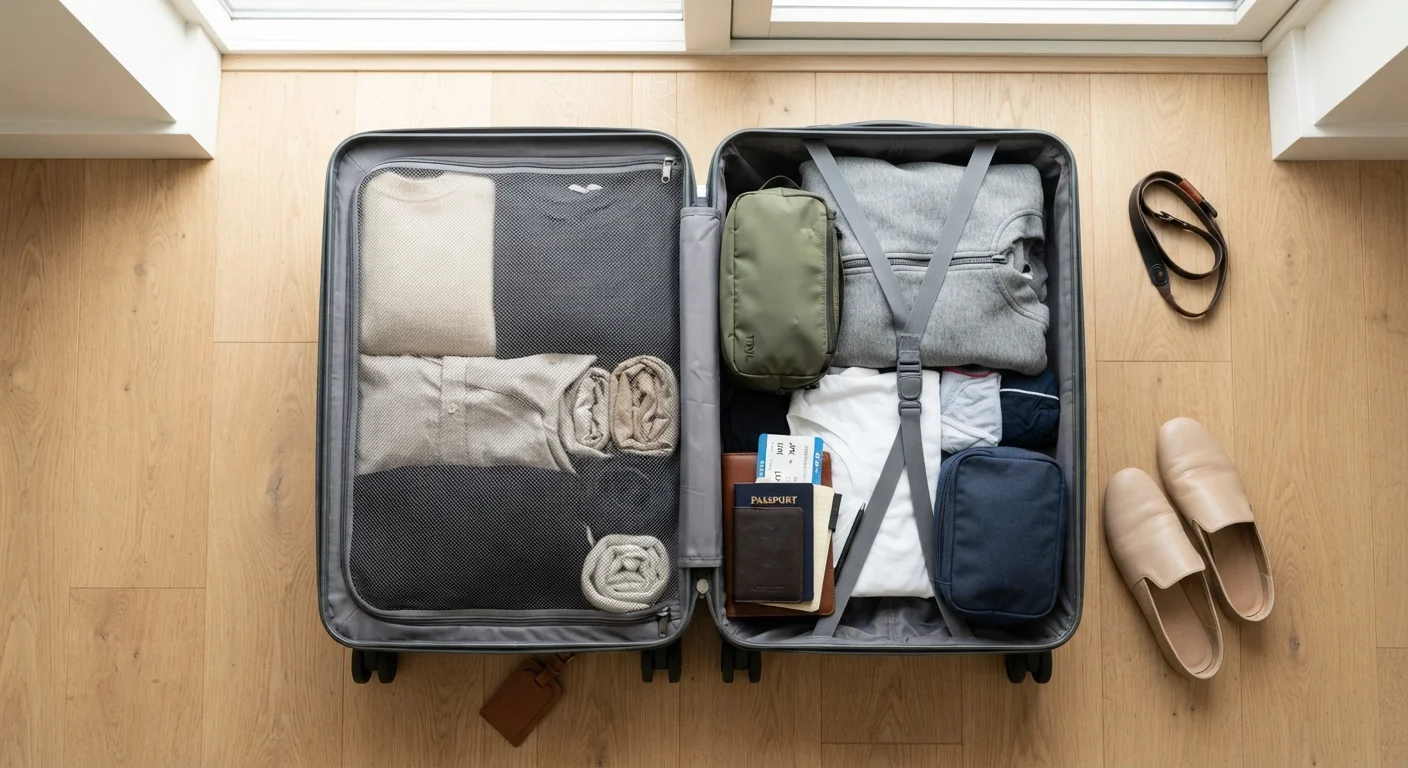
Photo credit: SkripTee.com | Search. Explore. Learn.
Proven techniques for reducing luggage volume on any trip — from the capsule wardrobe method to rethinking toiletries and duplicating documents digitally.
Key Takeaways
- A capsule wardrobe of mix-and-match neutrals dramatically reduces clothing volume without sacrificing outfit variety.
- Decanting toiletries into reusable travel containers and buying consumables at your destination saves significant space.
- Storing digital copies of key documents protects you without adding physical bulk to your bag.
- Wearing your bulkiest items on travel days frees up the most room inside your luggage.
- Rolling clothes and using packing cubes improves organization and compresses items more efficiently than folding.
Why Light Packing Is a Skill Worth Developing
Dragging heavy luggage through airports, paying surprise baggage fees, or waiting at a carousel after a long flight are frustrations that experienced travelers work hard to eliminate. Packing light isn't about deprivation - it's about choosing items deliberately so everything in your bag earns its place. The result is greater mobility, faster security lines, and less mental load throughout a trip.
The most common obstacle is psychological: travelers pack for unlikely scenarios rather than probable ones. A single rainy day prompts a full rain suit; a possible upscale dinner prompts formal shoes worn once. Addressing this tendency starts with an honest audit of what you've actually used on past trips.
Packing cubes
Compress and organize clothing into distinct categories, making items easier to locate and maximizing usable space.
Luggage scale
Verify your bag's weight before departure to avoid surprise fees or gate-check situations.
Reusable travel-size containers
Decant shampoo, conditioner, and other liquids into small containers that comply with carry-on liquid rules.
Wrinkle-resistant clothing
Reduces the need to pack multiple backup items or search for ironing facilities at your destination.
The steps below walk through a repeatable process that works for weekend getaways and multi-week international trips alike. For destination-specific packing considerations - including cruise travel - see our guide on what seasoned cruise passengers always bring.
Before You Start: What You'll Need
Effective packing starts with preparation, not improvisation. Having the right tools and information ready before you open your closet prevents the last-minute stuffing that causes bags to overflow.
What you will need
Audit your destination's actual conditions
Before touching your wardrobe, write down three things: the weather range during your trip, the most formal event you'll attend, and your primary daily activities. Every item you pack should serve at least one of these criteria. Packing without this filter is the primary reason travelers end up with bags full of clothes they never wear - a pattern explored further in our article on why travelers overpack.
Build a capsule wardrobe in neutrals
Select a base palette of two or three neutral colors - such as navy, grey, white, or khaki - that all work together. Aim for a ratio of roughly one bottom for every two tops, plus one versatile layer like a lightweight jacket or cardigan. Each piece should be wearable in at least two distinct outfit combinations. This approach typically allows a week of varied looks from five or six clothing items.
Wear your bulkiest items on travel day
Boots, thick sweaters, and structured jackets take up disproportionate space inside a bag. Wear these on the plane or train instead. For cruise departures, this applies equally - formal shoes and heavier layers worn during boarding can free up a meaningful portion of suitcase space for items that must be packed.
Decant toiletries and plan what to buy locally
Transfer only the amount of each product you'll realistically use into reusable travel-size containers. For trips longer than four days, consider buying full-size shampoo, conditioner, or sunscreen at your destination rather than packing large quantities. Many hotels and cruise ships also provide basic toiletries - confirm what's supplied before you pack duplicates.
Roll clothes and use packing cubes strategically
Rolling garments - particularly T-shirts, jeans, and casual trousers - compresses them more effectively than flat folding and reduces creasing. Place heavier rolled items at the bottom of the bag near the wheels, lighter layers on top, and use packing cubes to separate categories (tops, bottoms, underwear). This also makes repacking mid-trip far faster.
Digitize and secure your essential documents
Scan or photograph your passport photo page, travel insurance policy, visas, hotel confirmations, and emergency contact numbers. Store these in a secure, password-protected cloud service accessible from your phone or any web browser. Carry one printed backup set in a separate compartment from your originals. This habit, outlined in detail among the habits experienced travelers build into every trip, adds zero weight to your bag while significantly reducing risk.
[important_callout]Do a final edit and test carry
Once packed, close the bag and carry it for at least two minutes. Then open it and remove at least two items. This step forces honest reassessment: most travelers find at least one 'just in case' item that has never been used on a prior trip. Compare your final list against the smart traveler's packing checklist to confirm nothing genuinely essential has been left out.
Do a Test Pack Before You Commit
Once you've filled your bag, lift it, carry it for two minutes, and then try to remove three items you could genuinely live without. Most travelers discover at least one redundant outfit or a 'just in case' item they've never actually used on past trips. This final edit step consistently produces lighter bags.
Airline Size and Weight Rules Vary Widely
Carry-on dimensions and weight allowances differ significantly between airlines, and even between fare classes on the same carrier. Always check your specific airline's current policy before you pack - a bag that fits one carrier's overhead bin may not qualify as a free carry-on on another. Budget airlines in particular often apply strict enforcement at the gate.
Once your bag is finalized, consider how you'll protect the valuables inside it while traveling. Our guide on keeping your belongings safe while traveling covers practical strategies from document storage to situational awareness.

Author
Travel Editorial Team
Travel Editorial Team is the collective byline for our editorial team and contributor network. Articles published under this byline or an editorial pen name are researched, written, and reviewed according to our editorial standards for clarity, consistency, and independence before publication.
View all articles →