
Keeping Your Belongings Safe While Traveling
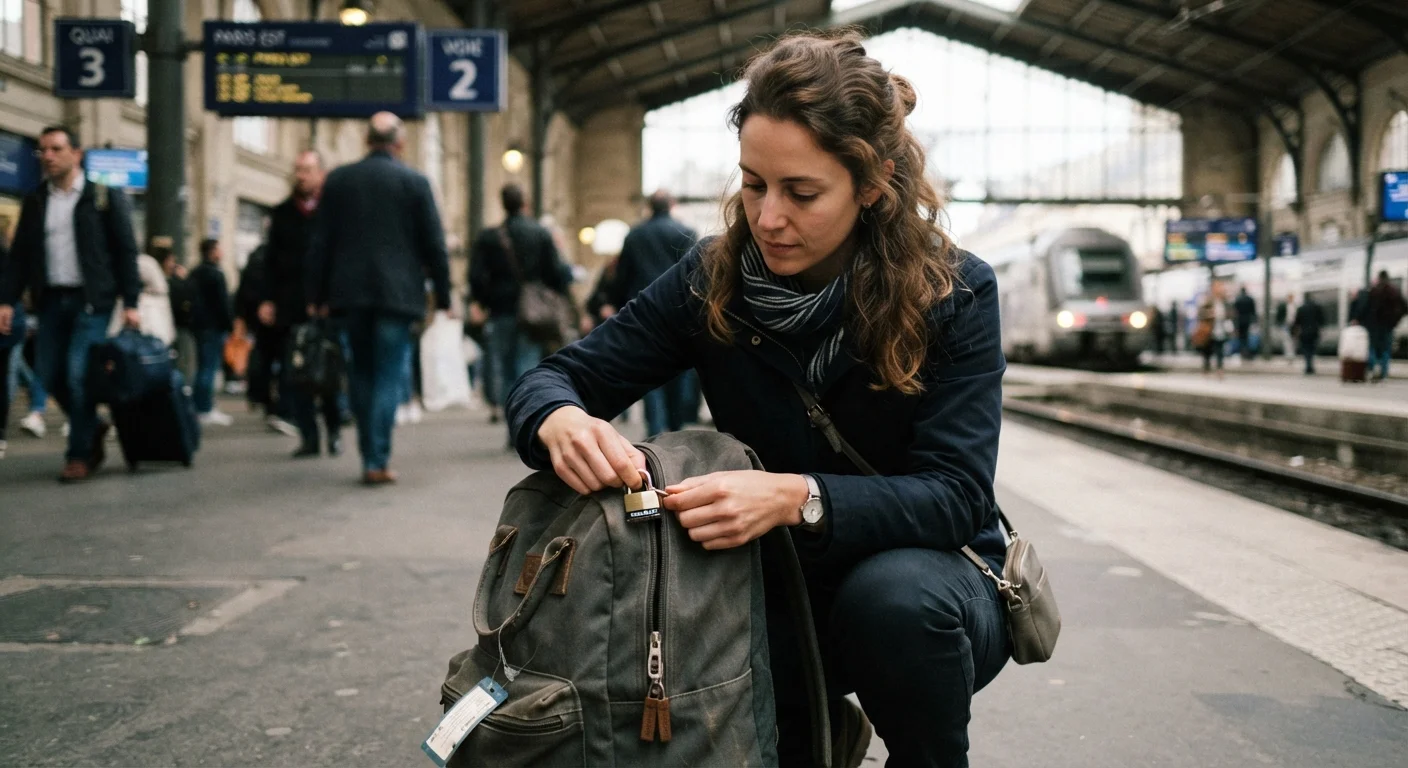
Photo credit: SkripTee.com | Search. Explore. Learn.
In this article
Practical, experience-backed approaches to protecting your valuables — from document storage to situational awareness in unfamiliar environments.
Key Takeaways
- Distribute valuables across multiple bags so a single loss doesn't wipe you out.
- Digital backups of key documents can be a lifesaver if originals are lost or stolen.
- Situational awareness in unfamiliar environments is your most reliable theft deterrent.
- Hotel safes and in-room precautions reduce risk even in well-regarded accommodations.
- A few low-cost physical tools - such as luggage locks and RFID-blocking sleeves - add meaningful protection.
Why Security Habits Matter Before You Leave Home
Most travel theft is opportunistic. Pickpockets and petty criminals look for distraction, not confrontation - which means preparation at home dramatically reduces your exposure before you even board a plane. Building security habits into your pre-departure routine is as important as knowing what to pack.
Start by making digital copies of your passport, travel insurance documentation, visas, credit cards (front and back), and any critical prescriptions. Store these in a secure cloud folder accessible from any device. If originals are lost or stolen, these copies speed up the replacement process considerably. The international travel planning guide covers document prep in depth for trips abroad.
Also review what you're actually bringing. Every unnecessary valuable left at home is one fewer thing to protect. Our pre-departure packing checklist walks through what genuinely needs to travel with you.
Distribute valuables across multiple bags and body locations.
If a single bag is snatched or a single pocket is picked, you lose only a portion of your valuables rather than everything. This redundancy is one of the simplest and most effective theft-mitigation strategies available to travelers.
Store digital backups of all critical documents in a secure cloud service before departure.
Replacing a lost passport abroad is far faster when you can present a digital copy to an embassy or consulate. Losing physical documents without any backup can strand travelers for days.
Use RFID-blocking sleeves or wallets for passports and contactless cards.
Modern passports and many credit cards contain chips that can theoretically be scanned at close range. RFID-blocking sleeves are inexpensive and eliminate this specific risk without adding meaningful weight.
Maintain active situational awareness in crowded or transit-heavy environments.
Most opportunistic theft happens when travelers are distracted - on their phones, consulting maps, or managing luggage in busy stations. Being alert and deliberate in high-traffic areas is a deterrent in itself.
Leave non-essential valuables secured in your accommodation whenever possible.
Items you aren't carrying can't be pickpocketed. Reducing what you take out each day is the most direct way to limit your exposure, particularly in destinations where petty theft is more common.
On the Ground: Protecting Yourself in Unfamiliar Places
Arriving in an unfamiliar city or port is when most travelers are most vulnerable - tired, disoriented, and visibly new to the area. Pickpockets frequent transit hubs, popular tourist sites, and crowded markets for exactly this reason.
Use a Money Belt for High-Risk Environments
A slim, under-clothing money belt worn at the waist or across the chest makes it nearly impossible for a pickpocket to access your passport and emergency cash without your knowledge. Reserve it for genuinely crowded or high-risk environments - markets, busy transit hubs, festivals - rather than wearing it all day. The goal is friction, not paranoia.
Carry only what you need for the day. Leave extra cards, large amounts of cash, and your passport in your accommodation safe when possible - bring a photocopy of your ID instead. Distribute what you do carry across multiple pockets or bags so a single snatch doesn't take everything. Solo travelers should pay particular attention to these habits; the solo travel guide addresses this in practical detail.
On cruises, similar principles apply in port. Ports are busy, tourist-heavy environments where opportunistic theft is common. Keep valuables aboard or secured in a front-access bag worn across the body. The cruise travel hub has further guidance on port safety and what to leave on board.
Accommodation Security: Not All Safes Are Equal
Hotel room safes are a useful layer of protection, but they're not infallible. Most are bolted to closet walls and can be accessed by hotel staff in emergencies - meaning they're a deterrent, not a vault. Use them for your passport and extra cash, but don't store anything irreplaceable without acknowledging that limitation.
Hotel Safes: Useful, Not Absolute
In-room safes are a solid deterrent for everyday theft, but they are accessible to hotel staff and, in some cases, are not permanently fixed. Use them to secure items you need protected during the day, but understand their limitations. For anything truly irreplaceable - rare or sentimental items - consider whether it should travel with you at all.
When a safe isn't available or adequate, consider a portable combination lock for your luggage zippers, or a door alarm for added peace of mind in unfamiliar accommodations. These are lightweight and listed in most security-focused packing guides. See packing light strategies for ideas on keeping your security kit minimal.
For checked luggage, TSA-approved locks allow screening without bag damage. Be aware that checked bags can be opened during screening regardless - avoid placing anything truly irreplaceable in checked luggage. The carry-on vs. checked luggage guide can help you decide what belongs where.

Author
Travel Editorial Team
Travel Editorial Team is the collective byline for our editorial team and contributor network. Articles published under this byline or an editorial pen name are researched, written, and reviewed according to our editorial standards for clarity, consistency, and independence before publication.
View all articles →