
The Smart Traveler's Packing Checklist
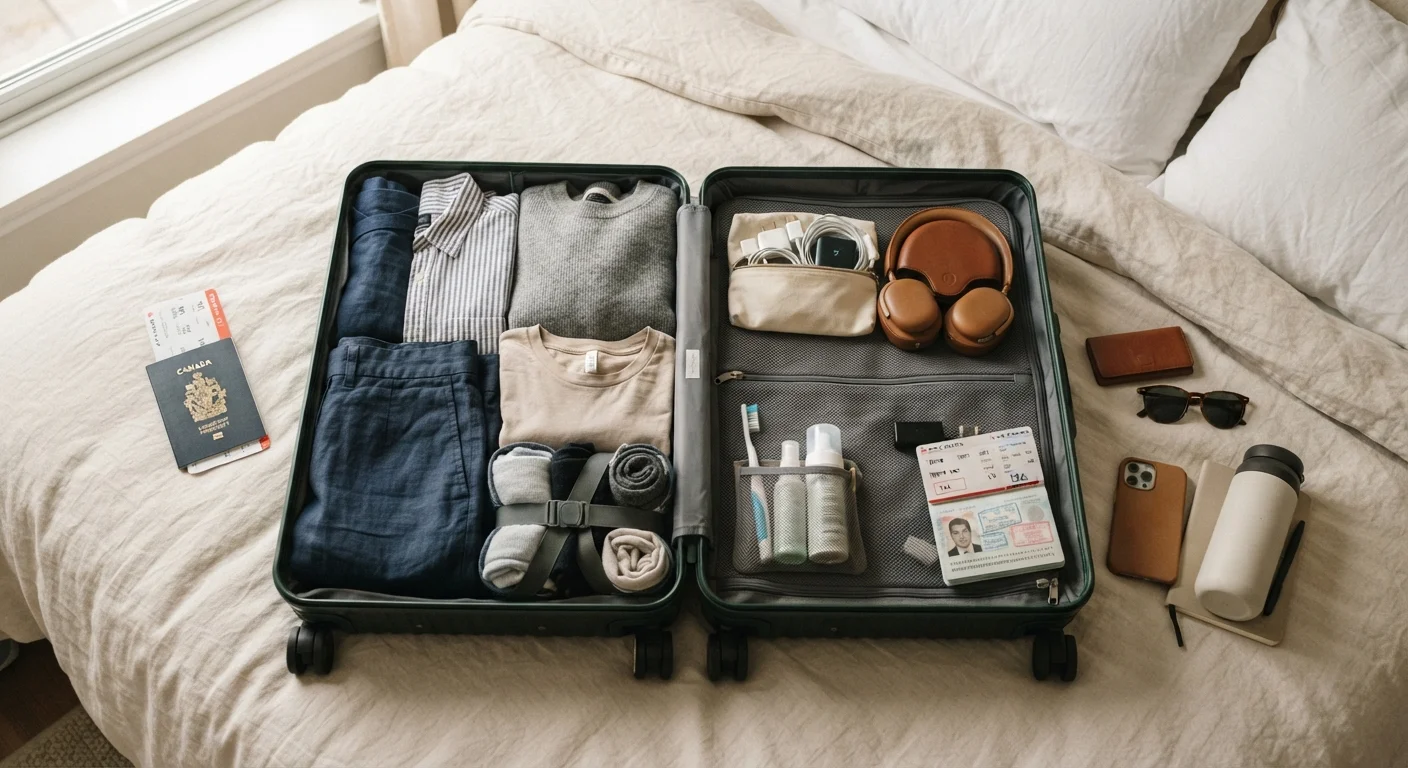
Photo credit: SkripTee.com | Search. Explore. Learn.
In this article
A thorough pre-departure checklist covering documents, clothing, tech, health essentials, and security items — so nothing important gets left behind.
Key Takeaways
- Organizing your packing by category - documents, clothing, tech, health, security - prevents critical oversights.
- Passport validity and visa requirements should be verified weeks before departure, not days.
- Carrying medications in their original labeled containers and keeping them in your carry-on reduces risk at borders.
- Digital backups of key documents add a layer of protection if originals are lost or stolen.
- Packing cubes and a rolling technique help maximize space without encouraging overpacking.
Why a Structured Checklist Outperforms Memory
Even experienced travelers forget something - a charger, a printed confirmation, a power adapter. The difference between a smooth trip and a stressful one often comes down to preparation done in the right order, not just good intentions the night before departure.
This checklist is organized into five categories that mirror how most travelers actually pack: documents first, then clothing, electronics, health essentials, and finally security items. Working through each group systematically means nothing slips through the gaps.
If you're planning around a specific trip type, the pre-departure checklist covers broader logistics like finances, home security, and health prep that sit alongside this packing-focused guide. For cruise-specific needs, see the packing guide for cruisers for attire and onboard essentials experienced passengers consistently rely on.
Travel Documents
Clothing and Footwear
Electronics and Connectivity
Health and Personal Care
Security and Money
Airport and In-Transit Essentials
Tools That Make Packing More Efficient
The right gear doesn't just protect your belongings - it makes working through a checklist faster and more reliable. Below are the tools most useful for executing this checklist effectively.
Packing Cubes
Compress clothing, maintain organization by category, and separate clean from used items throughout the trip.
TSA-Approved Quart-Sized Clear Bag
Required for carrying liquids, gels, and aerosols in carry-on luggage through airport security.
Universal Power Adapter
Allows your devices to connect to outlet types used in your destination country.
Portable Battery Pack
Keeps devices charged during long travel days when wall outlets aren't accessible.
Money Belt or Hidden Pouch
Provides a discreet, body-worn location for passports and cash in crowded environments.
Document Organizer Wallet
Consolidates passport, boarding passes, cards, and insurance details into one accessible folder.
Choosing between carry-on and checked luggage is its own decision worth thinking through carefully. The carry-on vs. checked luggage guide walks through how trip length, destination, and travel style should influence your approach. If reducing what you pack is a goal, understanding why travelers overpack offers practical perspective on breaking that habit.
Don't Pack Medications in Checked Luggage
Checked bags can be delayed, lost, or exposed to temperature extremes that may compromise medication. Always keep prescriptions in your carry-on in their original labeled containers. If you're traveling internationally, research your destination country's rules on controlled substances, as some medications legal in the US require advance documentation or are restricted abroad.
Key Considerations Before You Zip Up
Two areas deserve special attention beyond the mechanical act of packing: medications and security. Medications should always travel in carry-on luggage in original labeled containers - checked bags can be delayed, lost, or exposed to temperature extremes. For detailed guidance on carrying prescriptions across borders, the medications and travel guide is an essential read before any international trip.
On the security side, keeping copies of your passport, insurance card, and key bookings in a separate bag - and storing digital versions in a secure cloud location - gives you recovery options if your primary documents are lost or stolen. The guide to keeping belongings safe covers situational awareness and storage strategies that experienced travelers rely on.
Passport Validity Rules Can Catch Travelers Off Guard
Many countries require your passport to be valid for at least six months beyond your return date - not just the date of entry. Airlines may deny boarding if this condition isn't met, and embassies can take weeks to process renewals. Check the entry requirements for your specific destination through official government sources well before your departure date.
Once everything is packed, smart habits that experienced travelers build into every trip offers a final layer of trip-smoothing practices - from document backups to buffer days - that go beyond the bag itself.

Author
Travel Editorial Team
Travel Editorial Team is the collective byline for our editorial team and contributor network. Articles published under this byline or an editorial pen name are researched, written, and reviewed according to our editorial standards for clarity, consistency, and independence before publication.
View all articles →