
Why Travellers Overpack (And What to Do Instead)
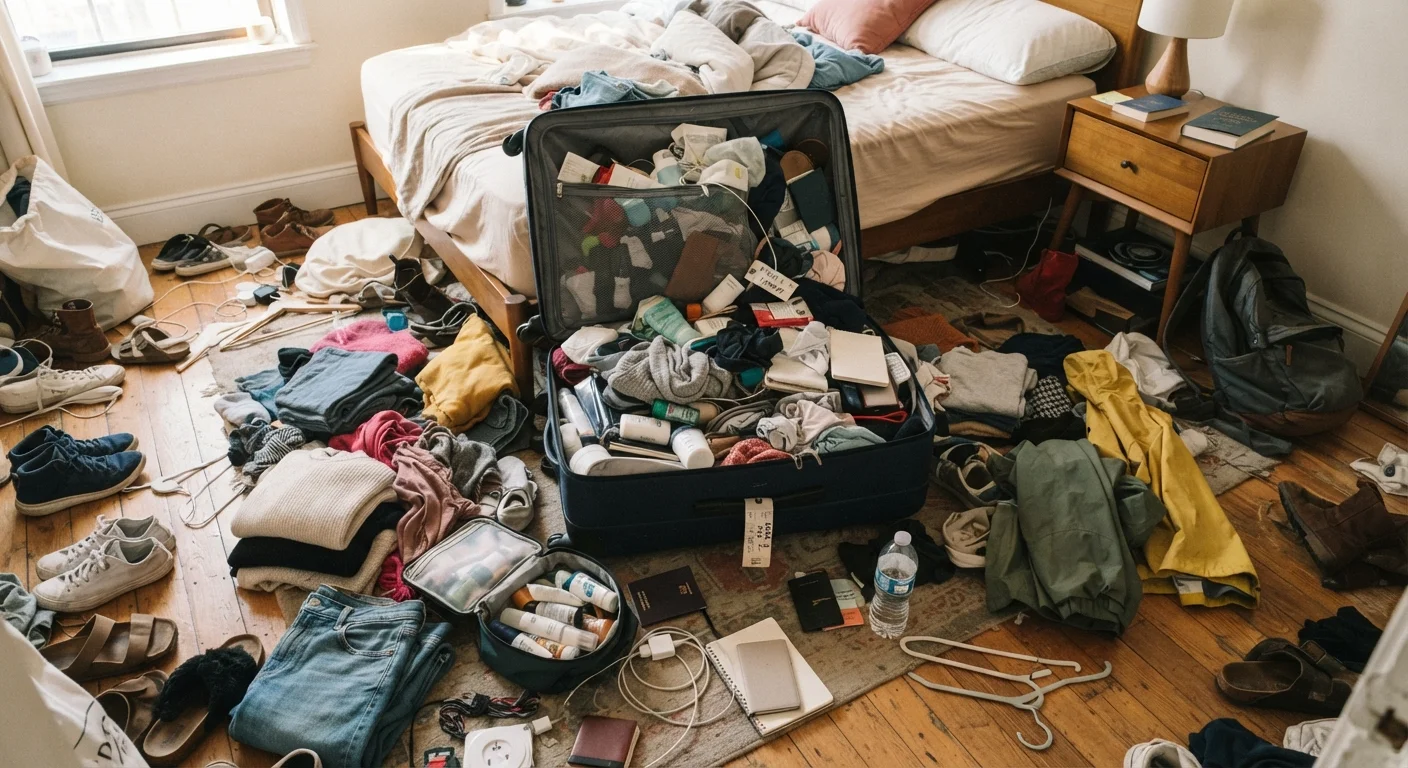
Photo credit: SkripTee.com | Search. Explore. Learn.
In this article
Overpacking is one of the most common travel mistakes. Understand why it happens and how to pack lighter without leaving essentials behind.
Key Takeaways
- Overpacking is driven by anxiety and worst-case thinking, not actual need.
- Most travellers wear only a fraction of what they pack on any given trip.
- A structured packing approach - not willpower - is what consistently reduces luggage volume.
- Baggage fees and physical strain are direct, measurable costs of overpacking.
- Experienced travellers plan outfits, not individual items, and buy small necessities locally.
The Real Reason Your Bag Is Always Too Heavy
Overpacking rarely comes down to poor organization skills. More often, it's a response to anxiety - the discomfort of imagining yourself without something you might need. That emotional trigger is powerful enough to override practical reasoning, which is why so many experienced travellers still overpack despite knowing better.
The result is predictable: bags that exceed airline weight limits, physical strain through airports, and a suitcase full of items that never leave their packing cubes. Understanding why overpacking happens is the first step to stopping it. The habits that experienced travellers develop over time aren't about willpower - they're about replacing anxious, reactive packing with deliberate systems.
~50%
Clothes packed that never get worn
Travel industry surveys consistently suggest that roughly half the clothing packed on typical leisure trips goes unworn - a figure frequent travelers themselves often acknowledge.
$60-$150+
Average round-trip checked bag fees
US domestic and international carriers charge widely varying baggage fees; costs compound quickly on multi-leg itineraries or trips with multiple travelers.
Common Overpacking Mistakes - and How to Fix Them
Most overpacking is traceable to a handful of recurring errors. Recognizing them in your own process is more useful than any packing tip.
Packing for every possible scenario rather than the most likely ones.
Why it happens: Anxiety about being unprepared pushes travellers to imagine worst-case situations - a formal event, a cold snap, a medical issue - and pack for all of them simultaneously.
Packing individual items instead of planned outfit combinations.
Why it happens: Without a clear plan, travellers add pieces that feel useful in isolation but don't coordinate together, resulting in more clothing and fewer complete outfits.
Bringing full-size toiletries and duplicating items already available at the destination.
Why it happens: Familiarity and habit lead travellers to reach for their home products, even when hotels, vacation rentals, or local stores carry perfectly adequate alternatives.
Starting with a large suitcase and filling it to capacity.
Why it happens: Available space acts as a psychological prompt - the bigger the bag, the more items find their way in. Many travellers don't consciously decide how much to bring; they simply fill what they have.
Re-packing the same items on every trip regardless of destination or duration.
Why it happens: Habit and a fear of forgetting something useful cause travellers to default to a standard list built for a different kind of trip entirely.
"Just In Case" Thinking Is a Packing Trap
Packing for unlikely scenarios - formal dinners, extreme cold snaps, sudden illness - results in bags filled with items that never leave the suitcase. Ask yourself honestly: if this situation arose, could I solve it locally? In most destinations, the answer is yes. Reserve "just in case" packing for genuinely hard-to-replace items like prescription medications or critical documents.
A Smarter Approach to Packing Light
Packing lighter isn't about deprivation - it's about precision. The travellers who do it consistently use structure, not self-discipline, to keep their bags manageable.
A good starting point is a well-designed checklist built around your specific trip. The Smart Traveler's Packing Checklist covers documents, clothing, tech, health essentials, and security items in a format designed to prevent both overpacking and forgotten necessities. Pair that with guidance on reducing luggage volume without missing essentials and you have a practical system rather than a vague intention.
One often-overlooked decision is luggage strategy itself. Whether to use a carry-on or checked bag shapes everything else about how you pack. The carry-on vs. checked luggage trade-offs are worth thinking through before you even open a suitcase.
Baggage Fees Add Up Fast
Checked bag fees from US carriers can range from $30 to over $150 per bag, per direction. On a round trip with multiple legs, overpacking can quietly become one of your largest trip expenses. Factor luggage costs into your travel budget before you ever zip a suitcase.
Finally, remember that overpacking has a financial cost beyond baggage fees. Heavier bags slow you down, limit flexibility with transportation, and can push you toward more expensive options throughout a trip. For more on keeping travel costs from spiraling unexpectedly, see why travel budgets run out early - the same blind spots that drive overpacking often affect spending too.

Author
Travel Editorial Team
Travel Editorial Team is the collective byline for our editorial team and contributor network. Articles published under this byline or an editorial pen name are researched, written, and reviewed according to our editorial standards for clarity, consistency, and independence before publication.
View all articles →