
River Cruising vs Ocean Cruising: Two Very Different Experiences
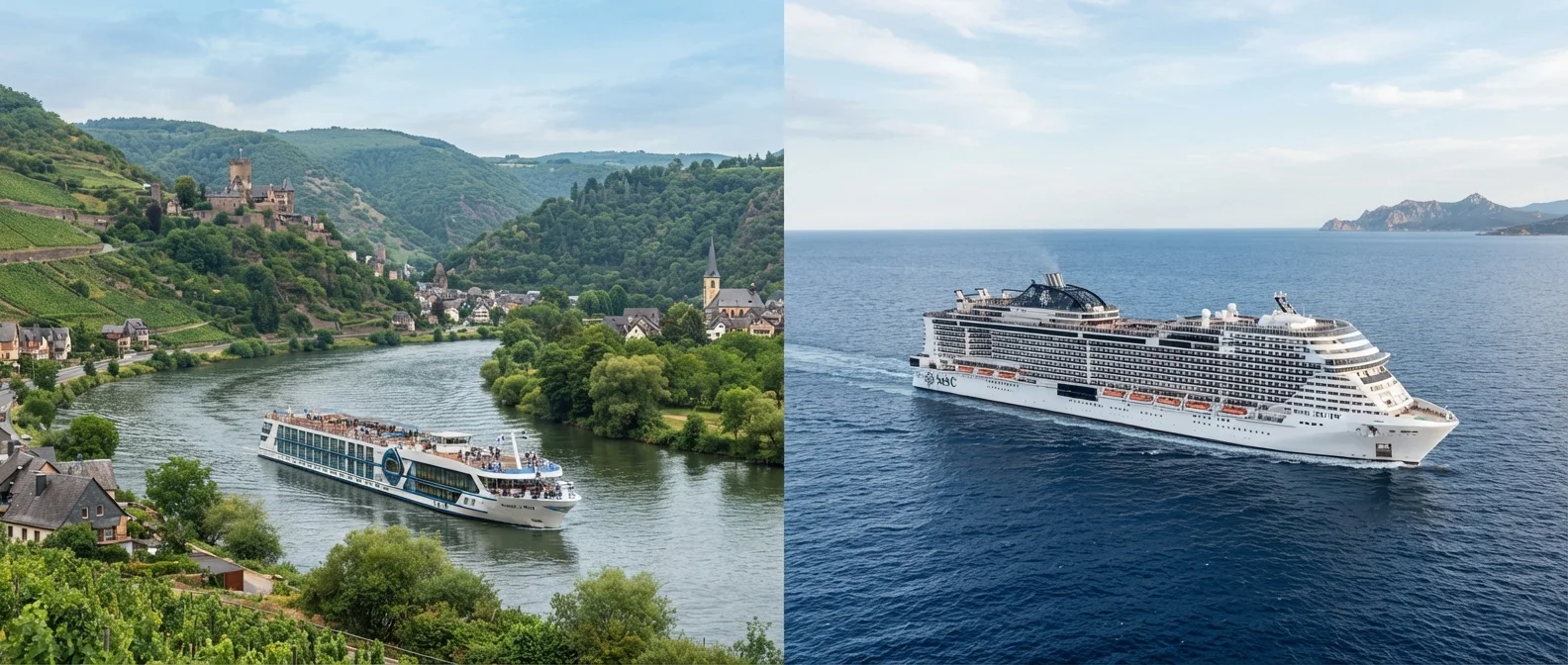
Photo credit: SkripTee.com | Search. Explore. Learn.
In this article
River and ocean cruises share a ship — and very little else. Explore the key differences in itinerary style, ship size, port access, and pace.
Key Takeaways
- River ships carry 100-200 passengers; ocean ships can hold thousands, creating very different social atmospheres.
- River itineraries dock in town centers, while ocean ships often anchor at industrial ports requiring transfers.
- Ocean cruises include far more onboard entertainment and dining variety than their river counterparts.
- River cruising tends to be more all-inclusive in pricing; ocean cruises frequently add costs for drinks, dining, and excursions.
- Weather and water levels affect river sailings more directly than open-ocean itineraries.
- First-timers may find ocean cruising more flexible; experienced travelers often favor rivers for cultural depth.
Ship Size and Onboard Atmosphere
The most immediately obvious difference between river and ocean cruising is scale. River ships are purpose-built to navigate narrow waterways, low bridges, and shallow depths - typically carrying between 100 and 200 passengers. That intimacy shapes everything: open-seating dining, easy access to crew and fellow passengers, and no queuing for elevators or tenders.
Ocean ships exist on an entirely different spectrum. Mainstream vessels carry anywhere from 2,000 to over 5,000 guests, with onboard amenities to match - multiple restaurants, theaters, casinos, climbing walls, and water parks. For travelers who want a resort-style experience at sea, the scale is part of the appeal. For those who find large crowds tiring, it can feel overwhelming.
| Criterion | River Cruising | Ocean Cruising |
|---|---|---|
| Passenger capacity | Typically 100-200 | Typically 2,000-5,000+ |
| Port location | City center docking | Often industrial terminals |
| Geographic range | Inland waterways only | Global, including remote coasts |
| Onboard entertainment | Minimal; enrichment-focused | Extensive; theaters, pools, casinos |
| Pricing model | Usually more all-inclusive | Base fare plus many add-ons |
| Motion/seasickness risk | Very low on calm rivers | Varies; open ocean can be rough |
| Itinerary pace | Slow; new port daily | Variable; sea days common |
If you're new to cruising generally, the guide for first-time cruisers covers both ship types in the broader context of planning your debut voyage.
Itinerary Style and Port Access
River itineraries are built around the waterway itself - the Rhine, Danube, Mekong, or Mississippi, for instance. Ships dock directly in historic city centers, often within walking distance of a cathedral, market square, or old town. There are no tender boats, no shuttle buses, and no industrial port zones to navigate. You step off the ship and you're already there.
Ocean cruises cover far greater geographic range, but port access works differently. Many major port cities berth ocean ships at commercial terminals some distance from the center. Getting into town typically means a shuttle, taxi, or organized excursion. Some itineraries also use anchor-and-tender arrangements at smaller ports, which can involve waits and weather-dependent logistics.
That said, ocean itineraries reach places rivers simply cannot - tropical islands, glacial fjords, remote coastlines. If geographic variety is the goal, ocean cruising wins by default. For those weighing how much independence they want once ashore, the comparison of ship excursions versus independent port days is worth reading before you decide.
~190
Average river ship passenger capacity
Industry data from river cruise operators suggests most European river vessels carry between 120 and 190 guests per sailing.
5,000+
Passengers on largest ocean ships
The world's largest ocean cruise vessels are designed to carry upward of 5,000 guests, with crew counts exceeding 2,000.
~7-14 days
Typical river cruise duration
Most river itineraries run one to two weeks, covering a single waterway region in depth rather than broad geographic sweep.
Pace, Pricing, and Who Each Style Suits
River cruising moves at a deliberate pace. Most itineraries spend each night docked in a new port, meaning mornings begin with the destination already in view. Enrichment programming - lectures on local history, culinary demonstrations, guided walks - tends to be front and center rather than optional add-ons.
Pricing structures also differ significantly. River cruise fares are commonly bundled, including guided excursions, house beverages with meals, and sometimes gratuities. Ocean cruise base fares are often lower, but specialty dining, drink packages, Wi-Fi, and excursions add up quickly. Neither model is inherently more expensive - the total depends on how you travel.
Traveler demographics reflect these differences. River cruising skews toward adults over 50 who prioritize cultural depth, culinary experiences, and a quieter social environment. Ocean cruising attracts a broader demographic, from families to solo travelers. For those considering a solo ocean voyage specifically, the honest overview of solo cruising addresses the practical and social realities. Ocean cruisers looking at specific regions can also explore how factors like climate and port culture differ in the Caribbean vs Mediterranean comparison.
River Water Levels: A Practical Consideration
Unlike ocean voyages, river sailings are directly affected by seasonal water levels. Drought conditions can strand ships in shallow sections; flooding can close certain ports or passages. Reputable river lines have contingency plans - such as motorcoach transfers - but itinerary adjustments are more common in river cruising than on open water. Travelers with rigid must-see destinations should factor this variability into their expectations.

Author
Travel Editorial Team
Travel Editorial Team is the collective byline for our editorial team and contributor network. Articles published under this byline or an editorial pen name are researched, written, and reviewed according to our editorial standards for clarity, consistency, and independence before publication.
View all articles →