
Caribbean vs Mediterranean Cruises: Choosing the Right Region
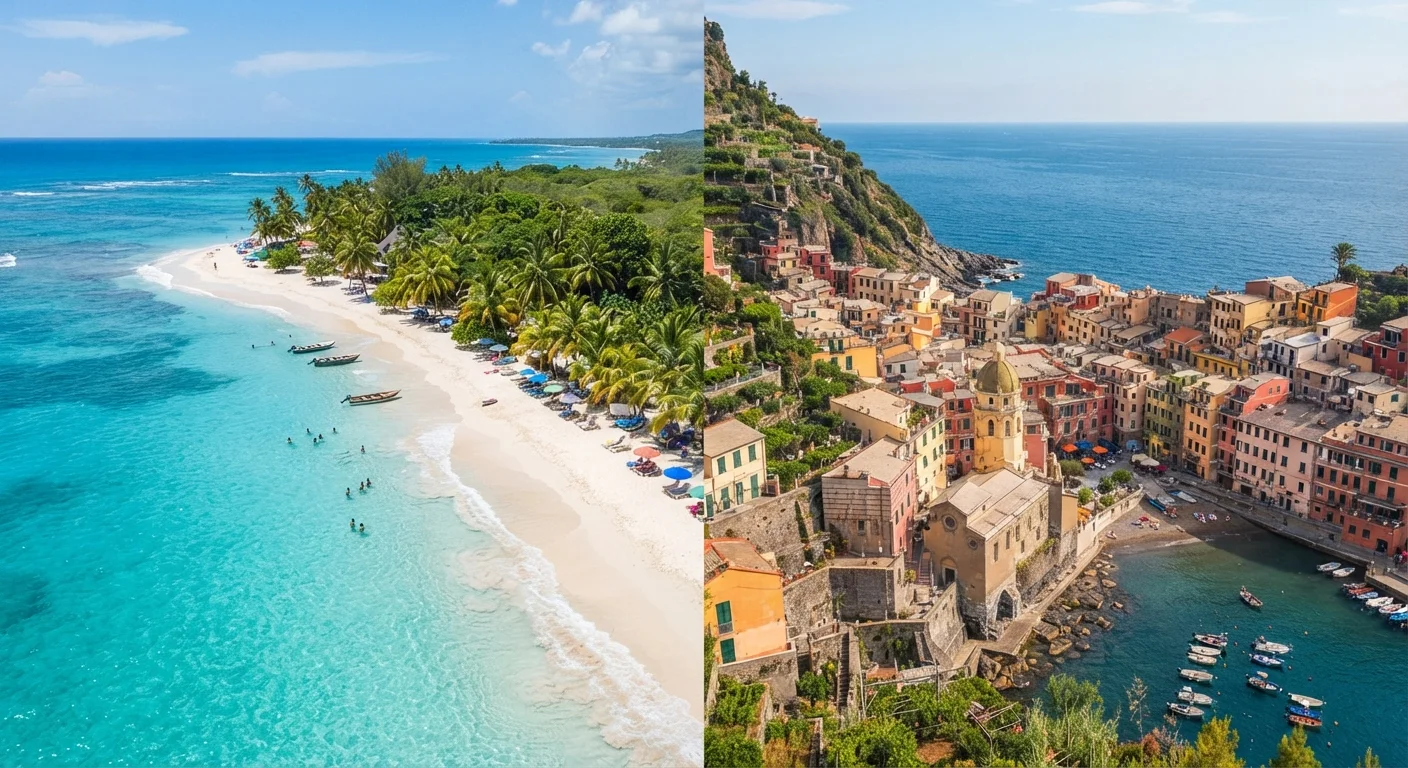
Photo credit: SkripTee.com | Search. Explore. Learn.
In this article
Both are perennial favourites, but they deliver very different trips. Compare climate, port culture, itinerary length, and onboard atmosphere.
Key Takeaways
- Caribbean cruises offer warmer, more predictable weather but are more susceptible to hurricane-season disruption between June and November.
- Mediterranean cruises pack in remarkable cultural density - multiple countries, languages, and culinary traditions within a single sailing.
- Caribbean itineraries tend to be shorter (7 nights is standard), while Mediterranean sailings commonly run 10-14 nights.
- Port experiences differ significantly: Caribbean stops often center on beaches and water activities, Mediterranean ports on historic sites and local food.
- Both regions carry distinct seasonal sweet spots - winter for the Caribbean, late spring or early fall for the Mediterranean.
- Onboard atmosphere and fellow-passenger mix can vary considerably between the two regions, reflecting different traveler priorities.
Climate and Seasonality
Weather is often the first filter travelers apply - and the two regions operate on very different rhythms. The Caribbean runs warm and humid year-round, with sea temperatures rarely dipping below 75°F. However, the Atlantic hurricane season (June through November) introduces real uncertainty. Ships do re-route around storms, but itinerary changes are common in this window. For the most settled Caribbean conditions, the period from December through April is broadly considered the sweet spot.
The Mediterranean is a seasonal destination. Peak summer months - July and August - bring intense heat (often above 95°F inland), large crowds at popular ports, and higher costs across the board. Late spring (May-June) and early fall (September-October) offer a more balanced experience: pleasant temperatures, thinner crowds, and operational flexibility. Winter sailings do exist but focus on a narrower set of ports. For a detailed look at how season affects cost and crowd levels, see our guide to peak vs shoulder season travel.
Port Experiences and Itinerary Style
What you actually do when the ship docks differs markedly between regions. Caribbean ports are largely oriented around natural assets - white-sand beaches, snorkeling reefs, zip-lines through rainforests, and private island resort facilities operated by cruise lines. Cultural immersion tends to be lighter, though ports like Cartagena (Colombia) and San Juan (Puerto Rico) offer meaningful historic districts worth exploring on foot.
Mediterranean ports are a different proposition altogether. A single sailing might include Greek islands, Turkish bazaars, Italian hill towns, and Spanish architectural landmarks. The density of UNESCO World Heritage Sites accessible from cruise terminals is extraordinary. That said, popular ports - particularly Santorini, Dubrovnik, and Venice - are managing overtourism concerns, which can mean congestion and time pressure at key sites. Regardless of region, deciding how to use your port time matters - weighing ship-organised excursions against independent exploration is a decision every cruiser faces.
| Criterion | Caribbean Cruises | Mediterranean Cruises |
|---|---|---|
| Typical itinerary length | 7 nights | 10-14 nights |
| Peak season | December-April | May-June, September-October |
| Weather risk | Hurricane season (Jun-Nov) | Extreme heat in Jul-Aug |
| Port focus | Beaches, water activities | Historic sites, food culture |
| Embarkation for US travelers | US domestic ports | European ports (flight required) |
| Countries visited | 1-5 island nations | 4-8 countries typical |
| Onboard atmosphere | Resort-style, family-friendly | Enrichment-focused, international |
Itinerary Length, Logistics, and Onboard Atmosphere
Caribbean sailings are typically structured as 7-night loops departing from US East Coast and Gulf ports - Miami, Port Canaveral, Galveston - making them logistically simple for American travelers who can often drive to their departure port. Transatlantic repositioning cruises aside, most Caribbean sailings don't require international flights to embark.
Mediterranean cruises almost always require a transatlantic flight to reach a European embarkation port like Barcelona, Civitavecchia (Rome), or Athens. That upfront travel commitment raises both cost and planning complexity. Itineraries typically run 10-14 nights, reflecting the distances between ports and the depth of sightseeing on offer.
Onboard atmosphere reflects these differences. Caribbean ships often skew toward resort-style entertainment, large water features, and active programming - partly driven by higher proportions of family and first-time cruisers. Mediterranean sailings attract a more varied international passenger mix, with slightly more emphasis on enrichment lectures, culinary programming, and longer port days. Neither atmosphere is inherently superior - it simply depends on what you want from your sea days.
Ocean vs River: A Different Comparison Entirely
If you're still early in deciding what type of cruise suits you, it's worth understanding that ocean cruises - whether Caribbean or Mediterranean - differ fundamentally from river cruising in ship size, port access, and pace. See how river and ocean cruising compare before committing to either style.
For practical preparation regardless of region, experienced cruisers share what they consistently pack - and the list differs more by onboard dress codes than by destination. It's also worth reviewing what cruise travel insurance typically covers, since both regions present distinct considerations around missed ports and medical access.

Author
Travel Editorial Team
Travel Editorial Team is the collective byline for our editorial team and contributor network. Articles published under this byline or an editorial pen name are researched, written, and reviewed according to our editorial standards for clarity, consistency, and independence before publication.
View all articles →