
What Cruise Fare Categories Actually Mean
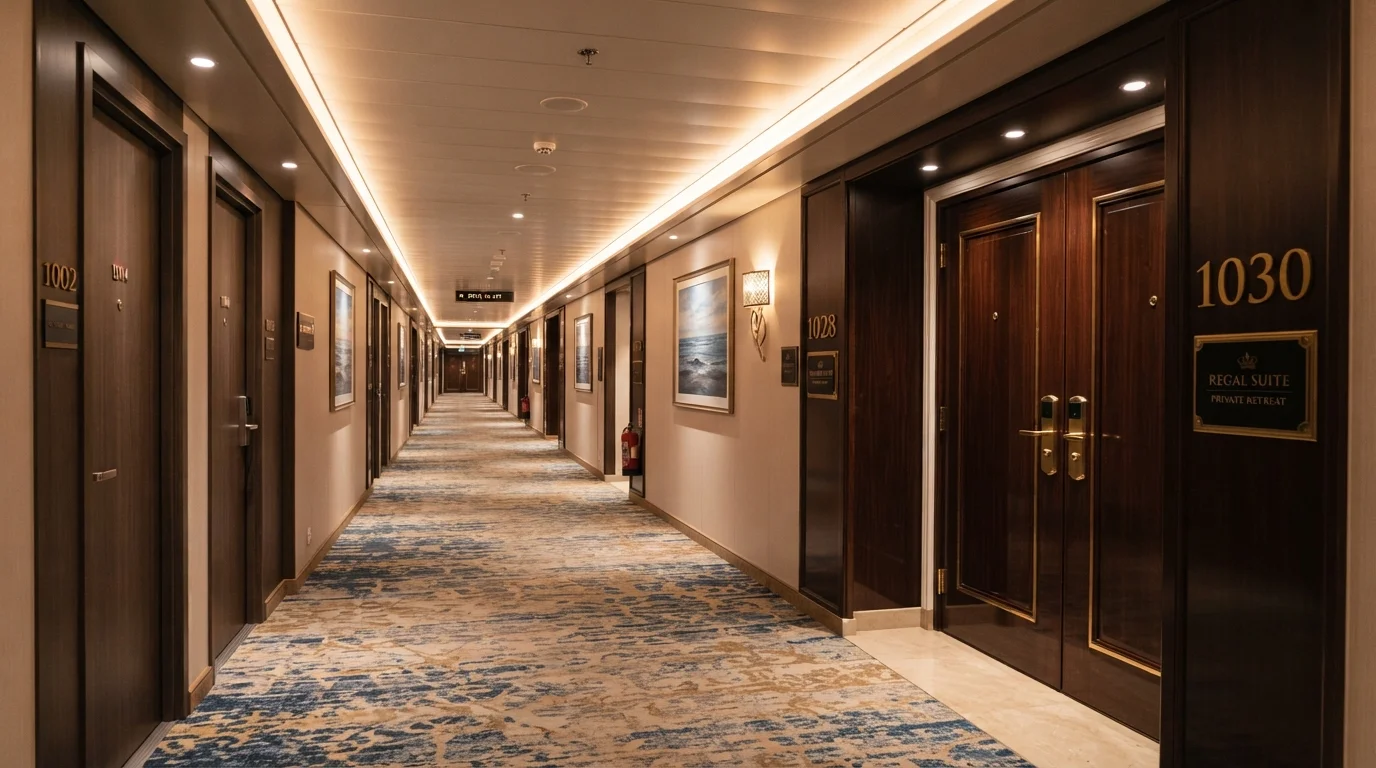
Photo credit: SkripTee.com | Search. Explore. Learn.
In this article
Inside, ocean-view, balcony, suite — cruise cabin categories can be confusing. Here's what each tier covers and what genuinely sets them apart.
Key Takeaways
- Cabin category primarily affects your private space - most public amenities are available to all passengers regardless of fare tier.
- Interior cabins offer no natural light; ocean-view and balcony cabins add windows or outdoor access at a higher price.
- Suite categories often include exclusive perks like priority boarding, butler service, and dedicated dining.
- Location on the ship - deck level, forward vs. aft - can affect both price and comfort during rough seas.
- Guarantee fares offer a category but not a specific cabin; the line assigns your room closer to sailing.
- Understanding what each tier includes helps you spend where it matters to you and save where it doesn't.
The Four Core Cabin Tiers
Most cruise lines organize their staterooms into four broad tiers, each reflecting a meaningful step up in space, light, and private amenities. Understanding what separates each tier is the fastest way to make a booking decision that actually matches your travel style.
Interior Cabins
Interior cabins are the most affordable category on any ship. They have no window, porthole, or source of natural light - your room is a fully enclosed, private space. For passengers who plan to sleep, shower, and spend time primarily in public areas, an interior cabin delivers everything they need at a lower fare. The trade-off is the absence of any visual connection to the outside world.
Ocean-View Cabins
These cabins add a fixed window or porthole, letting in daylight and providing a view of the sea. The window typically cannot be opened. Ocean-view staterooms are priced between interiors and balconies, making them a practical middle ground for travelers who want natural light without paying for outdoor access.
Balcony Cabins
Also called veranda staterooms on some lines, balcony cabins include a private outdoor space accessed through a sliding or French door. This is the category where passengers can sit outside, watch sunrises over the water, or simply keep the door ajar for fresh air while at sea. Balconies vary considerably in size - some are barely enough for two chairs; others are generously proportioned.
Suites
Suite categories represent the top tier of cruise accommodations. They typically offer significantly more floor space, a separate living area, premium furnishings, and a curated package of perks that can include butler service, priority boarding and disembarkation, exclusive lounge access, and specialty dining credits. Some lines segment suites further into mini-suites, junior suites, and full or owner's suites, each with a distinct amenity set.
4
Standard cruise cabin category tiers
Most major cruise lines organize staterooms into interior, ocean-view, balcony, and suite tiers, though sub-categories within each can number into the dozens on large ships.
~30%
Of cruisers typically book balcony cabins
Industry booking trend data consistently shows balcony staterooms as the most popular category among repeat cruisers, reflecting a preference for private outdoor access.
2x-4x
Suite price premium over interior cabins
Suite fares on contemporary cruise lines can range from roughly double to four times the cost of an interior cabin on the same sailing, depending on the line, itinerary, and included perks.
How Ship Location Affects Your Category Choice
Cabin category and cabin location are related but separate decisions. Within a single category - say, balcony - pricing often varies depending on where the cabin sits on the ship. Several location factors are worth understanding before you book.
Deck Level
Higher decks are generally priced at a premium and offer better views. Lower decks sit closer to the waterline, which some passengers prefer for stability, particularly in rough weather. On large ships, mid-deck cabins in the center of the ship tend to experience the least motion.
Forward, Midship, and Aft
Forward cabins are at the bow of the ship. Aft cabins sit at the stern and often offer a dramatic wake view. Midship cabins - located roughly in the center - are considered the most stable position. For passengers who experience motion sickness, midship and lower deck placement is often recommended, though no cabin location eliminates the possibility of feeling the ship's movement.
Check the deck plan before you book
Most cruise lines publish detailed deck plans on their websites, showing the exact position of every cabin category. Reviewing the deck plan before finalizing your booking lets you identify obstructed-view rooms, check proximity to elevators and stairwells, and compare midship versus forward or aft positions. It takes only a few minutes and can prevent post-booking regret.
Obstructed Views
Some ocean-view and balcony cabins are designated as having partially or fully obstructed views - a lifeboat, structural pillar, or equipment may block the sightline. These cabins are typically sold at a reduced rate within their category. The obstruction level is usually disclosed at booking, so it's worth reading the cabin details carefully rather than assuming all ocean-view or balcony cabins are equivalent.
For a broader overview of cruise terminology you'll encounter throughout the booking process, see our cruise terminology glossary.
What Fare Category Doesn't Determine
One of the most common misconceptions among first-time cruisers is that cabin category restricts access to ship amenities. In practice, nearly all public spaces - pools, buffets, theaters, gyms, lounges, and most dining venues - are open to every passenger regardless of their fare tier.
What category primarily affects is your private stateroom experience: the size of your room, whether you have a window or balcony, and any exclusive perks bundled into higher tiers. A passenger in an interior cabin can eat at the same main dining room, attend the same shows, and use the same fitness facilities as someone in a full suite.
Suite packages, however, do sometimes include genuinely exclusive access - a suite-only restaurant, a private sun deck, or a dedicated concierge. These distinctions are meaningful for passengers who want a quieter, more personalized onboard environment. But for the traveler whose priority is the destination rather than the ship itself, a lower fare category rarely diminishes the core experience.
Fare category also doesn't cover the full picture of cruise costs. Service charges, specialty dining, Wi-Fi, and shore excursions are typically added on top of the base fare. Our guide to hidden cruise costs breaks down what's typically extra so there are no surprises on your onboard account.
It's also worth understanding that the type of cruise - ocean versus river - affects category structures significantly. River cruises tend to have fewer cabin tiers and smaller ships, where category distinctions play out differently than on a large ocean vessel.
Frequently Asked Questions

Author
Travel Editorial Team
Travel Editorial Team is the collective byline for our editorial team and contributor network. Articles published under this byline or an editorial pen name are researched, written, and reviewed according to our editorial standards for clarity, consistency, and independence before publication.
View all articles →