
Group Travel vs. Independent Travel: Which Model Fits Your Trip?
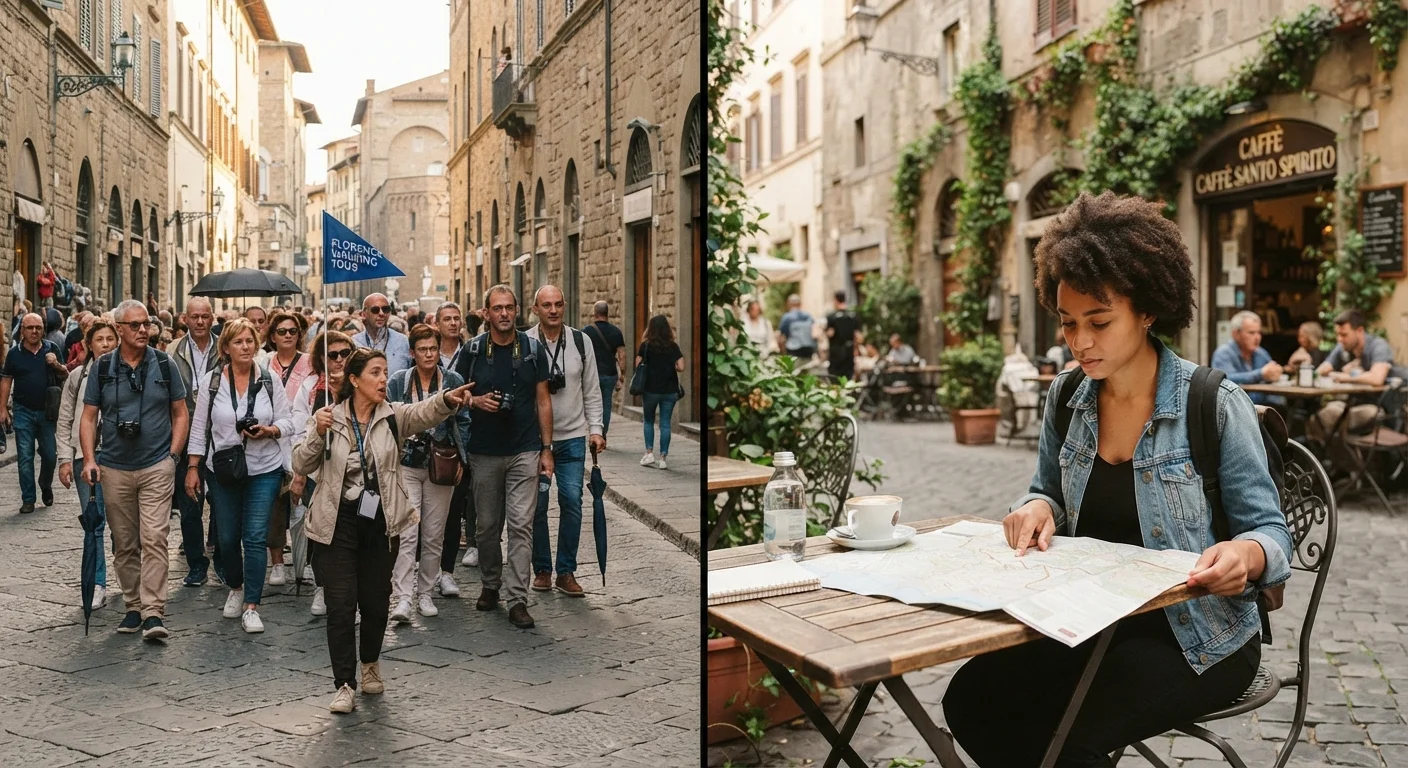
Photo credit: SkripTee.com | Search. Explore. Learn.
In this article
A balanced comparison of guided group tours and self-planned independent travel — covering cost, flexibility, social dynamics, and planning effort.
Key Takeaways
- Group tours reduce planning burden but limit day-to-day flexibility and spontaneity.
- Independent travel offers full control over pace and itinerary but demands significant pre-trip effort.
- Cost comparisons between the two models depend heavily on destination, group size, and travel style.
- Social dynamics differ substantially - group travel builds community; independent travel invites solitude or selective connection.
- Many travelers find a hybrid approach - booking a structured tour for one leg, going independent for another - works best.
Logistics handled end-to-end by the operator
Transportation, accommodation, and sequencing are pre-arranged, removing the planning burden from the traveler. This is especially valuable in destinations with complex infrastructure or unfamiliar transit systems.
Built-in social structure from day one
Travelers are automatically connected with a group, reducing the isolation that can accompany solo independent travel. For those who want companionship without coordinating it, this is a significant practical benefit.
Access to expert local guides
Quality group tours include guides with contextual knowledge - historical, cultural, logistical - that would take significant independent research to replicate. This can meaningfully deepen the experience at key sites.
Predictable upfront cost
Most group tours bundle major expenses into a single price, making budgeting straightforward. Travelers know their core spend before departure, reducing the risk of mid-trip financial surprises.
Reassuring structure in unfamiliar destinations
In regions where language barriers, safety considerations, or permit requirements add complexity, having a structured operator manage logistics removes meaningful friction and risk.
Fixed itinerary limits spontaneity and flexibility
Departures, arrivals, and site visits are scheduled in advance. Travelers who want to linger somewhere longer or change direction based on weather or mood will find this constraining.
Group pace may not match your own
Tours are designed for the group median - which may be faster or slower than your preferred rhythm. This can create friction, particularly on longer itineraries with diverse fitness or interest levels.
Less room for deep local immersion
Group tours often prioritize breadth over depth, moving through sites efficiently rather than allowing extended time in neighborhoods, markets, or off-itinerary locations that independent travelers can access freely.
Social compatibility with the group is unpredictable
You share extended time with people you haven't chosen. Personality mismatches, differing travel values, or disruptive group dynamics can affect the overall experience in ways that are difficult to anticipate before departure.
The Core Trade-Off: Control vs. Convenience
At the heart of this comparison is a single tension: how much control you want over your trip versus how much logistical work you're willing to do. Group tours hand that work to an operator - transportation, accommodation, itinerary sequencing, and often meals are pre-arranged. Independent travel puts every one of those decisions in your hands.
That trade-off isn't inherently good or bad. A traveler with two weeks of vacation and limited knowledge of a destination like Morocco or Japan may find the group model genuinely liberating. A traveler who finds rigid schedules frustrating will likely feel constrained by the same structure. Recognizing your own priorities before booking is more useful than chasing a universal answer.
It's also worth noting that this isn't always a binary choice. Comparing package and independent travel approaches shows how hybrid models - structured for some legs, self-directed for others - have become increasingly common.
Pros and Cons of Group Travel
Guided group tours carry real advantages, particularly for destinations where logistics are genuinely complex or where language barriers make independent navigation difficult. But they come with meaningful limitations too.
Logistics handled end-to-end by the operator
Transportation, accommodation, and sequencing are pre-arranged, removing the planning burden from the traveler. This is especially valuable in destinations with complex infrastructure or unfamiliar transit systems.
Built-in social structure from day one
Travelers are automatically connected with a group, reducing the isolation that can accompany solo independent travel. For those who want companionship without coordinating it, this is a significant practical benefit.
Access to expert local guides
Quality group tours include guides with contextual knowledge - historical, cultural, logistical - that would take significant independent research to replicate. This can meaningfully deepen the experience at key sites.
Predictable upfront cost
Most group tours bundle major expenses into a single price, making budgeting straightforward. Travelers know their core spend before departure, reducing the risk of mid-trip financial surprises.
Reassuring structure in unfamiliar destinations
In regions where language barriers, safety considerations, or permit requirements add complexity, having a structured operator manage logistics removes meaningful friction and risk.
Fixed itinerary limits spontaneity and flexibility
Departures, arrivals, and site visits are scheduled in advance. Travelers who want to linger somewhere longer or change direction based on weather or mood will find this constraining.
Group pace may not match your own
Tours are designed for the group median - which may be faster or slower than your preferred rhythm. This can create friction, particularly on longer itineraries with diverse fitness or interest levels.
Less room for deep local immersion
Group tours often prioritize breadth over depth, moving through sites efficiently rather than allowing extended time in neighborhoods, markets, or off-itinerary locations that independent travelers can access freely.
Social compatibility with the group is unpredictable
You share extended time with people you haven't chosen. Personality mismatches, differing travel values, or disruptive group dynamics can affect the overall experience in ways that are difficult to anticipate before departure.
Group size matters more than many travelers expect. A 12-person small-group tour operates very differently from a 45-seat coach. Smaller groups typically offer more flexibility within the itinerary and easier rapport with guides - worth investigating before booking.
The Independent Travel Reality Check
Independent travel is often romanticized - the freedom, the spontaneity, the sense of discovery. Those elements are real, but they come attached to a planning workload that first-timers frequently underestimate.
Researching visas, booking accommodation sequences, understanding local transit systems, and building contingency into your budget all take meaningful time and attention. Building a trip budget that holds up mid-journey is one area where independent travelers often run into trouble - costs that seem predictable upfront can shift significantly once you're in destination.
72%
Solo travelers who cite flexibility as their primary motivation
According to a Solo Travel Society survey, the majority of solo independent travelers rank freedom to set their own schedule above all other factors.
3-5 hrs
Average daily planning time for first-time independent travelers
Travel researchers have estimated that first-time independent travelers in unfamiliar regions spend significant daily time managing logistics that group travelers have pre-handled.
For first-time independent travelers in particular, destination complexity is a crucial variable. Western European capitals are generally forgiving of planning gaps. Remote regions with limited infrastructure, language differences, or visa sensitivities demand more thorough preparation. See our introduction to solo travel for a grounded overview of what to expect.
Social Dynamics: Community vs. Solitude
One underappreciated dimension of this decision is social. Group tours create an immediate community - you arrive at day one knowing you'll share meals, transport, and experiences with the same people for the duration. That structure works well for solo travelers who want companionship without coordinating it themselves.
Independent travel doesn't preclude social connection, but it requires more intentionality to find it. Hostels, shared tours, and local experiences can all provide it - but on a different timeline and without guarantees. Travelers who thrive on solitude and self-directed time often find independent travel more restorative than group travel, even if the destination is identical.
Solo Travelers: Group Tours Have a Specific Advantage
For solo travelers, group tours eliminate the single supplement problem that can make independent solo travel notably more expensive - single rooms in hotels often carry a significant premium. Group tours typically price per person based on shared accommodation, making them cost-competitive for travelers without a built-in travel partner. If you're planning your first solo trip, this ground-up planning framework walks through the full decision process.
This social dimension is especially relevant for cruise travelers weighing organized shore excursions against self-directed port days. The same framework applies: ship-organised tours vs. exploring independently breaks down that specific trade-off in more detail.
Pace, Itinerary Depth, and the Slow Travel Question
Group tours are typically optimized for breadth - seeing multiple cities, sites, or regions in a compressed timeframe. That suits travelers who want an overview of a destination before deciding where to return independently later. It's less suited to travelers who want genuine depth in a single place.
Independent travel allows you to slow down - to spend three nights in a small town rather than a rushed afternoon, or to abandon a planned stop because something better appeared. Slow travel vs. jam-packed itineraries explores how pace affects overall trip satisfaction - a useful read before committing to either model. Your choice of travel pace and your choice of group vs. independent are closely related decisions worth making together.

Author
Travel Editorial Team
Travel Editorial Team is the collective byline for our editorial team and contributor network. Articles published under this byline or an editorial pen name are researched, written, and reviewed according to our editorial standards for clarity, consistency, and independence before publication.
View all articles →