
Package Holiday vs. Independent Travel: Choosing the Right Approach for Your Trip
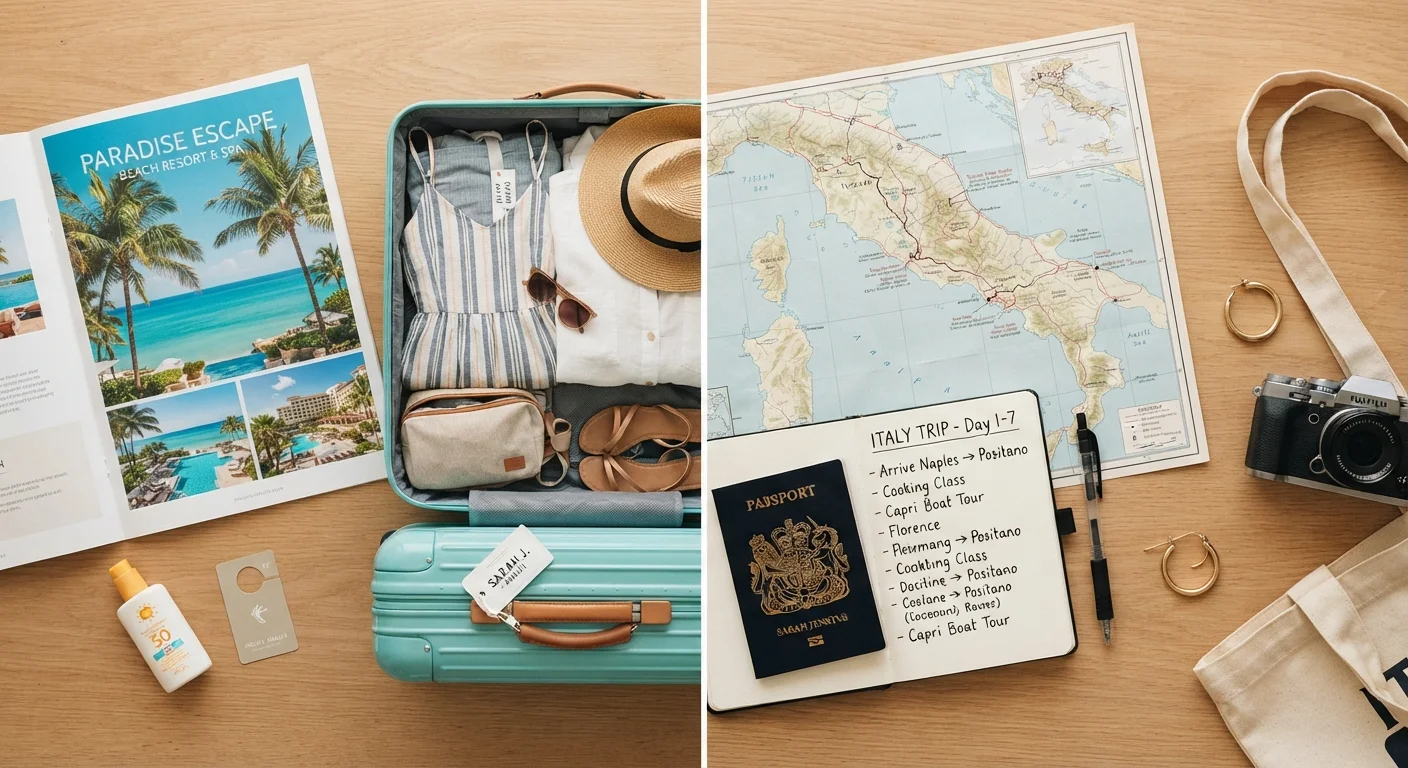
Photo credit: SkripTee.com | Search. Explore. Learn.
In this article
Weigh the real trade-offs between booking a package holiday and planning independently, so you can choose what fits your trip and travel style.
Key Takeaways
- Package holidays bundle flights, accommodation, and often transfers into one upfront price with consumer protection benefits.
- Independent travel offers greater flexibility and personalization but requires significantly more planning time and research.
- Package deals may offer cost predictability, while independent travel can be cheaper or more expensive depending on destination and timing.
- Your trip length, destination complexity, and travel experience level all influence which approach makes more sense.
- Both options can work well - the right choice depends on your priorities, not a universal ranking.
What Each Approach Actually Means
A package holiday bundles at least two travel components - typically flights and accommodation - sold as a single product by a tour operator or travel agent. In the US and many other markets, qualifying packages carry legal consumer protections: if the operator fails or a component is significantly changed, you may be entitled to a refund or alternative. Some packages also include transfers, excursions, or meals.
Independent travel means booking each element separately - flights, hotels, ground transportation, activities - on your own terms, through whichever channels you choose. You carry more responsibility for coordination but gain the freedom to build an itinerary that matches your interests precisely.
These aren't entirely opposing categories. A traveler might book a flight-and-hotel package for a base city, then independently arrange day trips from there. The question is really about how much you want pre-arranged versus how much you want to control yourself. For a deeper look at how this compares to guided group tours, see our guide to group vs. independent travel.
Key Trade-Offs Side by Side
The differences between these two approaches show up most clearly across cost, flexibility, planning effort, and what happens when things go wrong.
| Criterion | Package Holiday | Independent Travel |
|---|---|---|
| Planning effort | Low - operator handles logistics | High - you coordinate everything |
| Cost predictability | High - fixed upfront price | Variable - depends on your choices |
| Flexibility | Low - fixed dates and components | High - change plans as you go |
| Consumer protection | Strong - operator liable for failures | Relies on individual policies |
| Itinerary personalization | Limited to available packages | Fully customizable |
| Best for first-timers | Yes - structured and supported | Requires more destination knowledge |
| Multi-destination travel | Rarely supported | Easily accommodated |
Cost is rarely as simple as it appears. Package holidays can be genuinely competitive - operators buy in bulk and pass savings on - but the savings depend heavily on destination, season, and how far in advance you book. Independent travelers can sometimes beat package prices, particularly for off-season travel or by using fare alerts and flexible dates. For a fuller picture of how timing affects value, see our piece on peak season vs. shoulder season travel.
Planning Effort and On-the-Ground Experience
Package holidays shift the planning burden onto the operator. You review what's included, confirm dates, pay, and wait for your documents. That simplicity is genuinely valuable - particularly for shorter trips, first-time visitors to a region, or anyone who finds itinerary-building stressful rather than enjoyable.
Independent travel demands real investment upfront: researching accommodation options, comparing flight routing, understanding local transport systems, and building day-by-day structure. That effort pays off in trips that feel tailored rather than generic, but it's time and energy that not every traveler wants to spend.
Travel Insurance Applies to Both
Regardless of how you book, travel insurance is worth evaluating for any trip. Package holidays include certain legal protections in many markets, but they don't cover every scenario - illness, missed connections, or lost luggage, for example. Independent travelers carry more direct exposure and often have more to gain from comprehensive coverage. Always review policy terms carefully before purchasing.
On the ground, the difference continues. Package travelers often have a local contact number or rep to call if something goes wrong. Independent travelers navigate problems themselves - which can be empowering or exhausting depending on the situation and the traveler. If you're planning a more complex multi-destination trip, the planning demands multiply quickly; our article on planning a multi-country trip covers the key logistics in detail.
Which Approach Fits Your Trip?
Neither approach is universally superior. The right choice depends on a combination of factors specific to your trip and travel personality.
- Destination familiarity: First-time visitors to complex or logistically challenging destinations often benefit from the structure a package provides. Experienced travelers returning to familiar regions may prefer independent flexibility.
- Trip length: Short breaks - three to five nights - are well-suited to packages where the planning-to-enjoyment ratio matters. Longer trips with evolving plans often suit independent booking better.
- Pace preference: If you like to slow down, linger, and change direction, independent travel accommodates that naturally. Packages work best when you're happy with a fixed base and a pre-set rhythm. Our article on slow travel vs. jam-packed itineraries explores how pace shapes the experience.
- Risk tolerance: Packages offer a clear path to recourse if an operator collapses or a major disruption occurs. Independent travelers carry more exposure, which makes travel insurance a more critical consideration.
For practical tips applicable to both approaches - from packing strategy to safety planning - the Travel Tips hub is a useful ongoing resource.
~40%
US travelers who use packages for international trips
Research from the US Travel Association has consistently shown that a significant share of international leisure travelers use some form of packaged booking, particularly for beach and resort destinations.
2-5 hrs
Average planning time saved per trip with a package
Travel industry surveys suggest package bookers spend considerably less time on pre-trip logistics compared to independent planners, particularly for first-time destinations.

Author
Travel Editorial Team
Travel Editorial Team is the collective byline for our editorial team and contributor network. Articles published under this byline or an editorial pen name are researched, written, and reviewed according to our editorial standards for clarity, consistency, and independence before publication.
View all articles →