
Certified Pre-Owned vs. Standard Used: Is the Premium Worth It?
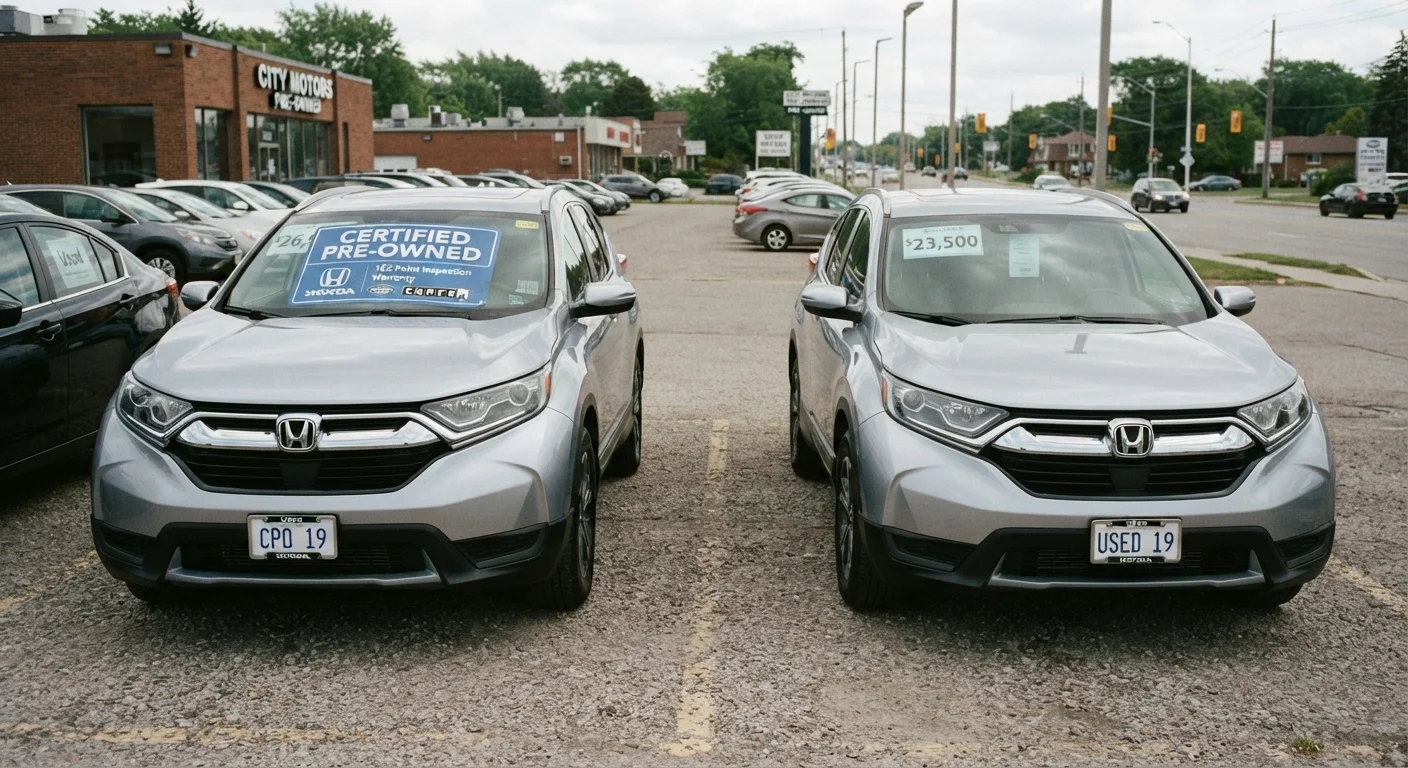
Photo credit: SkripTee.com | Search. Explore. Learn.
In this article
Compare what CPO programs actually include — inspections, warranties, and eligibility rules — against buying a regular used vehicle.
Key Takeaways
- CPO programs vary significantly by manufacturer - always read the specific program terms, not just the badge.
- The CPO premium typically ranges from a few hundred to several thousand dollars over a comparable standard used vehicle.
- Standard used vehicles can be a strong value when paired with an independent pre-purchase inspection.
- CPO warranties are usually tied to the original manufacturer and may require servicing at authorized dealerships.
- Neither option automatically guarantees a reliable vehicle - condition, history, and inspection matter in both cases.
What CPO Actually Means - and What It Doesn't
The term Certified Pre-Owned sounds official, but it has no single, universal definition. Each automaker runs its own CPO program with its own eligibility rules, inspection checklists, and warranty terms. A CPO vehicle from one brand may come with a 7-year/100,000-mile powertrain warranty; another brand's program might offer 12 months of limited coverage. The badge signals a program exists - not what the program contains.
In general, CPO vehicles must meet age and mileage thresholds (commonly under 5-6 years old and under 80,000 miles), pass a manufacturer-specified multi-point inspection, and have a clean title history. Vehicles that fail inspection may be reconditioned before being certified or removed from CPO consideration entirely.
Critically, CPO programs are only offered through franchised new-car dealerships, not independent lots or private sellers. If a used-car dealer without a manufacturer franchise calls a vehicle "certified," that certification is not backed by the manufacturer - it's an internal designation with no standardized meaning.
"Dealer Certified" Is Not the Same as Manufacturer CPO
Some independent dealerships use "certified" or "inspected" labels on their own authority. These designations are not backed by any automaker's program and carry no standardized warranty obligations. If you see a certification claim, always ask who stands behind it and what documentation supports it. Manufacturer CPO programs are identified by brand name (e.g., Honda Certified Used Vehicles, Toyota Certified Used Vehicles) and are only available at authorized franchised dealers.
Side-by-Side: How CPO and Standard Used Compare
Before deciding, it helps to see the structural differences clearly. The comparison below reflects general program norms - always verify the specific terms for any vehicle you're seriously considering.
| Criterion | Certified Pre-Owned (CPO) | Standard Used Vehicle |
|---|---|---|
| Price | Higher - premium over market value | Lower - broader negotiating room |
| Warranty Coverage | Manufacturer-backed limited warranty included | As-is or aftermarket option only |
| Multi-Point Inspection | Required by program; results vary by brand | Buyer must arrange independent inspection |
| Vehicle Age & Mileage Limits | Restricted (typically under 6 yrs/80K miles) | No restrictions - full market available |
| Vehicle History Report | Typically included with purchase | Buyer purchases separately (e.g., Carfax, AutoCheck) |
| Where to Buy | Franchised new-car dealerships only | Dealerships, private sellers, auctions |
| Financing Incentives | Promotional rates sometimes available | Standard market rates apply |
One frequently overlooked factor is where warranty work must be performed. Most manufacturer CPO warranties require authorized dealership service for covered repairs. For some buyers, that's a convenience; for others, it limits flexibility if a preferred independent mechanic offers lower labor rates.
On the financing side, some automakers extend promotional APR offers exclusively to CPO buyers. However, these rates are worth comparing against bank and credit union loans before committing. See our overview of dealer financing versus bank or credit union loans for context on evaluating your options.
The Case for Standard Used - With the Right Safeguards
A standard used vehicle isn't inherently riskier than a CPO vehicle - it's just less pre-packaged. The risk difference largely comes down to what the buyer does before purchase. A used car that has been independently inspected by a qualified mechanic, has a documented service history, and shows a clean vehicle history report can be a sound purchase at a substantially lower price point.
The key safeguard is the pre-purchase inspection (PPI) - an evaluation performed by a mechanic of your choosing, not the seller's. This is arguably the single most important step a used-car buyer can take. Our guide on what to look for during a used-car pre-purchase inspection explains what a qualified mechanic should examine and which findings warrant concern.
If coverage is a priority, an aftermarket extended warranty or a mechanical breakdown insurance policy can be added to a standard used vehicle - though these products vary widely in value. Before signing anything at the finance desk, review what finance desk add-ons actually cover to evaluate whether any offered product is appropriate for your situation.
Making the Call: Questions to Ask Before You Decide
There's no universal right answer between CPO and standard used - the better choice depends on your risk tolerance, budget, and how much independent research you're prepared to do. A few questions worth working through:
- What does this specific CPO program cover? Request the full warranty document, not just a verbal summary. Check deductibles, exclusions, and whether coverage is transferable if you sell the car.
- What is the price gap between CPO and comparable standard used examples? If the premium is $3,000 and the CPO warranty has a $200 deductible per visit with a short coverage window, the math may not favor CPO.
- Has the vehicle had an independent inspection? For a standard used vehicle, arrange one. For a CPO vehicle, ask for the inspection checklist results - a reputable program will provide them.
- What does the vehicle history report show? Accidents, title issues, and service gaps are relevant regardless of certification status.
Before committing to any deal - CPO or otherwise - consider working through a broader checklist of financial and contractual questions. Our article on questions worth asking before signing any car deal is a practical resource for that final review.
~$1,500-$3,500
Typical CPO price premium over comparable standard used
Industry analysts and consumer automotive researchers generally estimate CPO vehicles carry a premium in this range, though the gap varies by make, model, and local market conditions.
100+ points
Inspection checkpoints in many manufacturer CPO programs
Most major automaker CPO programs specify multi-point inspections covering powertrain, safety systems, electrical components, and structural integrity - though the exact checklist differs by brand.

Author
Autos Editorial Team
Autos Editorial Team is the collective byline for our editorial team and contributor network. Articles published under this byline or an editorial pen name are researched, written, and reviewed according to our editorial standards for clarity, consistency, and independence before publication.
View all articles →