
How a Car Battery Actually Works and When It's Near the End
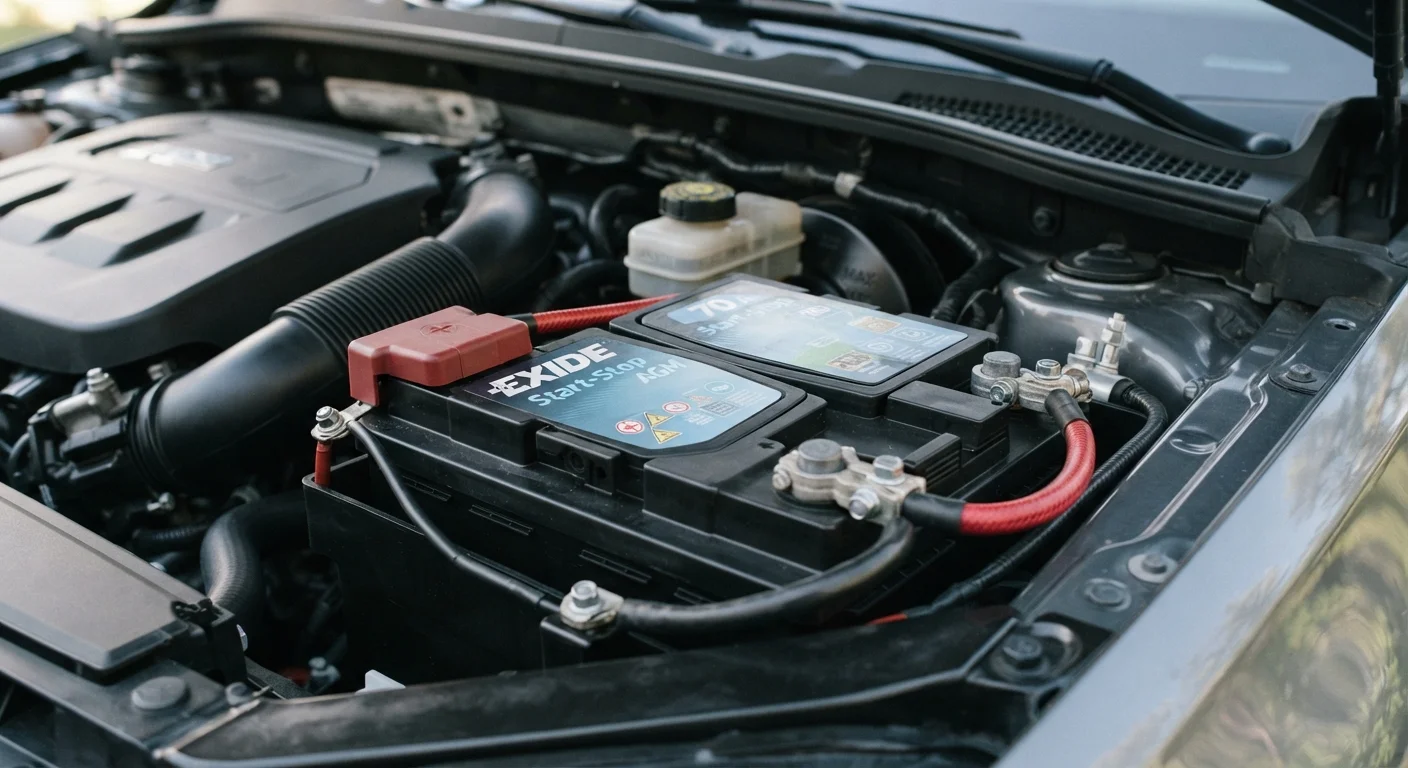
Photo credit: SkripTee.com | Search. Explore. Learn.
In this article
Understand the role your battery plays, what affects its lifespan, and the warning signs that suggest it's time for an inspection by a qualified technician.
Key Takeaways
- Most car batteries last 3-5 years under normal driving conditions.
- Extreme temperatures - both hot and cold - are among the biggest factors shortening battery life.
- A slow engine crank or dimming lights are early warning signs worth having checked promptly.
- Short, frequent trips prevent the alternator from fully recharging the battery over time.
- A qualified technician can load-test your battery to assess its true remaining capacity.
What a Car Battery Actually Does
The battery's primary job is to deliver a large burst of electricity to the starter motor, which cranks the engine to life. That single moment of ignition demands more power than almost anything else in your vehicle. Once the engine is running, the alternator - a generator driven by the engine - takes over, supplying electricity to the car's systems and replenishing the battery's charge.
Beyond starting the car, the battery acts as a buffer. It smooths out voltage fluctuations from the alternator and powers electronics like infotainment systems, power windows, and interior lights when the engine is off. In hybrid and electric vehicles, a separate high-voltage battery handles propulsion, but most still rely on a conventional 12-volt battery for accessory functions.
How the Alternator and Battery Work Together
Many drivers assume the battery powers the car while it's running - it doesn't. The alternator supplies electricity to running systems and charges the battery simultaneously. A failing alternator can drain an otherwise healthy battery within a single trip, so symptoms like dimming lights or a battery warning light may point to the charging system rather than the battery itself.
What Affects Battery Lifespan
Battery life isn't just about age - it's about the conditions the battery endures. Heat is actually the leading cause of battery degradation. High under-hood temperatures accelerate corrosion inside the battery's cells, which permanently reduces capacity. Cold weather compounds the problem: freezing temperatures thicken engine oil and demand more cranking power at the exact moment the battery delivers less of it.
Driving patterns matter, too. Short trips - errands under 10 minutes - don't give the alternator enough time to fully recharge the battery after each start. Over weeks and months, this partial cycling steadily depletes the battery's reserve capacity. Leaving accessories like interior lights or a phone charger running with the engine off can also drain it faster than most drivers expect. For more on everyday habits that accelerate vehicle wear, see habits that quietly shorten a car's lifespan.
3-5 years
Typical car battery lifespan
Industry guidance from AAA and automotive maintenance organizations consistently cites this range for conventional 12-volt lead-acid batteries under normal use.
~50%
Capacity loss at 0°F vs. 80°F
Battery Council International notes that a fully charged lead-acid battery can lose roughly half its cranking capacity in freezing temperatures compared to mild conditions.
1 in 4
Vehicles with a weak or failing battery
AAA's vehicle research has found that approximately one in four vehicles tested during roadside service calls had a battery in poor or failing condition.
Warning Signs to Watch For
Battery problems rarely appear without at least some advance notice. The challenge is recognizing signals that are easy to dismiss as minor quirks.
- Slow or labored engine cranking: If the engine turns over more sluggishly than normal, especially on cold mornings, the battery may be struggling to deliver full starting power.
- Dimming headlights or interior lights: Noticeably dim lighting - particularly when idling - can indicate the battery isn't holding sufficient charge.
- Electrical gremlins: Erratic behavior from power windows, infotainment screens, or automatic locks is sometimes traced back to a weak battery rather than a faulty component.
- Battery warning light: This dashboard indicator typically signals a charging system issue - which could be the battery, the alternator, or connecting wiring. Understand what your car's warning lights mean before assuming the worst.
- A battery older than 3 years: Age alone is reason enough to request a load test at your next service visit.
Request a Load Test, Not Just a Voltage Check
A basic voltage check only tells you if a battery is severely discharged - it won't reveal whether the battery has adequate reserve capacity. Ask your technician specifically for a load test, which simulates real starting demands and gives a much more accurate picture of the battery's true condition.
When to Have It Inspected
A visual check is worth doing periodically. Look for corrosion - a white or blue powdery buildup around the terminals - and ensure cables are firmly connected. However, a visual check tells you very little about the battery's actual capacity. The most reliable assessment is a load test, performed by a qualified technician using dedicated equipment. This test applies a controlled electrical load and measures how the battery responds under realistic conditions, revealing whether it has the reserve capacity to be dependable.
Most mechanics recommend requesting a battery test when the battery is 3 years old, before any long road trip, and every autumn before cold weather arrives. If you're buying a used vehicle, battery condition should be part of any pre-purchase inspection - see what to look for during a used-car pre-purchase inspection for the full checklist. Before heading out on a longer journey, run through a pre-long-drive vehicle check that covers the battery along with other key systems.
Frequently Asked Questions

Author
Autos Editorial Team
Autos Editorial Team is the collective byline for our editorial team and contributor network. Articles published under this byline or an editorial pen name are researched, written, and reviewed according to our editorial standards for clarity, consistency, and independence before publication.
View all articles →