
Tailgating: Why Following Distance Is One of the Most Underrated Safety Margins
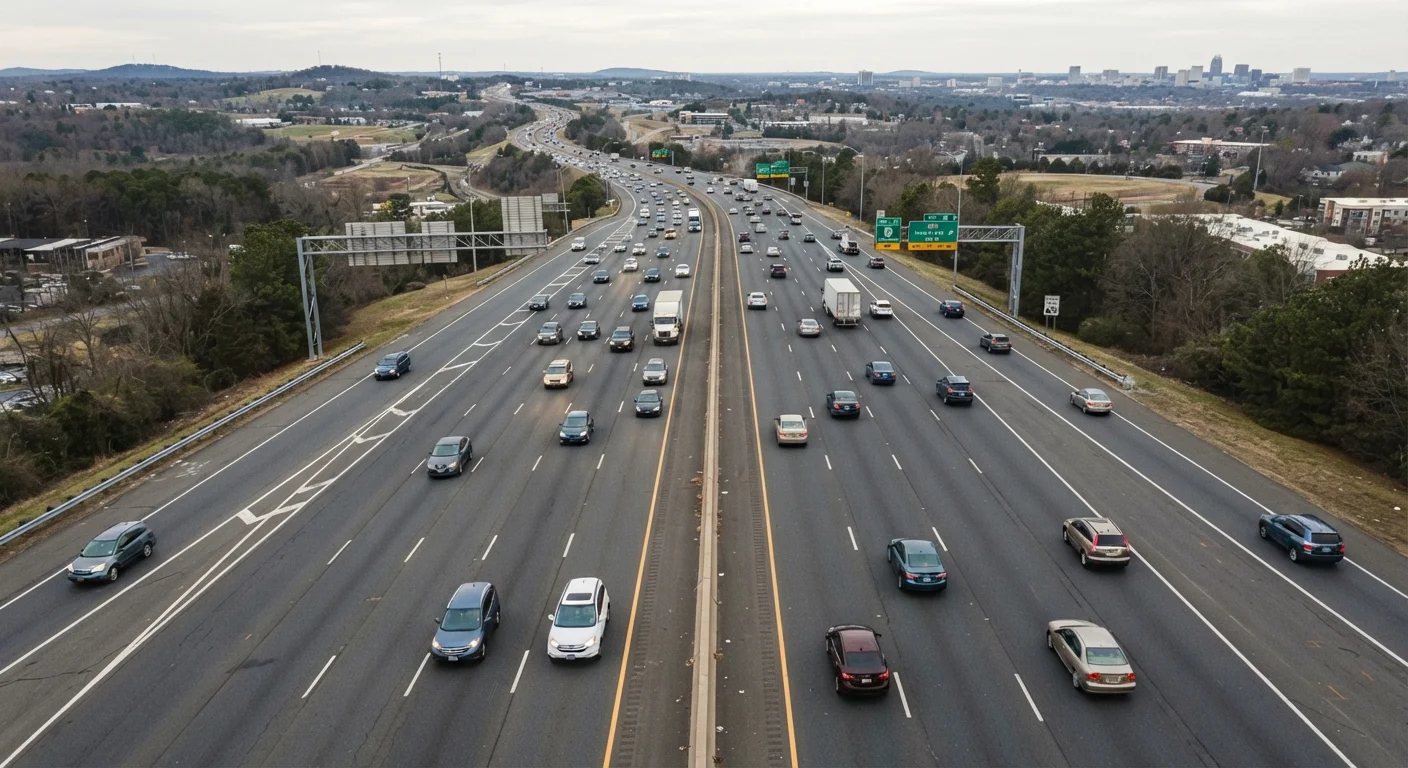
Photo credit: SkripTee.com | Search. Explore. Learn.
In this article
Most drivers follow too closely without realising it. Here's how following distance works, why it matters, and how to recalibrate your spacing habit.
Key Takeaways
- Most rear-end collisions are caused by following too closely, not by sudden braking.
- The three-second rule is a minimum - adverse conditions demand more space.
- Human reaction time alone consumes roughly 1.5 seconds before braking even begins.
- Tailgating near large trucks is especially dangerous due to their longer stopping distances.
- Speed dramatically increases the physical distance needed to stop safely.
The Hidden Risk Most Drivers Accept Every Day
Rear-end collisions are among the most common crash types in the United States, and the majority involve a driver who simply did not have enough room to stop. Yet most drivers significantly underestimate how much space they actually need - and how little time they have to react when something goes wrong ahead of them.
Tailgating is often dismissed as a minor annoyance rather than a genuine safety risk. In reality, following too closely strips away the single most important buffer a driver has: time. The physics of stopping distance make it clear that even a moment's hesitation can turn a manageable situation into a collision.
~29%
Of all US crashes that are rear-end collisions
According to the National Highway Traffic Safety Administration (NHTSA), rear-end collisions consistently account for roughly 29% of all reported crashes in the US.
1.5s
Average driver perception-reaction time
Traffic engineering research commonly cites 1.5 seconds as a baseline reaction time for alert drivers under normal conditions - longer when fatigued or distracted.
2×
Stopping distance increase on wet roads
Road safety authorities note that wet pavement can approximately double the stopping distance compared to dry conditions at the same speed.
How the Three-Second Rule Actually Works
The three-second rule is a time-based guideline, not a fixed measurement in feet or car lengths. Because stopping distance scales with speed, a time gap automatically adjusts: at 30 mph, three seconds equals roughly 132 feet; at 65 mph, it's closer to 285 feet.
To apply it: choose a stationary reference point - a road sign, overpass, or lane marker. When the vehicle ahead passes it, begin counting. If you pass that same point before reaching 'one-thousand-three,' you are too close. The fix is simple - ease off the accelerator and let the gap re-establish naturally, without abrupt braking.
Three seconds is a minimum under ideal conditions: dry roads, good visibility, alert driver. Rain, snow, darkness, or fatigue each demand more. Night driving in particular compounds the problem, since reduced visibility shortens the window in which you can even perceive a hazard ahead.
Adjusting for Conditions Beyond Weather
Road type matters too. On gravel, unpaved surfaces, or roads with poor lane markings, extend your following distance further - your stopping grip and visual reference points are both reduced. The same applies when driving an unfamiliar vehicle: different vehicles have meaningfully different brake feel and stopping performance.
Why Human Reaction Time Changes Everything
A common misconception is that the moment you decide to brake, your car starts slowing. In practice, there is a measurable lag between perceiving a hazard, deciding to act, and your foot physically reaching the pedal. Research consistently places average driver reaction time between 1.5 and 2.5 seconds - and that's before the brakes generate any deceleration.
At 60 mph, your car covers 88 feet per second. A 1.5-second reaction time means you have already traveled 132 feet before you even begin to brake. Add braking distance on top of that, and you need far more road than most drivers account for. Fatigue, distraction, and impairment all stretch reaction time further.
Special Situations That Demand Extra Space
While the three-second rule covers most everyday driving, certain scenarios call for an even greater buffer:
- Large trucks and commercial vehicles: Fully loaded trucks can take 40% longer to stop than a passenger car traveling at the same speed. Cutting in front of a truck with minimal clearance is genuinely dangerous. Our guide on driving safely around large trucks covers the specific positioning habits that reduce risk near these vehicles.
- Adverse weather: Wet roads can double stopping distances; ice can multiply them several times over. Adjust your gap accordingly - four to five seconds in rain, and significantly more on snow or ice.
- Towing a trailer: Additional weight increases stopping distance considerably. If you regularly tow, practice judging your extended gap in low-stakes conditions before heading onto busy roads.
- Merging zones: Following distance matters just as much during lane changes and merges, where gaps shift quickly and drivers around you may act unpredictably.
Following Distance Laws Vary by State
While all US states require drivers to maintain a reasonable following distance, the specific language and enforcement practices differ. Some states specify numeric distances in statute; others rely on the broader 'reasonable and prudent' standard. Check your state's Department of Motor Vehicles (DMV) resources for the exact language applicable where you drive.
Recalibrating Your Spacing Habit
The challenge with following distance is that it feels uncomfortable to maintain. Leaving a three-second gap on a busy road often results in another vehicle filling that space. The natural instinct is to close the gap again - but doing so recreates the problem.
The practical solution: let the interloping vehicle settle, then gradually ease back to re-establish your buffer. There is no benefit to pressuring the vehicle ahead, and no destination worth eliminating the margin that keeps you in control. Over time, drivers who consciously practice adequate spacing often report that it becomes automatic - and that their overall driving feels less stressful as a result.
Following distance is one of the most straightforward habits to improve, and one of the highest-value changes a driver can make. It costs nothing, requires no equipment, and works at every speed.
Frequently Asked Questions

Author
Autos Editorial Team
Autos Editorial Team is the collective byline for our editorial team and contributor network. Articles published under this byline or an editorial pen name are researched, written, and reviewed according to our editorial standards for clarity, consistency, and independence before publication.
View all articles →