
What New Drivers Are Rarely Taught About Merging and Lane Changes
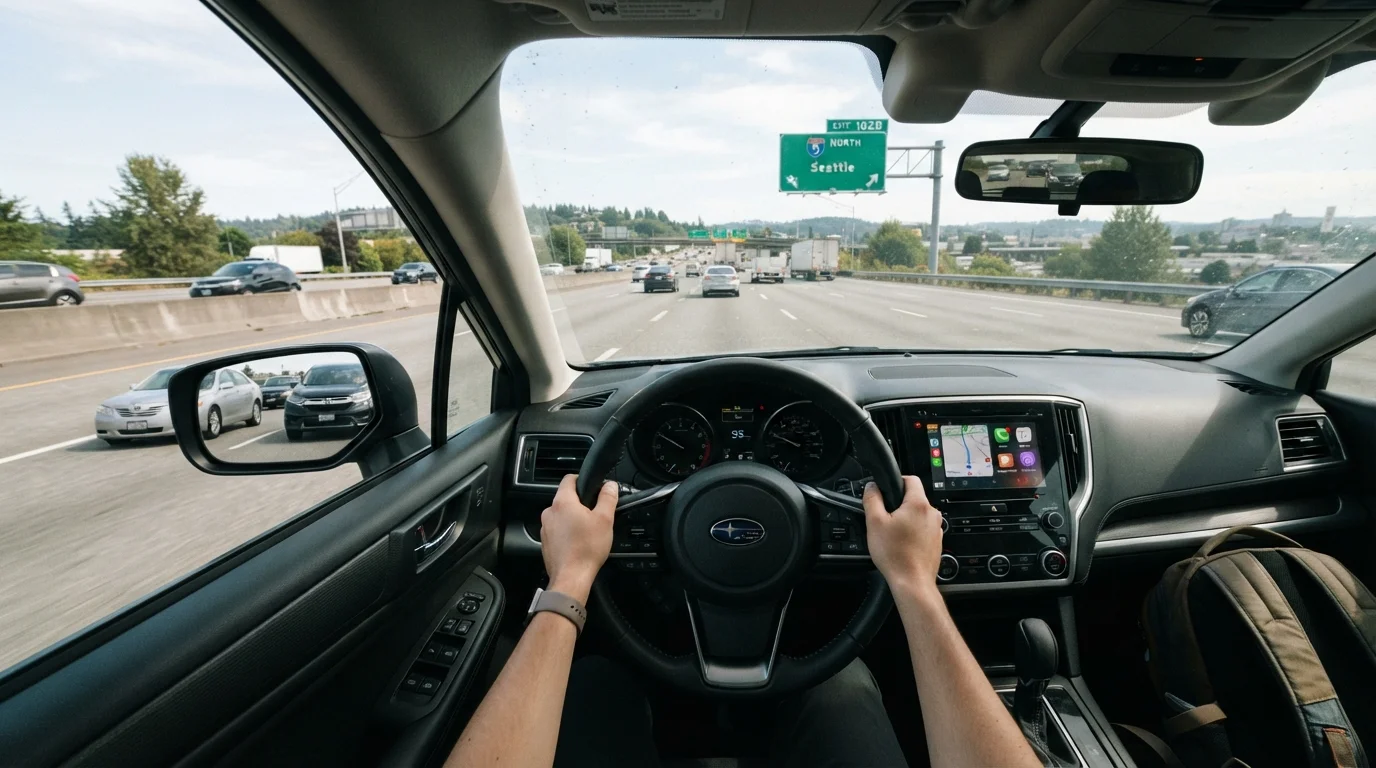
Photo credit: SkripTee.com | Search. Explore. Learn.
In this article
Merging confidently is one of driving's most undercoached skills. This guide covers blind spots, timing, and signalling strategy for safer lane changes.
Key Takeaways
- Blind spots are larger than most new drivers expect - always perform a physical head-check before moving.
- Matching the speed of traffic before merging is more important than finding a large gap.
- Signalling early communicates intent but does not give you the right of way.
- Hesitation during a merge is often more dangerous than committing to a well-timed move.
- Mirror adjustment and head positioning are foundational habits worth practising deliberately.
Why Merging Feels Harder Than It Should
Driver's education courses spend considerable time on traffic signs and parking - but merging and lane changes are often covered in a single session. The result is that many new drivers arrive on real roads with incomplete mental models for what is, in practice, one of the most judgment-intensive tasks in everyday driving.
Merging requires simultaneously monitoring your own speed, reading the pace of traffic in the target lane, judging gap size, communicating intent, and executing a smooth lateral move - all within a few seconds. That's a genuine cognitive load, and it's normal to find it stressful at first.
The good news: these skills are learnable and highly transferable. Understanding why merging works the way it does - not just the steps - builds durable confidence. This guide fills in the gaps that formal instruction typically leaves out. For broader context on how highway environments differ from city driving, see our comparison of highway and city driving demands.
Understanding Your Blind Spots
Every vehicle has blind spots - areas around the car that neither your mirrors nor your direct forward vision cover. The two most critical zones are alongside the rear quarters of your vehicle, roughly at the level of your back doors. A car sitting in that zone can be completely invisible in your mirrors while remaining dangerously close.
Blind spot
An area around your vehicle that cannot be seen in your mirrors or through the windshield. Vehicles in this zone are invisible without a physical head-check.
Head-check (shoulder check)
A brief turn of the head to look directly into the blind-spot zone alongside your vehicle before changing lanes. It takes less than a second and provides information no mirror can.
Speed matching
Accelerating to match the pace of traffic in the lane you're merging into, so you enter at a compatible speed rather than forcing other drivers to adjust.
Acceleration lane
The dedicated entry lane on a highway that gives drivers space and distance to build speed before joining the main flow of traffic.
Gap selection
Identifying and targeting a space between vehicles in the target lane that is large enough to merge into safely at matching speed.
Mirrors reduce blind spots but do not eliminate them. The fix is the head-check (also called a shoulder check): before moving into a lane, briefly turn your head to look directly into the zone your mirrors cannot reach. This takes under a second but provides information no mirror can.
Mirror adjustment also matters. Many drivers angle their side mirrors too far inward, showing an unnecessary amount of their own vehicle. Adjusted correctly - aimed further outward - side mirrors cover more road and reduce the blind-spot zone substantially. Getting this right before driving is a habit worth building from the start.
Modern vehicles increasingly offer blind-spot monitoring systems that use sensors to alert you when a vehicle is in your blind zone. These tools are genuinely useful, but they are a supplement to head-checks, not a replacement. Our article on what driver assistance systems actually do explains the limits of these features in detail.
Timing and Speed Matching
New drivers often search for a large gap in traffic when merging - one that feels obviously safe. In reality, waiting for a large gap on a busy highway can leave you stranded at the end of an acceleration lane, forcing an even more difficult merge under pressure.
The more reliable approach is speed matching: accelerate to match the pace of traffic in the target lane, then assess the gap at similar speed. A gap that looked small at 40 mph can be entirely adequate when you're travelling at 65 mph alongside the other vehicles. Entering at a lower speed forces surrounding drivers to brake, which creates risk.
Use the Full Acceleration Lane
Don't merge the moment you enter the on-ramp. Use the entire length of the acceleration lane to build speed and assess available gaps at highway pace. Drivers who merge early often do so at a speed mismatch, which creates more risk than a slightly tighter gap entered at the correct speed.
To judge a gap effectively, focus on the vehicle ahead of where you intend to merge rather than on the approaching vehicle behind. A useful mental benchmark: you need enough space in front of you to maintain a safe following distance once you're in the lane. See our coverage of following distance and how to calibrate it for more on this principle.
Signalling Strategy: More Than Just a Blinker
Signalling is widely taught as a mechanical step - activate the blinker, then move. But the strategic use of signals is more nuanced and more valuable than that framing suggests.
Signalling communicates intent, not entitlement. Activating your turn signal does not give you the right of way. What it does is give surrounding drivers advance notice, which allows them to make space voluntarily or hold their position consciously. Signal early - ideally three to five seconds before you begin moving - so that information is useful rather than a simultaneous announcement of your action.
On highways, early signalling is especially important because closing speeds between vehicles are higher. A driver 400 feet behind you travelling at 70 mph has roughly four seconds to respond. Signalling at the last moment removes that window entirely.
Also worth noting: once you've completed your lane change, cancel the signal promptly. A blinker left on after a move confuses drivers around you about your next intention.
Signalling Is Not Permission to Move
A common misconception is that activating your turn signal gives you the right of way. It does not. Always confirm through mirrors and a head-check that the lane is actually clear before beginning your move. Signalling tells others what you intend - it doesn't guarantee they'll yield.
Common Mistakes and How to Avoid Them
Several patterns reliably cause trouble for newer drivers making lane changes:
- Hesitating mid-merge. Stopping or dramatically slowing during a merge creates a mismatch in speed that is more dangerous than the gap you were trying to avoid. If you've committed to a move, carry it through smoothly.
- Skipping the head-check. Relying on mirrors alone - even well-adjusted ones - leaves a genuine blind zone unchecked. Make the shoulder check a reflex, not an afterthought.
- Merging too slowly onto highways. Acceleration lanes exist specifically to allow drivers to reach traffic speed. Using only half the lane before merging wastes your built-in safety buffer.
- Changing multiple lanes at once. Moving across two lanes in one action cuts your checking time in half. Complete one lane change, verify your position, then signal and move again.
- Not accounting for weather. Rain, fog, and reduced visibility change how quickly you can read gaps and how long your vehicle takes to respond. Our guide to driving in heavy rain covers how conditions affect your margin for error.
Merging proficiency builds gradually with deliberate practice. The drivers who handle it well aren't reacting faster - they're reading the situation earlier, which gives them more time to act calmly. That habit starts with understanding what to look for, and grows with every mile of attentive driving.
For a broader framework of skills across all road environments, the complete guide to safe driving in all conditions is a useful companion resource.
Frequently Asked Questions

Author
Autos Editorial Team
Autos Editorial Team is the collective byline for our editorial team and contributor network. Articles published under this byline or an editorial pen name are researched, written, and reviewed according to our editorial standards for clarity, consistency, and independence before publication.
View all articles →