
Highway Driving vs. City Driving: How the Skills and Risks Differ
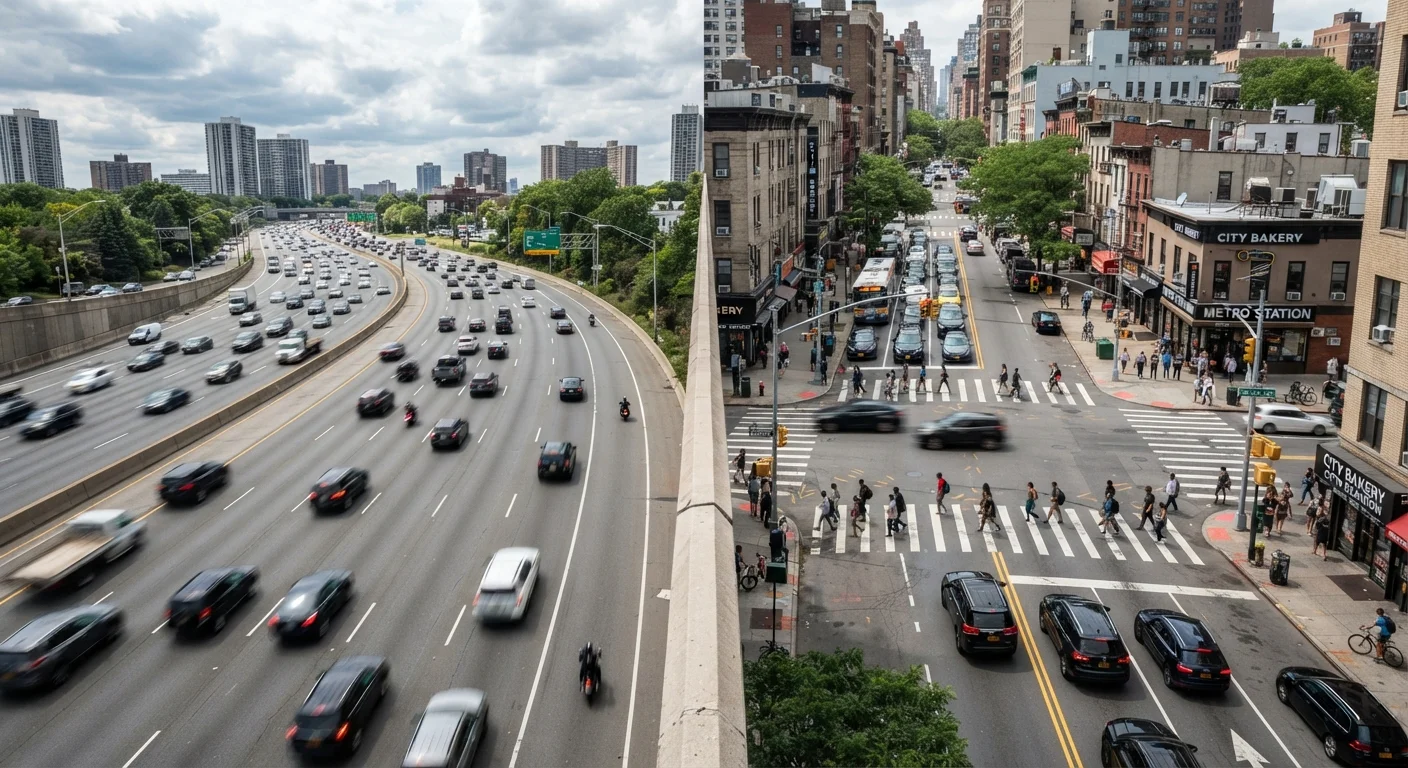
Photo credit: SkripTee.com | Search. Explore. Learn.
In this article
High-speed merging and urban stop-start traffic demand very different driver behaviours. Here's how each environment challenges your attention.
Key Takeaways
- Highway driving demands sustained attention at speed, while city driving demands frequent, rapid decisions at lower speeds.
- Rear-end collisions are the most common highway crash type; intersection crashes dominate city environments.
- Cognitive fatigue builds differently in each setting - monotony on highways, overload in cities.
- Following distance rules differ significantly between highway and urban speeds.
- Both environments require drivers to actively manage blind spots, but the threats come from different directions.
- Skilled drivers adjust their scanning patterns, speed management, and signalling habits based on which environment they're in.
What Makes Each Environment Fundamentally Different
Highway and city roads don't just look different - they place completely different cognitive and physical demands on drivers. Understanding those differences is the first step toward becoming more competent in both settings.
On a highway, the primary challenge is sustained high-speed attention. Traffic generally moves in one direction at consistent speeds, entry and exit points are controlled, and pedestrians are absent. The danger isn't complexity - it's complacency. At 70 mph, a vehicle travels roughly 103 feet per second, meaning a two-second lapse in attention covers more than the length of a basketball court.
City driving flips this entirely. Speeds are lower, but the environment is far more unpredictable. Pedestrians step off curbs, cyclists filter between lanes, parked vehicles open doors without warning, and intersections require drivers to process right-of-way, signals, and crossing traffic simultaneously. The challenge is cognitive overload, not monotony.
This difference in mental load is why many experienced drivers feel more fatigued after 30 minutes of urban driving than after 90 minutes on an open highway - and why both types of fatigue are genuinely dangerous. For a broader framework on handling varied road conditions, see our complete guide to safe driving in all conditions.
Key Skill Differences: Speed, Space, and Scanning
The skills that keep you safe on a highway are not the same ones that protect you in a city grid - and actively recognising those differences helps drivers shift gears mentally when the environment changes.
| Criterion | Highway Driving | City Driving |
|---|---|---|
| Typical speed range | 55-80 mph | 15-45 mph |
| Primary hazard type | Rear-end, high-speed collisions | Intersection and pedestrian crashes |
| Mental load | Sustained attention, monotony fatigue | Rapid decisions, cognitive overload |
| Recommended following distance | 3-4+ seconds minimum | 2-3 seconds, variable by hazard |
| Scanning range | 12-15 seconds ahead | Near-vehicle + mid-range dynamic scan |
| Key skill | Merging, speed consistency | Anticipation, pedestrian awareness |
| Fatigue pattern | Builds slowly via monotony | Builds quickly via sensory overload |
Following Distance
At highway speeds, the standard guidance is a minimum three-second following distance - and many safety organisations recommend extending that to four or more seconds in adverse weather or heavy traffic. At 65 mph, three seconds translates to roughly 285 feet of space. In a city, lower speeds shorten absolute stopping distances, but the hazard isn't always the vehicle ahead - it's the pedestrian who steps out, or the cyclist who brakes suddenly at a light.
Scanning and Hazard Detection
Highway drivers should scan well ahead - up to 12-15 seconds of travel time in front of the vehicle - to detect slowdowns, lane merges, and debris early. City drivers need a much tighter, more dynamic scan: near the vehicle for crossing pedestrians, mid-range for signal changes, and periodic checks of mirrors for cyclists and lane-filtering vehicles. Merging and lane changes on highways also demand a precise blind-spot check routine that differs from a simple urban lane shift.
Speed Management
On highways, consistent speed is a safety asset - erratic acceleration and braking disrupts traffic flow and increases rear-end risk. In cities, controlled deceleration in advance of signals, crosswalks, and junctions is the core skill. Anticipating stops early is always safer than reacting late.
Crash Patterns: Where the Risks Actually Land
Understanding where crashes are most likely to occur - and why - helps drivers prioritise the right habits in each environment.
~40%
Of urban crashes occur at intersections
According to the Federal Highway Administration, intersections are the site of a disproportionate share of urban traffic crashes in the US.
103 ft/sec
Distance covered at 70 mph per second
A standard physics calculation illustrating why a two-second attention lapse at highway speed covers significant ground before a driver can react.
2 hours
Recommended maximum highway driving before a rest break
Driver fatigue organisations and highway safety bodies commonly advise stopping for a break at least every two hours on long interstate journeys.
On highways, rear-end collisions account for a substantial portion of crashes, often triggered by sudden slowdowns, rubbernecking, or following too closely at speed. High-speed crashes carry significantly higher injury severity due to kinetic energy - even with modern safety systems. Large commercial vehicles are a particular consideration; their braking distances and blind spots differ substantially from passenger cars. Our guide on driving safely around large trucks covers the spacing and positioning rules that reduce risk near these vehicles.
In cities, intersection crashes dominate the statistics. Left turns across oncoming traffic are among the most consistently dangerous urban manoeuvres. Pedestrian and cyclist involvement is also concentrated in urban areas, underscoring the need for reduced speed near crosswalks and slower scanning habits in high-foot-traffic zones. For a deeper look at right-of-way rules that still confuse experienced drivers, see our breakdown of roundabouts and yield rules.
Weather compounds both environments differently. Rain raises hydroplaning risk at highway speeds but creates treacherous stopping distances at city intersections. Understanding those distinctions is covered in our article on driving in heavy rain.
Urban vs. Rural Fatality Rates: A Nuance Worth Noting
While cities generate more total crashes, rural and highway roads account for a disproportionately high share of traffic fatalities in the US. This is largely because higher speeds mean greater injury severity when crashes do occur. Both environments carry real risk - the nature and probability of that risk simply differs. Drivers should resist treating either setting as inherently 'safe.'
Building Better Habits in Both Environments
Drivers who adapt their behaviour consciously - rather than applying a single default approach to every road - tend to be safer overall. A few habits apply universally; others are environment-specific.
For highway driving
- Combat monotony actively. Take rest breaks every two hours on long trips. Fatigue and highway hypnosis - a state of reduced awareness caused by repetitive visual stimuli - are real and documented risks.
- Maintain consistent following distance. Extend your gap in rain, at night, or behind large vehicles. See our coverage of night driving risks for low-visibility specific guidance.
- Signal early and merge smoothly. Sudden lane changes at speed give surrounding drivers less time to react.
For city driving
- Slow before intersections, not at them. Anticipating the stop gives you more reaction time if something unexpected happens.
- Check mirrors more frequently. Cyclists and motorcycles can appear in your mirrors much faster in slow-moving urban traffic than on open roads.
- Reduce speed near parked vehicles. The risk of a door opening into your path - known as being "doored" - is a genuine urban hazard that low speed mitigates significantly.
Passengers can also affect driver behaviour differently in each environment - urban complexity with social distraction can be a particularly risky combination. Our article on how passengers affect driver behaviour explores this dynamic further.

Author
Autos Editorial Team
Autos Editorial Team is the collective byline for our editorial team and contributor network. Articles published under this byline or an editorial pen name are researched, written, and reviewed according to our editorial standards for clarity, consistency, and independence before publication.
View all articles →